
Nearly 12,000 people were killed during the Siege of Sarajevo. The city was surrounded for almost four years – longer than any siege in modern history.
That legacy isn’t sealed behind museum walls. You see it in the buildings still marked by shelling. You hear it in everyday conversations. Everyone here lived through it, or knows someone who didn’t.
But Sarajevo isn’t frozen in trauma. It’s a city that kept moving – sometimes awkwardly, sometimes defiantly. Coffee shops fill up. Tram bells ring. A new café might open next to a bullet-scarred facade, and nobody makes a fuss about the contrast.
I came here after leaving my job in Budapest, making the most of my final days on the EU blue card. I thought I’d stay a few days. I stayed three weeks.
This guide pulls together the things that stood out – not just what to see in Sarajevo, but what makes it linger.
1. Get Lost in Baščaršija (Old Town)
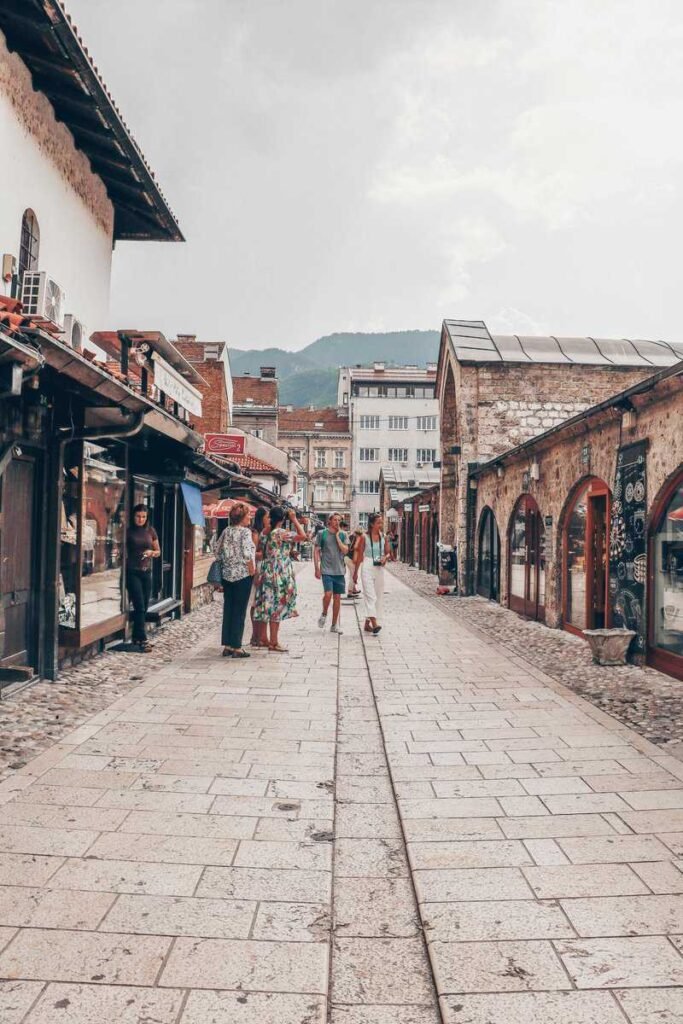
Baščaršija is Sarajevo’s old town – a dense patchwork of Ottoman-era streets, mosques, and market stalls that still feels like a functioning part of the city, not a recreated museum for tourists.
You’ll likely pass through here multiple times a day, and it’s different each time. One morning I found a shop selling only teapots. Another day, I wandered into a place stacked with shawls from floor to ceiling. No sign, no sales pitch. Just someone running a business the way it’s always been done.
Start at the Sebilj Fountain – a wooden structure that sits at the center of it all – then head down Coppersmith Street (Kazandžiluk), where you’ll find artisans making traditional Bosnian coffee sets. They make much better souvenirs than anything you’ll find in the tourist shops across the square.
Some restaurants in the area feel like they’re catering to the day-trippers, but even the more commercial spots don’t feel overdone. It’s not like the curated chaos of a major European capital. If you’ve spent time in downtown Rome or Paris, Baščaršija feels stripped back – less curated, more lived-in.
2. Stand at Latin Bridge
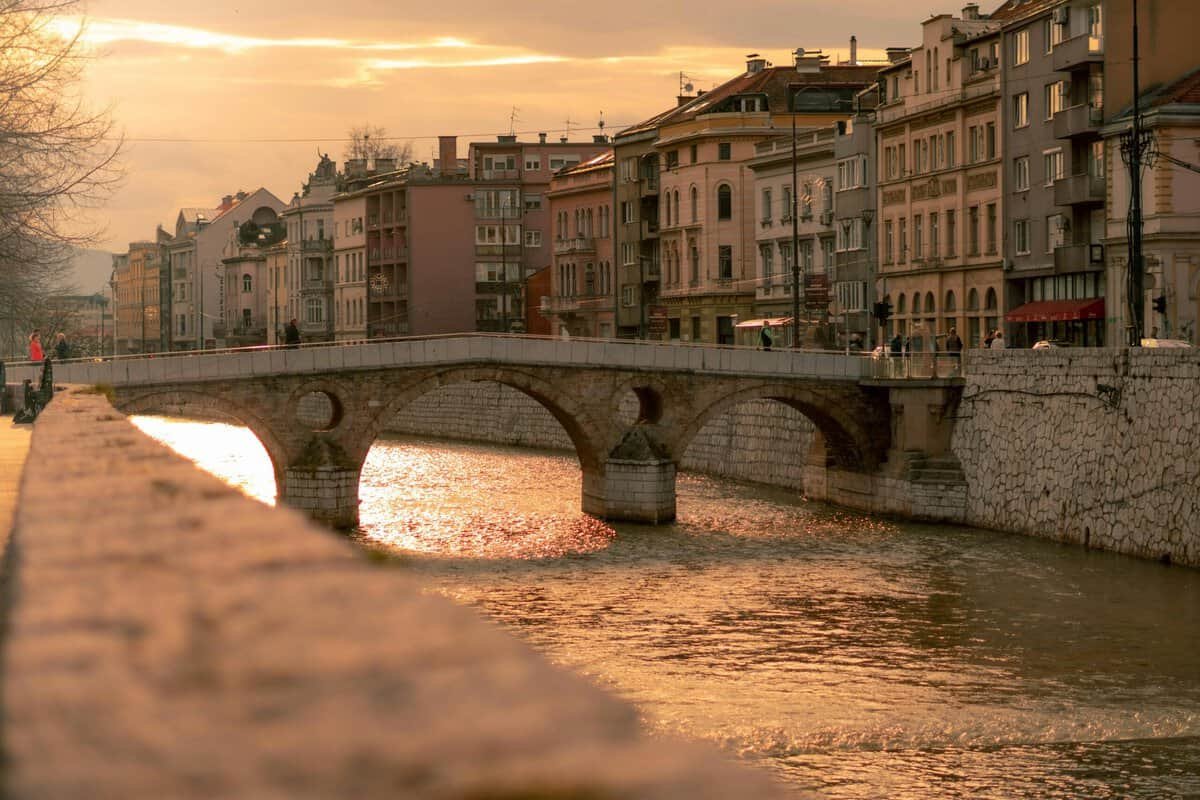
It doesn’t look like the kind of place that changed the world. Just a small stone bridge over the Miljacka River, with a plaque you could easily walk past without noticing.
But this is where Archduke Franz Ferdinand was assassinated in 1914 – the moment that set off World War I. The spot is ordinary in the way most real places in history tend to be. You can stand there, watch trams pass by, and feel absolutely nothing, or everything.
It’s a quick stop, but worth making. If only to be reminded that global events often begin in places that look like nothing at all.
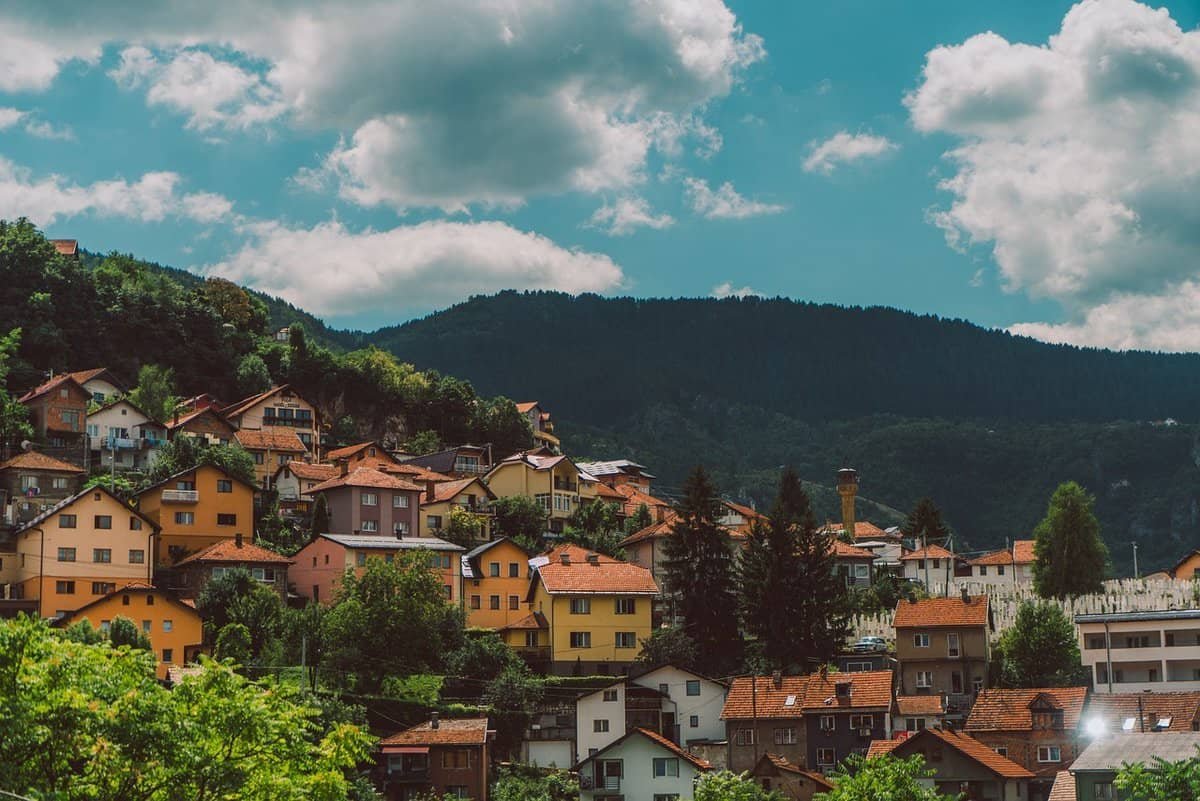
3. Watch the Sunset from Yellow Fortress (Žuta Tabija)
The best view in Sarajevo costs nothing. Climb up to Yellow Fortress in the late afternoon and wait.
Locals bring snacks, drinks, or just themselves. I went on the recommendation of my host, and ended up sitting there long after the sun had dipped behind the hills, watching the city lights flicker on. There’s something surreal about seeing a place so calm, knowing what it’s been through.
The fortress itself is part of the old defensive line from the Ottoman period. It was later used again during the war – and if you’re interested in that side of the story, the Fall of Yugoslavia and War Tunnel Tour makes a stop here to explain how this spot became a vantage point during the siege.
But even without the history, Yellow Fortress is worth the walk. Sarajevo stretches out below, the call to prayer rises in the distance, and it’s the kind of place where you don’t feel rushed to move on.
4. Ride the Cable Car to Mount Trebević
The Sarajevo cable car connects the city to Mount Trebević – a forested hill that once served as an Olympic venue, later as a front line during the war. I went in winter, when the cable car was closed, which still feels like a missed opportunity.
In warmer months, it’s one of the easiest ways to leave the city behind and get above it all. The ride gives you a full view of Sarajevo’s sprawl – the old town, the post-war apartment blocks, the cemeteries – all laid out below in a way that gives everything context.
At the top, locals head here to hike, picnic, or just sit around. The views stretch out across the Dinaric Alps. There’s also a cafe and the remains of the old bobsled track, slowly being reclaimed by graffiti and pine needles.
5. Walk the Abandoned Olympic Bobsleigh Track
In 1984, Sarajevo hosted the Winter Olympics. Forty years later, the bobsleigh track is slowly disappearing into the forest.
The concrete is cracked and weather-stained, covered in graffiti and moss. It was repurposed during the war as an artillery position, and you can still see signs of that – blast marks, bullet holes and damage.
Getting here takes a bit of a walk from the top of Mount Trebević, but it’s one of the more surreal places in the city. Half Cold War relic, half urban ruin, and completely unlike anything else on the list. Somewhere between Cold War relic and urban ruin, it’s worth the detour – even if you don’t care about sports.

6. Visit the Sarajevo War Tunnel (Tunnel of Hope)
The tunnel is only 20 meters long now, but it used to run nearly 800 – hand-dug beneath the airport runway during the siege, connecting the city to the outside world.
I went without a guide, which in hindsight wasn’t the best call. There’s a video inside, but it’s in Bosnian, and most of the signage doesn’t go deep. What I didn’t expect was that our taxi driver – the man who took us there – had helped build the tunnel. He showed us the scar on his leg where he’d been shot. Then he lit a cigarette and waited in the car.
Stories like his are everywhere in Sarajevo, but the tunnel makes it literal. This was the city’s only lifeline during the blockade – used to smuggle food, medicine, people, anything that could help them keep going.
If you want to actually understand how it worked, there are tours that go beyond what the museum alone can offer. The Fall of Yugoslavia and Tunnel Tour includes other war sites across the city, while the Veteran’s Story Tour is led by someone who lived through the siege. Either is worth considering. I probably should’ve done one.
7. Climb to the Old Jewish Cemetery
Our accommodation was just uphill from the Old Jewish Cemetery, so we passed it almost every day on the way down to Baščaršija. It’s nearly 600 years old and one of the largest Jewish cemeteries in Europe – tucked into the slopes of Mount Trebević, quiet and mostly overlooked.
The walk up is steep, especially in summer, but it’s worth it. The headstones are clustered at odd angles, some worn down to the point where the inscriptions are almost gone. From the top, you get one of the best unfiltered views of Sarajevo – not framed for tourists, just a raw overlook of the city and the surrounding hills.
It’s peaceful, a little eerie, and a reminder that Sarajevo’s layers go much deeper than the war everyone talks about.
8. Free Walking Tour
One of my favorite things to do in any city is a walking tour, and Sarajevo was no exception. If you want to really get to know the city, the free walking tour is a must. It’s a fun way to learn about Sarajevo’s history and see some of the main sights.
The guides are super knowledgeable and make the stories behind the landmarks come to life. Plus, you get to explore different areas of the city, and it’s the perfect opportunity to ask any questions you’ve been wondering about.


9. Stroll Vilsonovo šetalište (Wilson’s Promenade)
If you want a break from Sarajevo’s hills and history, head to Vilsonovo šetalište. It’s a long, flat riverside promenade lined with trees – shaded in summer, calm in the late afternoon, and popular with locals out for a walk or a run.
There aren’t major landmarks here, which is kind of the point. It’s the place people go when they’re not sightseeing. Kids ride bikes. Old men sit on benches and smoke. A few cafes dot the edges, but the vibe is low-key.
It’s not something you need to plan around. But if you’re nearby and feel like walking without thinking, this is the spot.
10. Learn About the Bosnian War at a Museum
Sarajevo wears its history openly, but if you want to actually understand what happened here during the 1990s, go to a museum. There are two in particular that stand out.
Gallery 11/07/95 focuses on the Srebrenica genocide – where over 8,000 Bosniak men and boys were killed in July 1995. The space is stark and quiet, filled with photographs, videos, and personal stories. It’s not graphic, but it’s heavy. You leave with less distance between you and the facts.
The Museum of Crimes Against Humanity and Genocide takes a broader view of the war. It covers events from across the country, with exhibits on war crimes, siege conditions, and survivor testimony. The timelines and context are well put together, and it’s often less crowded than Gallery 11/07/95.
If you only have time for one, start with Gallery 11/07/95. But if you’re looking for a more complete picture of what happened here, both are worth visiting.
12. Unwind at Sarajevo’s Oldest Brewery
Sarajevska Pivara has been around since 1864, and it’s still going strong. During the war, it provided one of the only sources of clean water in the city, which made it a lifeline – and a target. Today, it’s a good place to grab a beer and decompress after visiting the heavier sites. The courtyard is relaxed, the service decent, and the beer pretty solid.
13. Step Inside the Gazi Husrev-Beg Mosque
Right in the heart of Baščaršija, the Gazi Husrev-Beg Mosque has been the spiritual center of Sarajevo since the 1500s. The mosque is open to visitors outside of prayer times, and it’s quiet and beautifully preserved. There’s a small museum on site and an optional guide if you want more context on its place in the city’s religious life.
14. Trace the Sarajevo Roses
As you walk through Sarajevo, you might notice patches of red resin filling the cracks in the pavement – these are the Sarajevo Roses. Each “rose” marks where a mortar shell fell during the Siege of Sarajevo, and where civilians tragically lost their lives.
It’s a somber but important part of the city’s landscape, serving as a reminder of the war’s impact. The largest concentration of these memorials can be found in Dobrinja.
15. Get Some Air at Vrelo Bosne
If Sarajevo starts to feel dense, head to Vrelo Bosne. This is where the Bosna River begins, and it’s a lush, green space with wooden walkways, swans, and locals out for a stroll. You can cycle here or take a short cab ride. It’s especially refreshing in the summer months, when the city gets hot and sticky.
16. Pause at the Eternal Flame (Vječna Vatra)
Located near the heart of the city, the Eternal Flame is a small memorial to the victims of World War II. It’s one of those places you might walk past without noticing, but it still burns-literally and metaphorically-as a reminder of Sarajevo’s long and difficult relationship with conflict. It’s usually surrounded by people, but it’s rarely loud.
17. Admire Sacred Heart Cathedral
The Sacred Heart Cathedral is Sarajevo’s main Catholic church. With its twin towers and stained glass, it brings a touch of Gothic revival to the city’s otherwise Ottoman-heavy skyline. It’s often open to visitors, and it’s one of the easiest spots to pop into as you’re walking around the center.
18. Dance at Cinema Sloga
This one’s for the night owls. Cinema Sloga is a nightclub set in an old cinema building with a bit of character and a lot of 90s hits. It’s not flashy, and that’s part of the charm. If you’re looking for a night out that isn’t just a tourist trap, this is a decent bet. The drinks are affordable, the music nostalgic, and it goes late.
Where to Stay in Sarajevo
Sarajevo has a good mix of accommodations, from modern apartments to more traditional stays. Here are a few solid options to consider:
Apartment Incognito | This is where we stayed, and it was perfect. Right near the Old Jewish Cemetery with an easy walk down to the old town, it had a great terrace view and an incredibly kind host (her father even drove me to the airport).
D&K Apartments | A modern, well-reviewed apartment with clean design, good light, and a central location. Great if you’re after a self-catered setup with a bit more space.
İsa Begov Hamam Hotel | For something more traditional, this hotel is set in a restored Ottoman-era hammam. It blends historic character with modern comfort, and the location near Baščaršija makes it ideal for exploring on foot.
How to Get Around Sarajevo
Sarajevo is walkable, but if you’re flying in, the best way to get to the city center from the airport is by taxi. It’s quick and cheap. Within the city, trams and buses cover a decent range, and taxis or ride-hailing apps work reliably. Most of the places listed here, though, are within walking distance.
🛂 Bosnia is visa-free for anyone already holding a valid Schengen or US visa. I’ve also mapped out visa access for Pakistani passport holders across every other country – e-visas, visa-on-arrival, visa-free entries, and more. Check the visa tool
Where to Eat and Drink in Sarajevo
I spent about three weeks in the city, so I tried a lot. Here’s what stood out:
Coffee & Drinks
- Kamarija Point of View – Great view, good sweets.
- Džirlo – Tea house, calm and cozy.
- Birtija – Coffee and drinks, casual hangout.
- At Mejdan – Chill spot in a park.
- Ministry of Ćejf – Local favourite.
- Rahatlook – Authentic, quiet.
- Marshall’s Gelato – Best gelato in the city.
- City Pub – Lively with gigs.
- Tesla, Ort, Opera, Barometar, Viking Pub – For more options.
Restaurants
- Ćevabdžinica Petica Ferhatović – The classic spot for ćevapi.
- Konoba Luka – Fish-focused, very good.
- Kibe Mahala – View and great food.
- Inat Kuća – More expensive, but worth it.
- Hadžibajrić – Local food, budget prices.
- Pekara Poričanin, Imaret – Excellent bakeries.
- Klopa – Modern, gluten-free options.
- Revolucija 1764 – Fusion-style Balkan food.
- Avlija – Hilltop spot, worth the walk.
What Sarajevo Left Me With
Sarajevo isn’t just a place you visit, it’s one that lingers. The scars of its past are visible on its walls, in its museums, and in the stories people still tell. But so is its resilience, its warmth, and its refusal to be defined by tragedy alone. If you’re looking for a city that surprises you, challenges you, and stays with you long after you’ve left, Sarajevo might just be it.
If you’re continuing your journey through the Balkans, don’t miss nearby Mostar, a city where Ottoman bridges meet dramatic canyon views. Or, if you’re planning a broader European trip, you’ll find ideas in this 2-week Europe itinerary or this Montenegro guide.
Planning a trip soon? Bookmark this post, and when you’re ready to dive into Sarajevo – take a walk, listen closely, and let the city speak for itself.
