
Most Pakistanis will tell you Islamabad is boring.
The city sleeps early, nightlife is almost nonexistent, and if you grew up somewhere chaotic like Lahore or Karachi, it can feel almost too calm. But if you like hiking before breakfast, quiet green spaces, and cities that don’t scream at you 24 hours a day, Islamabad starts to make a lot more sense.
I’ve been visiting Islamabad since childhood because my grandparents lived here. Over the years I’ve watched the city slowly change, cafés popping up, more people exploring the Margalla Hills, and a few actually fun things appearing beyond the usual “drive to Monal and drink chai” routine.
Islamabad is not a city that reveals itself immediately. You won’t stumble into its best spots accidentally. You have to know where to go.
In this guide I’m sharing the places I keep returning to, from sunrise hikes in the Margalla Hills to quiet lakes, historic villages, and a few surprisingly fun activities that locals actually do. If you’re planning a trip, these are the 17 best things to do in Islamabad that will make the city far more interesting than its reputation suggests.
1. Listen to the call to prayer at Faisal Mosque
I’ve been coming here since I was a kid visiting my grandparents, and one of the places I like to see when I’m back in the city.
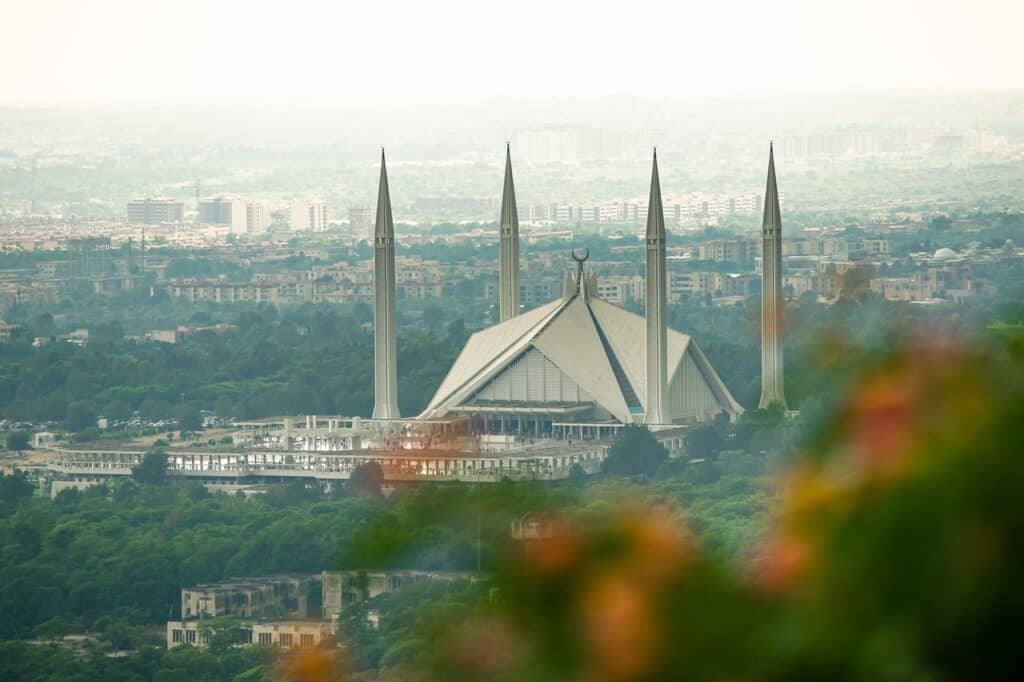
At the base of the Margalla Hills, the white triangular structure looks nothing like the Mughal mosques you’ll see elsewhere in Pakistan. Instead of domes and ornate red sandstone, the design is sharp, modern, and almost tent-like. When it was completed in 1986, it was the largest mosque in the world.
But the architecture isn’t the main reason to visit.
Come around sunset and wait for the maghrib azaan. As the call to prayer echoes across the hills, the courtyard slowly fills with worshippers while the last light hits the Margalla ridge behind the mosque.
A few practical tips:
Not sure where to go in Pakistan?
Take my quiz and get a 9–12 day route that matches how you like to travel.
Take the quiz- Walk toward the back of the mosque courtyard for the best mountain views
- Dress modestly, long pants and covered shoulders are best
- Women should bring a scarf
- Sunset is the best time to visit
2. Go hiking in Margalla Hills National Park
If there’s one reason I secretly prefer Islamabad over Lahore, it’s this: you can leave the city and be hiking in under 15 minutes.
The Margalla Hills National Park forms the green wall behind Islamabad, and the difference between city life and hillside quiet happens almost instantly. One minute you’re passing traffic circles and chai stalls, the next you’re climbing through pine forest with views stretching across Islamabad and Rawalpindi.
There are several hiking trails in the Margalla Hills, but a few are the most popular.
- Trail 3 is the classic Islamabad workout trail. It’s steep, direct, and always full of locals power-walking uphill before work. If you’re reasonably fit, you can reach the top in about 1–1.5 hours.
- Trail 5 is my personal favorite. It’s longer, greener, and quieter than Trail 3. The path winds through thicker forest and passes two small seasonal water streams where people often stop for a break. It feels much more like a nature hike than a cardio challenge.
- Trail 6 starts behind Faisal Mosque and is often overlooked. It has better tree cover than Trail 3 and eventually loops through the small hillside village of Jabri before reconnecting with the main trail network.
- Trail 2: This trail is nothing special, starting near the bottom of Pir Sohawa Road and leading to Daman-e-Koh.
- Trail 4: The least maintained of the trails, it starts near Pir Sohawa Road and joins with Trail 6 at the top. It has a viewpoint named ‘Selfie Point’ for those looking for a photo op.
Some practical tips to hike in the Margalla Hills:
- Start early in the morning, especially in summer
- Bring plenty of water
- Wear proper shoes, some sections are steep
- Try hiking on weekdays if you want fewer crowds
You’ll occasionally hear locals mention leopard sightings in the Margalla Hills. Yes, leopards do live here, but encounters are extremely rare. The more realistic safety consideration, especially for women, is avoiding isolated trails or hiking alone. I go into this in more detail in my guide on is Pakistan safe for women?
For many travelers, Islamabad is just a short stop before heading further north into the mountains. The Margalla Hills are basically a preview of what’s coming next. If you continue your trip toward Gilgit-Baltistan, the landscapes become far more dramatic.
But even if you’re only in the capital for a couple of days, hiking in the Margalla Hills is easily one of the best things to do in Islamabad.
3. Explore Saidpur Village
At the foot of the Margalla Hills, Saidpur Village feels completely different from the rest of Islamabad.
The village dates back several centuries and was once a small farming settlement. Today it’s been partially restored into a cultural complex with restaurants, courtyards, and old stone buildings climbing the hillside.
What makes Saidpur interesting isn’t just the scenery, it’s the layered history. Within the same small area you’ll find a Hindu temple, Sikh gurdwara, and mosque, reflecting the religious communities that lived here before Partition.
The central courtyard can feel a bit polished and touristy, but if you wander into the smaller streets behind it, the village becomes quieter and more atmospheric. Come in the late afternoon when the hills start cooling down and locals are sitting outside with chai.
4. Visit Lok Virsa Museum
If you want a quick crash course in Pakistan’s cultural diversity, Lok Virsa Museum is one of the best places in Islamabad to start.
Located near Shakarparian Hills, the museum showcases regional cultures from across the country, from Sindhi embroidery and Balochi jewelry to Kalash traditions and traditional truck art. Pakistan is incredibly diverse, and this museum does a good job of showing how different each region can feel.
The galleries walk you through:
- traditional clothing from different provinces
- musical instruments and folk traditions
- recreated village scenes and craft displays
Photography isn’t allowed inside, which is a little annoying, but it also forces you to actually look at the exhibits instead of rushing through.
Before leaving, stop by the Lok Virsa handicraft center, where artisans sell traditional crafts and textiles. It’s a much better place to buy souvenirs than the generic markets around the city.
5. Spend a morning at Rawal Lake
Rawal Lake sits just southeast of Islamabad and serves as one of the city’s main water reservoirs. More importantly for visitors, it’s also one of the easiest places in the capital to escape traffic and concrete.
Locals come here for picnics, boating, and long lakeside walks. Early mornings are the best time to visit, when the air is cooler and the Margalla Hills reflect softly on the water.
The area near the main parking lot can get busy and a little messy, but if you walk further along the shoreline you’ll find quieter corners where fishermen sit for hours waiting for a bite.
You can also walk part of the Lake View South Trail, which runs along the edge of the reservoir.
6. Watch sunset from the Pakistan Monument
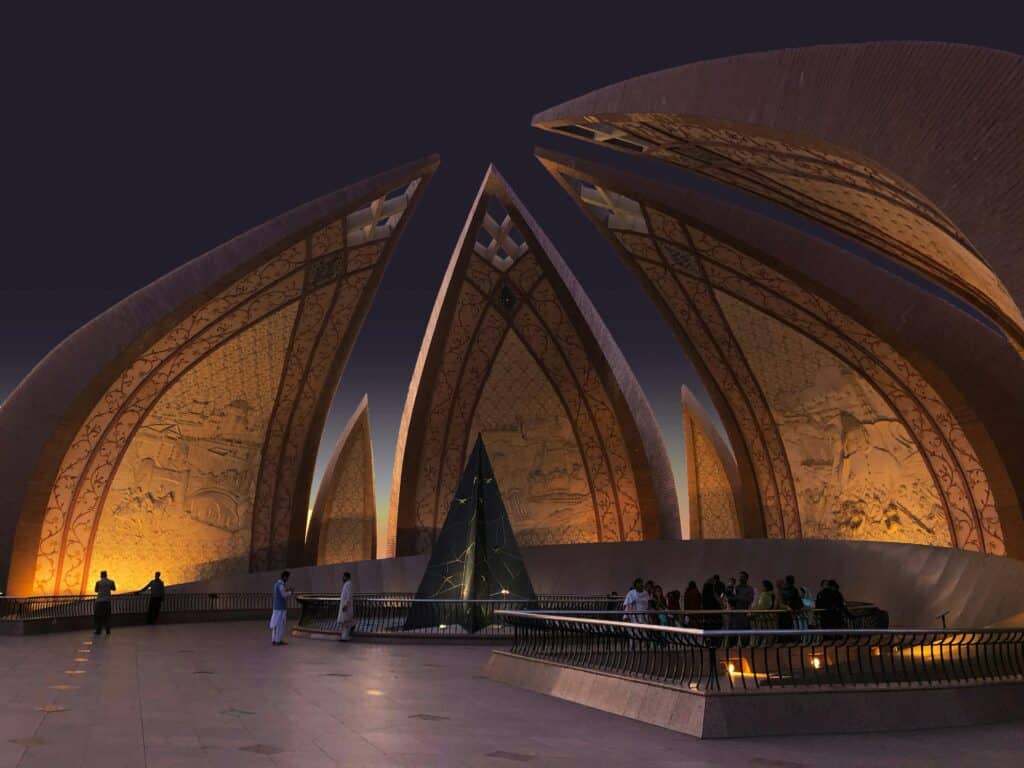
Perched above the city in Shakarparian Park, the Pakistan Monument looks like a giant stone flower opening toward the sky. The four large petals represent Pakistan’s provinces, while the smaller ones symbolize the territories.
Even if the symbolism isn’t your thing, the view alone makes the visit worthwhile.
From the top you can see Islamabad’s tidy grid stretching toward Rawalpindi, with the Margalla Hills rising behind the city. Come around sunset, when the monument lights up and locals gather on the plaza with families, snacks, and way too many selfies.Right below the monument is the Pakistan Monument Museum, which walks through the country’s history from the Indus Valley Civilization to modern Pakistan. It’s small but useful if you want some context before traveling further through the country.
7. Drive up to Daman-e-Koh
Halfway up the Margalla Hills, Daman-e-Koh is Islamabad’s classic viewpoint.
Locals drive up here in the evening to escape the heat, drink chai, and look out across the city. From the terrace you get a sweeping view of Islamabad’s grid-like layout, with Rawalpindi stretching into the distance.
It’s not exactly a secret spot, especially on weekends when the parking lot fills quickly, but the view still holds up.
You’ll also see monkeys around the viewpoint. They’re entertaining, but keep your snacks hidden unless you want to donate them.
8. Stroll Through Shakarparian National Park
Right next to the Pakistan Monument sits Shakarparian Park, a sprawling green hillside that’s perfect for a relaxed walk.
The park has wide pathways, shaded benches, and some of the best panoramic views of Islamabad. On clear days you can see all the way toward the distant hills near Murree.
What makes Shakarparian interesting is how many small landmarks are scattered through the park. You’ll find:
- viewpoints overlooking the city
- monuments gifted by different countries
- quiet corners where locals sit and watch the sunset
It’s an easy place to spend an hour wandering around after visiting the Pakistan Monument, especially in the evening when the air cools down and the city lights start to appear below.
9. Wander through Old Rawalpindi (Pindi)
Islamabad might be Pakistan’s capital, but Rawalpindi is where things feel a lot more real.
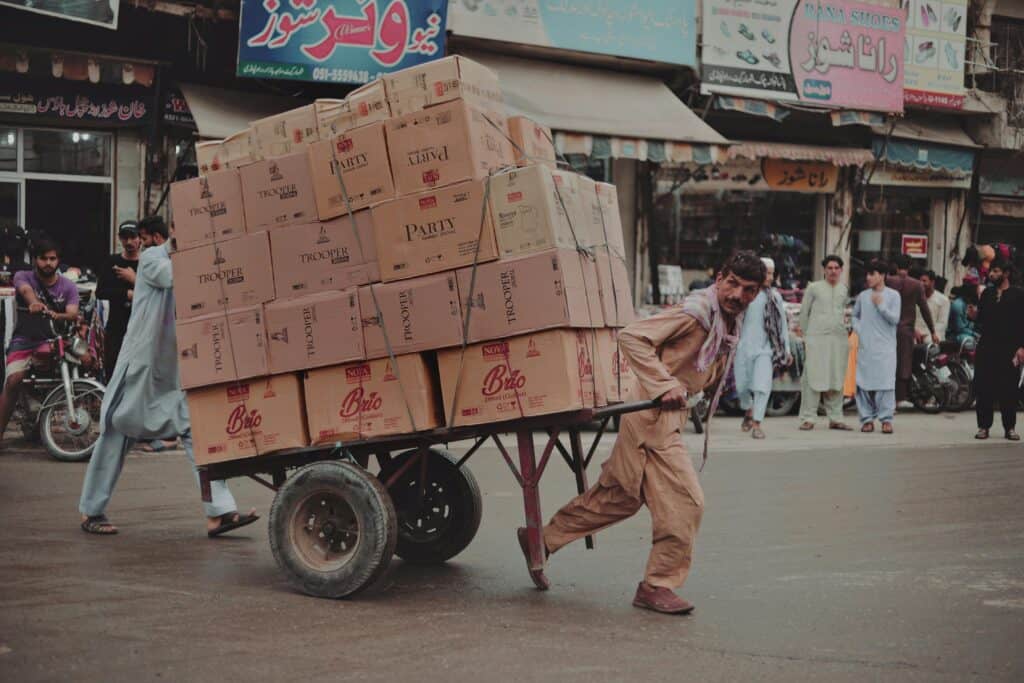
Just a short drive away, Rawalpindi (usually called Pindi by locals) is older, louder, and far less polished than Islamabad. Streets are chaotic, markets spill onto sidewalks, and the pace of life feels completely different.
The heart of the city is Raja Bazaar, a maze of narrow streets packed with shops selling everything from spices to electronics. It’s chaotic, crowded, and honestly a lot more interesting than Islamabad’s tidy sectors.
Rawalpindi also carries traces of the city that existed before Partition, when Sikhs and Hindus formed a large part of the population. Many historic buildings and old neighborhoods still reflect that layered past.
10. Visit Golra Railway Station and Museum
For something quieter and a little unusual, head to Golra Railway Station, a small historic station on the outskirts of Islamabad.
Built during the British colonial era, the station still has its original architecture and even houses a small railway museum filled with vintage locomotives, signaling equipment, and railway memorabilia.
It’s not a huge attraction, but it has a nostalgic atmosphere that’s hard to find elsewhere in the city. Old railcars sit on the tracks while a few active trains still pass through the station.
The museum itself gives a glimpse into the history of Pakistan’s railway system, which once connected major cities across the subcontinent.
If you like photography, this is a great place to visit in the late afternoon when the light hits the old train cars and station buildings. It feels like stepping into a different era compared to Islamabad’s modern layout.
11. Walk through Fatima Jinnah Park (F9 Park)
Fatima Jinnah Park, usually called F9 Park, is one of the largest parks in Islamabad and easily the city’s biggest green space.
The park covers an enormous area in Sector F-9, with walking paths, open lawns, and tree-lined sections where locals come to jog, picnic, or escape the city for a bit.
I have a lot of childhood memories here visiting my grandparents, and while the park isn’t as well maintained as it once was, it’s still one of the best places in the city to stretch your legs.The sunrise and sunset here can be surprisingly beautiful, especially when the light cuts through the trees.
12. Walk through Shah Allah Ditta Caves
On the edge of Islamabad near Sector D-12, the **Shah Allah Ditta Caves** offer a quiet glimpse into the region’s ancient past.
The sandstone caves were once used by Buddhist monks for meditation thousands of years ago. Massive banyan trees surround the area, creating a surprisingly peaceful atmosphere just outside the city.
There’s also a small village and a few cafés nearby where locals come for chai. Visit on a weekday morning if you want to experience the place without crowds. A short walk from the caves leads to old terraces and hillside viewpoints overlooking the village.
13. Try go-karting at F1 Traxx, Lake View Park
If you want something more active than sightseeing, head to **F1 Traxx** at Lake View Park.
It’s Islamabad’s main go-karting track and one of the few activities in the city that doesn’t revolve around food or hiking. The track offers two types of karts, beginner and faster GT models, and races usually last a few laps around the circuit.
It’s not Formula 1 levels of professionalism, but it’s still a fun way to spend an evening with friends.
Lake View Park also has a few other activities including paintball, small adventure courses, and seasonal zipline setups.
14. Visit Itwar Bazaar (Sunday Market)
Itwar Bazaar, Islamabad’s famous Sunday Market, is one of the best places to experience everyday local life.
The market is enormous and sells almost everything imaginable:
- fresh fruits and vegetables
- second-hand clothes
- household items
- random electronics and gadgets
Bargaining is expected, especially in the used goods sections. Even if you don’t plan on buying anything, wandering through the market is an interesting look at how locals shop.
15. Try rock climbing in the Margalla Hills
For something a little more adventurous, the **Margalla Hills** also offer several natural rock climbing routes.
Local climbing groups regularly organize trips where beginners can try climbing or rappelling on the rocky cliffs scattered throughout the hills. The views alone make the experience worthwhile.
Even if you’re not an experienced climber, guided sessions make it accessible and safe for first-timers looking to try something different in Islamabad.
16. Visit Simly Dam
About an hour outside the city, Simly Dam is one of the most peaceful escapes from Islamabad.
I hesitated to share this place because it still feels relatively quiet compared to other spots around the capital, but it’s too good to keep secret. Surrounded by green hills and calm water, the dam is a perfect place to slow down for a few hours.
There isn’t much infrastructure here, which is exactly the point. Bring snacks, water, or anything else you might need because there aren’t many shops around. People come here to hike along the hills, fish near the water, or just sit quietly and enjoy the view.
And if you’re a foreigner, this might be the perfect place to crack open a Murree beer and relax by the water… which of course I would never do myself.
17. Spend a day at Khanpur Dam
If you want something more active than a quiet lakeside afternoon, Khanpur Dam is the most popular adventure day trip from Islamabad.
About an hour from the city, the lake has become a hub for water sports and outdoor activities. Jet skis race across the bright blue water, kayakers paddle along the shoreline, and the surrounding cliffs have become famous for guided cliff-diving trips.
The landscape here feels completely different from Islamabad. Instead of pine-covered hills, Khanpur is surrounded by dry rocky mountains that make the turquoise water look almost unreal on a clear day.
Where To Stay In Islamabad
Luxury | Serena Hotel is always a safe bet. Standard higher end (by Pakistani standards) hotel with all the amenities you could need.
Mid-range/Budget | Coyote Den. While I haven’t personally stayed here, it’s run by Alex Reynolds, a fellow travel blogger whose recommendations I trust completely.
What are the best places to eat in Islamabad?
Islamabad might not be known for its food, especially if you’ve experienced the culinary scenes in Karachi or Lahore, but there are still some great spots worth trying. Here are some of my favorites:
Street Food Vendors: Burger Fest, One Way Shawarma, Red Apple (F-7 sector), TRP Roll Paratha (F-10), Melody Food Park.
Breakfast: Chai Khana, Cheema & Chatta
Restaurants: Bala Tikka (PWD), Jagangir (Saddar fish fry), Savour Foods, Haleem Ghar (Blue Area), Malang Jaan Baanu (beef pulao at Tarnol branch), Street One (cookie skillet is a must-try), New Kabul Restaurant
Cafes: Brew, Kaf, Atrio, Robert’s Coffee, Loafology, Burning Brownie, Quetta Tea and Teas
Is Islamabad worth visiting?
Yes, but not for the reasons most travelers expect. Islamabad is quieter than cities like Lahore or Karachi, but its access to the Margalla Hills and surrounding nature makes it one of the most pleasant cities in Pakistan.
How many days should you spend in Islamabad?
Most travelers spend 1–2 days in Islamabad. That’s enough time to see the major landmarks, hike in the Margalla Hills, and explore nearby places like Saidpur Village or Rawalpindi.
Does Islamabad have nightlife?
Unfortunately, no. Islamabad is pretty quiet after dark, with limited nightlife options. While I enjoy it, that’s mainly because I already have friends there. If you’re looking for vibrant nightlife, Islamabad might not be the place for you
How to Get Around Islamabad?
Ride-hailing services like Uber and Careem are your go-to options for getting around Islamabad. They’re affordable and way more convenient than trying to flag down a cab.

I have no money 😭 and it’s my dream to see all these places…