
For years, Hunza was my comfort zone. Every time I planned a trip up north, I’d find myself back in Karimabad, sipping chai with a view of Rakaposhi, convincing myself that I’d get to Skardu someday.
That day finally came – on two wheels.
The further I rode, the more the landscape shifted. Lush valleys gave way to jagged cliffs, high-altitude desert, rivers carving through rock. By the time I arrived, the mountains were closer and bigger than anything I’d seen on the KKH.
I’ve been twice now, and this list covers 20 things to do in Skardu, ranked by how strongly I’d recommend them, with a few I’d tell you to skip.
About Skardu
Located in Gilgit-Baltistan, Skardu sits in the Baltistan region, which has its own distinct culture, language, and history. Unlike Hunza, which has a mix of Wakhi and Burushaski influences, Skardu’s roots are deeply tied to Tibetan and Balti heritage. You’ll see it in the architecture, the food, and even the way people dress.
The geography here is dramatic. Skardu Valley is flanked by the Karakoram Range, home to some of the world’s highest peaks, including K2. But what makes it even more unique is the diverse terrain. In a single day, you could be:
- Standing on a cold desert with sand dunes at 7,500 feet
- Boating on turquoise alpine lakes
- Driving through Martian-like rock formations
- Climbing up ancient forts that overlook the mighty Indus River
These are ranked by how strongly I’d recommend them, not by distance or type. If you only have 3 days, focus on the first 6. If you have a week, work your way down the list.
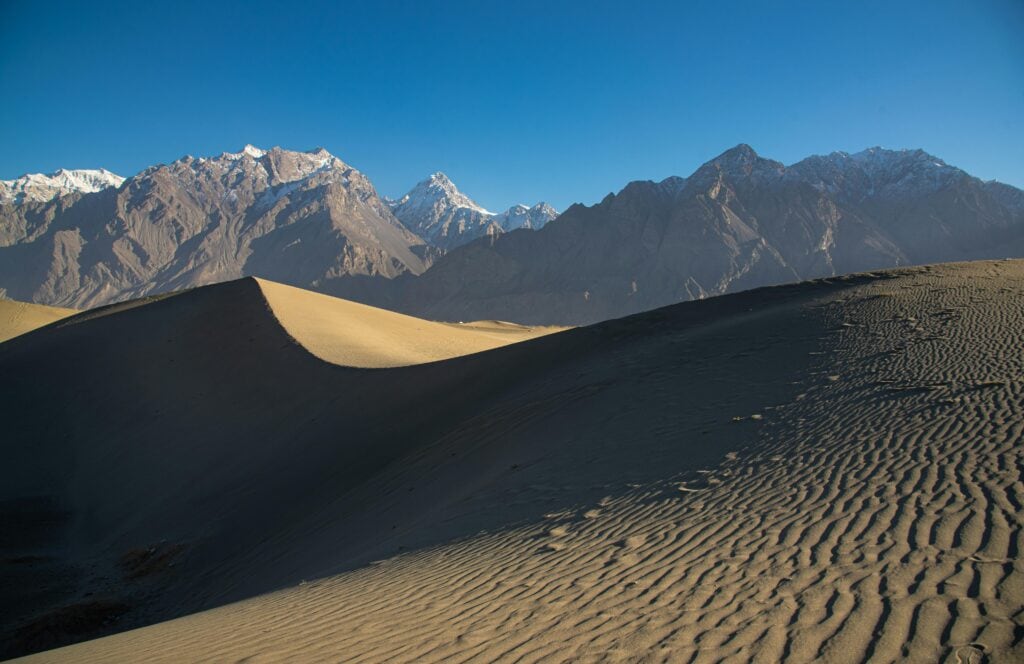
1. Sarfaranga Cold Desert
📍 15km from Skardu | ⏱ 3 hours
A desert at 7,500 feet sounds like it shouldn’t work. It does.
Sarfaranga is white sand dunes, jagged peaks, and the Shigar River all in the same frame. The first time I visited was during the Sarfaranga Jeep Rally, which meant I was surrounded by 4,000 men and a lot of revving engines. Not exactly my scene. Outside of rally season though, it’s quiet and genuinely striking.
Not sure where to go in Pakistan?
Take my quiz and get a 9–12 day route that matches how you like to travel.
Take the quizGood for jeep safaris, quad biking, and sandboarding. Sunset is the best time to go – the dunes turn golden and it’s worth hanging around for.
Geologically it’s super fascinating. The desert formed through wind erosion and glacial deposits over centuries, which is why it exists at this altitude at all.
2. Shigar Fort
📍 32km from Skardu | ⏱ 2 hours
Shigar Fort doesn’t feel like a fort. At least not in the way you’d imagine – no crumbling walls, no eerie ruins. It has wooden balconies, stone walls, quiet courtyards and is suprisingly well preserved.
Built in the 17th century by the Raja of Shigar, it sits in the heart of Shigar Valley, which is a key gateway to the Karakoram Range. Anyone heading toward K2, Broad Peak, or the Baltoro Glacier passes through here. The Aga Khan Trust restored it, and you can either stay overnight in the boutique hotel or just wander through the balconies and courtyards for a few hours.
If you follow the little paths winding around the fort, you’ll stumble into Shigar’s ancient village. Unlike Skardu, which feels more developed, this is where the old Balti way of life is still going – stone houses with tiny wooden doors, women drying apricots on rooftops, kids running barefoot through narrow alleys. Take a slow walk through, stop at a roadside teashop, and just watch life happen for a bit.
Visit around sunset if you can, and ask a local to point you toward the Shigar viewpoint. It’s unmarked but worth it – the fort, the river, and the mountains stretching into the horizon all at once.
3. Kharpocho Fort
📍 2km from Skardu | ⏱ 2 hours
Kharpocho Fort sits on a rocky hill above Skardu. Getting there means a steep climb on loose gravel – not long, but wear proper shoes and bring water.
Built in the 16th century by the Maqpon rulers, the fort itself is more weathered ruin than grand structure. The location is the whole point. Right below is Skardu’s organic forest, a rare patch of green in an otherwise rocky landscape. In spring, apricot and walnut trees bloom here and the colour hits differently against the mountains.
Take the unmarked trail behind the fort and you’ll reach a cliffside viewpoint with open views of Skardu town, the Indus River, and the surrounding peaks – without the crowd. Watch your footing on the descent, the loose stones make it easy to slip.
If you’re into Pakistan’s history, Kharpocho is one of the more underrated historical places in Pakistan.
4. Khaplu Palace
📍 103km from Skardu | ⏱ 2 hours
Khaplu Palace is a 19th-century royal residence that once belonged to the Raja of Khaplu. It’s one of the best preserved examples of Balti and Tibetan architecture you’ll find anywhere in the region.
Unlike Shigar Fort, which feels more polished, Khaplu has a quieter, more lived-in feel. Intricate wooden balconies, carved doors, sunlit courtyards. There’s a small museum inside with artifacts and photographs that give you a real sense of the region’s history.
I haven’t stayed overnight – it’s run by Serena Hotels and sits outside my budget – but even a short visit is worth it. Grab a chai at the café inside and that’s honestly enough to make the trip feel worthwhile.
5. Lower and Upper Kachura Lakes
📍 35km from Skardu | ⏱ 3 hours
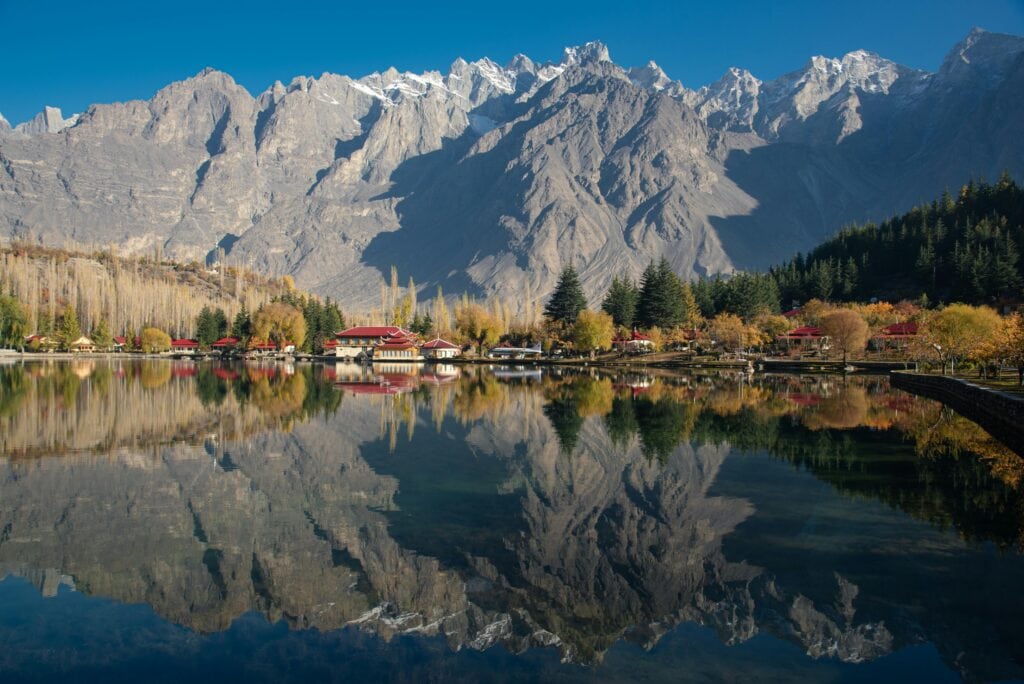
Lower Kachura Lake, better known as Shangrila Lake, is probably the most photographed spot in Skardu. The lake is beautiful, but what most people come for is Shangrila Resort – red-roofed cottages and an old crash-landed plane sitting in the middle of the property that was turned into a restaurant. It’s quirky and worth a look.
Upper Kachura is where you should actually spend your time. A 20-30 minute walk from the lower lake, it’s quieter, less commercialised, and the water is crystal clear. You can swim if you’re brave enough, the water is freezing.
If you only have time for one, go upper.
6. Deosai National Park and Sheosar Lake
📍 35km from Skardu | ⏱ Multiple days
At 4,100 meters, Deosai is the world’s second highest plateau. Rolling plains, wildflowers, complete silence apart from the wind and the occasional marmot. I’ve been twice and would go again without hesitation.
The first time was on my motorcycle trip through northern Pakistan. The second time I came in from the Astore side after doing the Rupal Face on Nanga Parbat with my brother – which means Deosai felt almost calm by comparison.
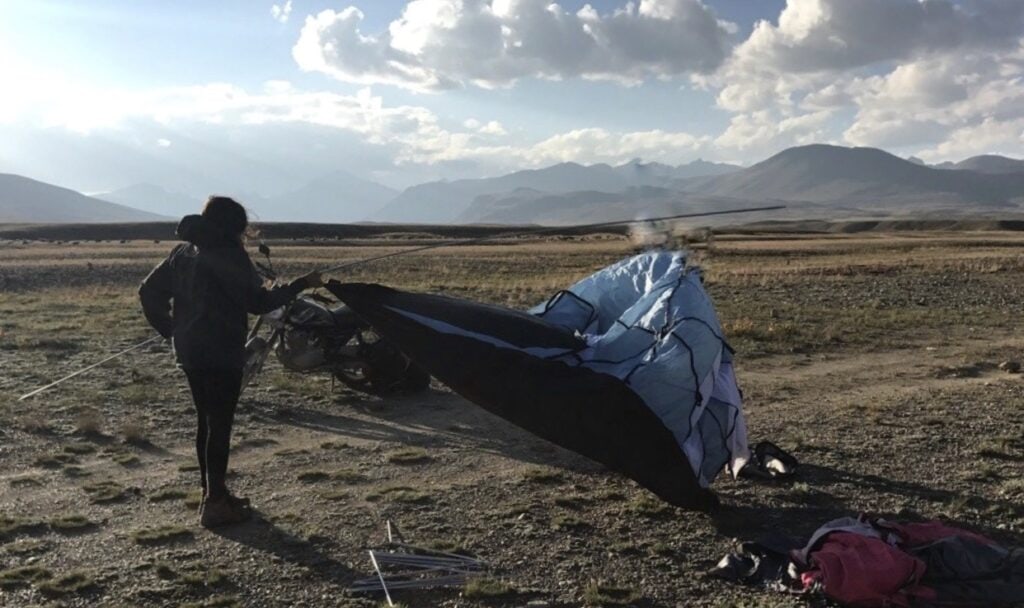
The highlight is Sheosar Lake. On a clear day you can see Nanga Parbat in the distance. The best camping spots are near Sheosar or Bara Pani where other travelers tend to gather – wandering too far out means a higher chance of running into a Himalayan brown bear, so keep that in mind.
Deosai is only accessible in summer. Don’t try to wing this one in shoulder season.
7. Katpana Desert
📍 15km from Skardu | ⏱ 1-2 hours
Katpana and Sarfaranga get confused a lot but they’re quite different experiences. Katpana is closer to town, easier to reach, and has softer, smoother dunes, better for a quiet walk than an adrenaline afternoon.
The thing that makes it unique is the snow. In winter the dunes get a layer of snowfall, which gives you this strange combination of white sand and snow that you won’t find at Sarfaranga. If you’re visiting at night, it’s also one of the best spots in Skardu for stargazing, the mountain skies are incredibly clear.
For quad biking and off-roading, go to Sarfaranga. For a quieter, more low-key visit, Katpana is the one.
8. K2 Museum
📍 4km from Skardu | ⏱ 1-2 hours
The K2 Museum isn’t flashy but it’s one of the few places in Skardu that seriously captures the region’s mountaineering history. It’s housed in a dome-shaped tent designed to resemble expedition base camps, established with help from Italian mountaineers to honour the 1954 Italian expedition that first summited K2.
Inside you’ll find climbing gear from past expeditions – battered ice axes, frostbitten gloves, oxygen tanks that have actually been to the summit. Route maps, old photographs, personal journals. There’s also a section dedicated to Balti high-altitude porters and guides, the people who made most of these ascents possible and rarely get the credit.
K2 doesn’t get anywhere near Everest’s traffic. It’s steeper, deadlier, and far less forgiving. Standing in front of gear that survived some of K2’s worst storms puts that into perspective pretty quickly.
9. Manthoka Waterfall
📍 80km from Skardu | ⏱ 1-2 hours
At 55 meters, Manthoka is impressive on paper. In person it’s fine, but I’d be doing you a disservice if I hyped it up too much.
The area has been developed with food stalls and picnic spots, which takes away from any sense of wild beauty you might be expecting. The drive there is scenic and the sound of the rushing water makes for a decent break from Skardu’s dry landscapes. Grab a chai, stretch your legs, enjoy the mist.
If you’re short on time, this isn’t the one to prioritise.
10. Sadpara Lake
📍 8km from Skardu | ⏱ 1-2 hours
Sadpara Lake doesn’t get much attention compared to Deosai or Kachura, and honestly that’s part of its appeal. The dusty brown mountains surrounding deep blue water give it a stark, almost severe look that’s quite different from the postcard lakes further out.
It also supplies water to Skardu, so it functions more as infrastructure than tourist attraction – which means it’s never overcrowded. Good spot if you want somewhere quiet to sit and take in the landscape without much effort.
11. Manthal Buddha Rock 📍
3km from Skardu | ⏱ 30 minutes
Just outside town, Manthal Buddha Rock is an 8th-century carving-— weathered but detailed enough to make out the figure of Buddha surrounded by smaller figures.
If ancient rock carvings aren’t your thing, you’ll be done in 5 minutes. But historically it’s significant. Before Islam reached Baltistan, this area had deep Buddhist roots and this rock is one of the few pieces of evidence still standing. Worth a short detour if you’re into history. If not, you won’t feel like you missed anything.
12. Masrur Rock
📍 7km from Skardu | ⏱ 30 minutes
Another ancient rock carving, but between this and Manthal Buddha Rock, Manthal wins. The carvings here are less distinct and unless you have a serious interest in ancient inscriptions it won’t hold your attention for long.
If you’re already in the area, sure. If not, skip it and use the time elsewhere.
13. Saling
📍 58km from Skardu | ⏱ Full day
I first passed through Saling on my way to K6/K7 Base Camp and it stuck with me despite not planning to stop long. Small village, green pastures, traditional Balti houses, a suspension bridge stretching across the Shyok River. The kind of place where nothing much happens — and that’s exactly the point.
It’s not a destination in itself but if you’re already heading toward Hushe Valley, slow down here. Farmers tending fields, kids herding goats, birds you won’t spot anywhere else in the region. If you like places that feel genuinely untouched, it’s worth the stop.
14. Basho Valley
📍 50km from Skardu | ⏱ Full day/Camping
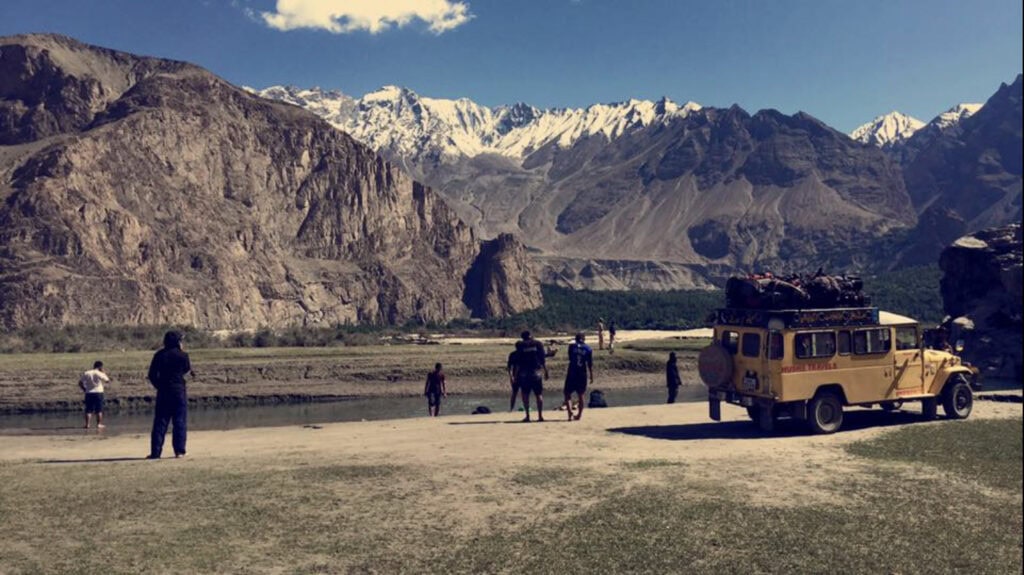
I haven’t personally been to Basho Valley but everyone I know who has raves about it. Meadows, pine forests, rivers weaving through the valley — it’s a quieter alternative to Deosai with a completely different feel.
People usually visit for camping, short hikes, and photography. Even a day trip is worth it if you’re looking for a scenic escape from Skardu’s drier landscapes. If you’ve been to Fairy Meadows, think of Basho as its less visited cousin — just as beautiful, with fewer people.
15. Nansoq Organic Village
📍 3km from Skardu | ⏱ 1-2 hours
Nansoq is one of Pakistan’s first organic farming communities, tucked into Soq Valley just outside Skardu. The trek there is short but it genuinely feels like a different pace of life.
No developments, no noise. Simple Balti homes, fields of vegetables, locals doing things the way they’ve always been done. If you visit at the right time of year you might get fresh apricots or homemade butter straight from source.
Walk through slowly, talk to people if you can. It’s not a tourist attraction — it’s just a village — and that’s exactly what makes it worth visiting.
16. Skardu Bazaar
📍 Town centre | ⏱ 1-2 hours
Skardu Bazaar is chaotic, dusty, and full of life. The main street is lined with shops selling everything from hiking gear to dried apricots. If you want a souvenir, your best bet is handwoven Balti carpets, traditional caps, or gemstones – though unless you know your stones, you’re probably getting ripped off.
The dried fruit is legit though. Stock up before heading back.
If you’re hungry, look for street stalls selling Balti-style momos. Skip the empty ones and go wherever locals are eating, that’s your best indicator.
17. Chaqqan Mosque
📍 103km from Skardu | ⏱ 30 minutes
I haven’t been to Chaqqan Mosque personally, but it’s one of the oldest in the region, dating back around 400 years. Simple stone and wood construction, intricate wood carvings, hand-painted calligraphy — it’s a good example of traditional Balti-Islamic architecture that you don’t see much of elsewhere in Pakistan.
It’s still an active place of worship so be mindful of prayer times and dress modestly if you visit.
Worth going out of your way for? Probably not unless you’re specifically into architecture or history. But if you’re already heading toward Khaplu, it’s a reasonable stop.
18. Hushe Valley
📍 140km from Skardu | ⏱ Multiple days
If you’re heading further into the mountains, Hushe Valley is Baltistan’s serious mountaineering hub – a jumping off point for expeditions to Masherbrum, K7, Laila Peak, and K2 via the Gondogoro La trek.
Unlike some of the more accessible valleys near Skardu, Hushe still feels genuinely remote. Rough roads, simple villages, and mountains that are just massive. If you’re into trekking this is one of the best bases in the region, whether it’s a short hike to Honbrok or something more committing like Spantik Base Camp.
If you’re not trekking, the 8-hour drive from Skardu is a lot to justify on scenery alone.
19. Rama Lake
📍 138km from Skardu | ⏱ Full day / Multiple days
Rama Lake wasn’t even on my itinerary – I ended up there because I had extra days and no plan. Turned out to be one of the best surprises of the trip.
The lake sits at 3,353 meters, surrounded by forest and alpine meadows, with a clear view of Nanga Parbat on a good day. The trek up is easy, more of a nature walk than a serious hike, and the scenery shifts from dense pine forest to open meadow as you climb.
If you’re already heading toward Astore, this is 100% worth the stop.
14. Basho Valley
📍 50km from Skardu | ⏱ Full day/Camping
I haven’t personally been to Basho Valley but everyone I know who has raves about it. Meadows, pine forests, rivers weaving through the valley — it’s a quieter alternative to Deosai with a completely different feel.
People usually visit for camping, short hikes, and photography. Even a day trip is worth it if you’re looking for a scenic escape from Skardu’s drier landscapes. If you’ve been to Fairy Meadows, think of Basho as its less visited cousin — just as beautiful, with fewer people.
15. Nansoq Organic Village
📍 3km from Skardu | ⏱ 1-2 hours
Nansoq is one of Pakistan’s first organic farming communities, tucked into Soq Valley just outside Skardu. The trek there is short but it genuinely feels like a different pace of life.
No developments, no noise. Simple Balti homes, fields of vegetables, locals doing things the way they’ve always been done. If you visit at the right time of year you might get fresh apricots or homemade butter straight from source.
Walk through slowly, talk to people if you can. It’s not a tourist attraction — it’s just a village — and that’s exactly what makes it worth visiting.
16. Skardu Bazaar
📍 Town centre | ⏱ 1-2 hours
Skardu Bazaar is chaotic, dusty, and full of life. The main street is lined with shops selling everything from hiking gear to dried apricots. If you want a souvenir, your best bet is handwoven Balti carpets, traditional caps, or gemstones – though unless you know your stones, you’re probably getting ripped off.
The dried fruit is legit though. Stock up before heading back.
If you’re hungry, look for street stalls selling Balti-style momos. Skip the empty ones and go wherever locals are eating, that’s your best indicator.
17. Chaqqan Mosque
📍 103km from Skardu | ⏱ 30 minutes
I haven’t been to Chaqqan Mosque personally, but it’s one of the oldest in the region, dating back around 400 years. Simple stone and wood construction, intricate wood carvings, hand-painted calligraphy — it’s a good example of traditional Balti-Islamic architecture that you don’t see much of elsewhere in Pakistan.
It’s still an active place of worship so be mindful of prayer times and dress modestly if you visit.
Worth going out of your way for? Probably not unless you’re specifically into architecture or history. But if you’re already heading toward Khaplu, it’s a reasonable stop.
18. Hushe Valley
📍 140km from Skardu | ⏱ Multiple days
If you’re heading further into the mountains, Hushe Valley is Baltistan’s serious mountaineering hub – a jumping off point for expeditions to Masherbrum, K7, Laila Peak, and K2 via the Gondogoro La trek.
Unlike some of the more accessible valleys near Skardu, Hushe still feels genuinely remote. Rough roads, simple villages, and mountains that are just massive. If you’re into trekking this is one of the best bases in the region, whether it’s a short hike to Honbrok or something more committing like Spantik Base Camp.
If you’re not trekking, the 8-hour drive from Skardu is a lot to justify on scenery alone.
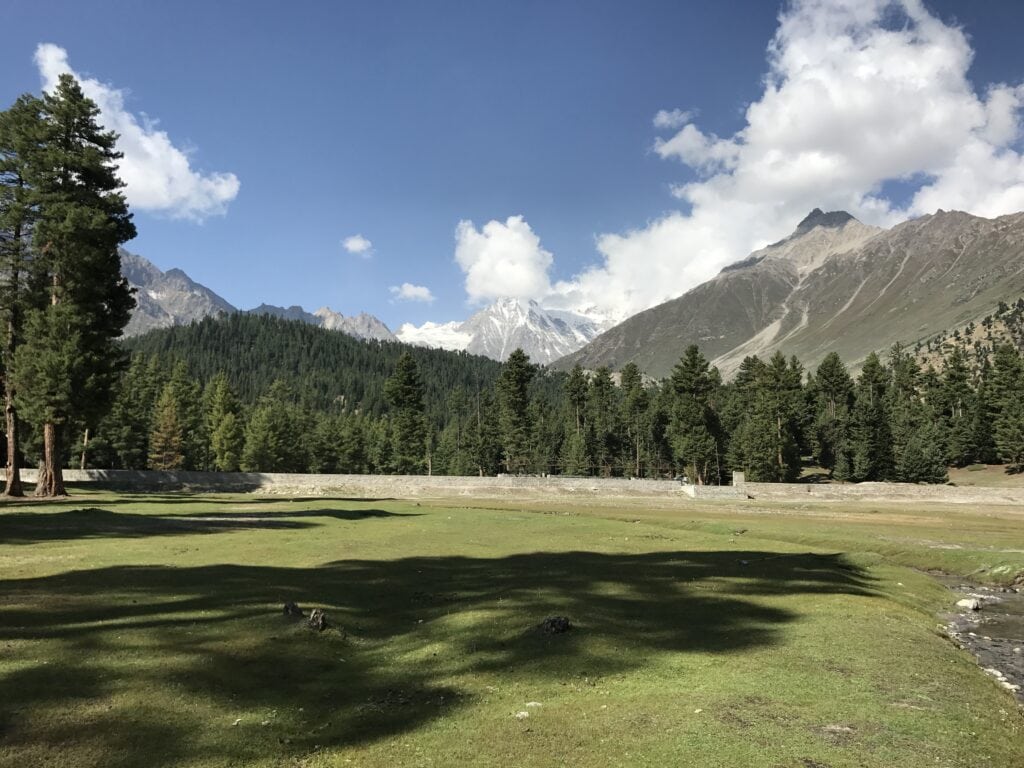
19. Rama Meadows
📍 138km from Skardu | ⏱ Full day / Multiple days
Rama Lake wasn’t even on my itinerary – I ended up there because I had extra days and no plan. Turned out to be one of the best surprises of the trip.
The lake sits at 3,353 meters, surrounded by forest and alpine meadows, with a clear view of Nanga Parbat on a good day. The trek up is easy, more of a nature walk than a serious hike, and the scenery shifts from dense pine forest to open meadow as you climb.
If you’re already heading toward Astore, this is 100% worth the stop.
20. Mosque Sofia Noorbaksia Gharbonchong
📍 2km from Skardu | ⏱ 30 minutes
Haven’t been inside this one either, but it comes up enough to mention. It’s connected to the Noorbakshia Sufi order, which has a strong presence in Baltistan, and architecturally it sits somewhere between Tibetan and Persian influence – quite different from mosques you’d see elsewhere in Pakistan.
Active place of worship, so dress accordingly and check prayer times before you show up.
Where To Stay In Skardu
Skardu has options across every budget – from a restored 17th-century fort to a solid mid-range hotel in the centre of town. Here’s what I’d recommend.
Serena Shigar Fort | A restored 17th-century fort turned boutique hotel, run. Carved wooden balconies, stone courtyards and mountain views, if you’re going to splurge once on this trip, this is the place to do it.
Khaplu Palace | A 19th-century royal residence turned heritage hotel, also run by Serena. Intricate woodwork, traditional Balti architecture, and a setting that feels genuinely removed from the rest of the world. If Shigar Fort is booked out, this is your next call.
Baltistan Fort Skardu | Centrally located and the most practical base if you’re planning to cover a lot of ground. Good access to the bazaar, easy to get in and out of town, and solid value for the price.
How to Get to Skardu
There are two ways in – air or road. Which one makes sense depends on your time and your tolerance for long drives.
By Air
The quickest option is a direct flight from Islamabad to Skardu on PIA, which takes about 45 minutes. If you get a window seat on the right side, you’ll see Nanga Parbat up close – genuinely one of the best things you can see from a plane window.
The catch is reliability. Skardu’s airport is surrounded by mountains, so flights are heavily weather-dependent. Delays and cancellations are common. If you’re flying in, build buffer days into your schedule and don’t book anything time-sensitive right after landing.
By Road
Driving from Islamabad to Skardu takes 20-22 hours and follows the Karakoram Highway – one of the highest paved roads in the world. The route winds through deep valleys, alongside rivers, and past snow-capped peaks. It’s long but the scenery makes it bearable.
You have two options:
Rent a 4×4 if you want flexibility — you can stop at Chilas, Jaglot, and Deosai on the way. NATCO also runs regular buses from Islamabad to Skardu if you’re on a budget, though it’s a long and tiring ride.
Check road conditions before you leave. Landslides and snowfall can make certain stretches impassable with no warning.
If this is your first time visiting, I’d recommend reading my complete guide to planning your first trip to Pakistan before you book anything.
🧭 Exploring more of Pakistan?
Check out my guides to things to do in Hunza Valley and things to do in Lahore – two very different sides of the country, both worth your time.
Best Time to Visit Skardu
Skip winter. Seriously. Infrastructure isn’t great, heating is a struggle, road closures are common, and half the places on this list will be shut. Unless you have a very specific reason to be there in the cold, don’t do it.
For hiking and exploring, summer (June-September) is the sweet spot. Trails are open, lakes are at their best, and the weather is actually manageable. Spring (April-May) and autumn (October) are solid alternatives — wildflowers in spring, golden landscapes in autumn, and noticeably fewer people either way.
If skiing is what you’re after, Rattu is where you want to be (close to Astore). But Skardu in winter is just a lot of shivering and closed attractions.
Practical Tips for Visiting Skardu
A few things worth knowing before you go.
- Altitude: Skardu sits significantly higher than most people are used to, and altitude sickness is real. Take it easy on your first day, stay hydrated, and if you know you struggle with altitude, bring medication.
- Wildlife: If you’re camping in Deosai, store your food properly. Himalayan brown bears are out there and they’re not shy.
- Connectivity: Internet is hit or miss. Zong and Telenor work best but even then, don’t expect reliable service. Download offline maps before you arrive.
- Language: Urdu is widely spoken but a few Balti phrases go a long way. English is understood in most tourist areas.
- Respect local culture: Dress modestly, especially in villages and religious sites. If you’re traveling as a woman and have questions about safety, I’ve written a full guide on what it’s actually like to travel Pakistan as a woman.
- Tipping: Not mandatory but if someone goes out of their way for you, a small tip is always appreciated.
- Packing: Skardu’s weather is unpredictable. Warm sunny days, freezing nights, and the occasional surprise storm — sometimes all in one trip. Layers are your best bet. Good shoes are non-negotiable.
⛺️ I’ve put together my full backpacking gear list here if you want to see everything I carry. You can also browse it in my Amazon storefront.
Planning Your Skardu Trip
Skardu rewards the people who don’t rush it. The non-negotiables – Deosai, Upper Kachura, Shigar Fort, Sarfaranga – are non-negotiables for a reason. But honestly, some of my best memories from both trips were the unplanned ones. Ending up at Rama Lake because I had an extra day. Slowing down in Saling when I was just passing through.
Go with a loose plan and room to wander.
If you’re still in the early stages of figuring out the logistics – permits, routes, what to expect – my guide to planning your first trip to Pakistan covers all of it. And if you want to read about the trip where everything that could go wrong did, that’s here.
Drop any questions in the comments, I’m happy to help you plan it out!

Thanks for your detailed insight on the must see places, Hira. My Argentinian friend and I are headed to Skardu for a couple days and now we know the places we mustn’t miss.
Than you Fahd, that truly means a lot! I hope you and your friend have a great time. 🙂