
I moved to Toronto in early 2025, but I knew this city long before I called it home. Over the years, I’ve stayed all over – couch-hopping downtown near Dundas Square, living midtown during a sublet, spending weekends in Oakville, and now settling in the West End. I’ve experienced Toronto as both a visitor and a local, and I can tell you with full honesty: where you stay in Toronto makes or breaks your trip.
Toronto can be tricky. The map looks simple, but getting around isn’t always. A short ride often turns into a long one, especially if you’re not near a subway line. The right location can save you hours a day and the wrong one can make your trip feel like a commute.
This guide breaks down Toronto’s neighborhoods so you can choose the one that fits your trip. I’ve included real pros and cons, based on actually living here, plus hotel picks you can book directly. Whether it’s your first visit or your second, this should help you make the most of it.
How Toronto Is Laid Out (And Why It Matters)
Toronto is a big, spread-out city. Most neighborhoods fall into four broad zones: Downtown, Midtown, the West End, and the East End. These aren’t official boundaries, but they matter when it comes to transit, vibe, and how much time you’ll spend getting around.
Downtown is where most first-timers land. It’s packed with attractions, major hotels, and office towers. It’s walkable and dense, but also polished, pricey, and sometimes a bit soulless unless you know where to look.
Midtown sits north of downtown and feels more residential. You can find quiet side streets, independent bookstores, and clusters of low-rise apartment buildings. It’s not touristy, but it’s well-connected and laid-back – good if you want access without the noise.
The West End is where much of the city’s creative energy lives. Neighborhoods like Queen West, Roncesvalles, and Ossington are full of indie cafés, live music, and vintage shops. It’s hip, but in a lived-in way – popular with artists, young professionals, and longtime locals.
The East End has a slower, brunchier vibe. Leslieville, Riverside, and the Danforth are full of families, leafy parks, and solid Greek food. Fewer tourists come this way, but it’s still well worth a stay especially if you’re not in a rush.
The GTA (Greater Toronto Area) sprawls out far beyond this. Places like Mississauga, Vaughan, and Oakville are technically part of the region but for the purposes of this guide, we’re focused on Toronto proper. (We’ll get into why that matters later.)
Getting Around Toronto (The Not-So-Glamorous Truth)
Toronto isn’t a city where you want to rely on your car. Traffic is brutal, parking is expensive, and even locals will tell you they avoid driving downtown unless absolutely necessary.
Public transit exists, but it’s limited. The TTC (Toronto Transit Commission) runs a subway system with just two major lines that matter:
- Line 1 (Yonge-University) runs north–south in a U-shape
- Line 2 (Bloor-Danforth) runs east–west across the city
Everything else is a mix of streetcars (what locals call trams) and buses – slower, surface-level, and prone to delays. If your hotel isn’t near Line 1 or 2, expect long travel times.
You’ll also hear about the UPExpress, a fast train from Union Station to Pearson Airport. It’s clean, reliable, and worth using but it doesn’t serve airport hotels.
If you’re staying way out, the GO Transit system connects suburbs like Mississauga and Vaughan to downtown but service can be infrequent and expensive, and it won’t save you from long commute times.Parking Tip: If you must drive, check Green P or Parkopedia for real-time rates and locations. Most downtown hotels charge $40–60/day to park.
Best Neighborhoods to Stay in Toronto (with Hotel Picks)
Downtown Core / Entertainment District
Best for: First-timers who want everything at their doorstep
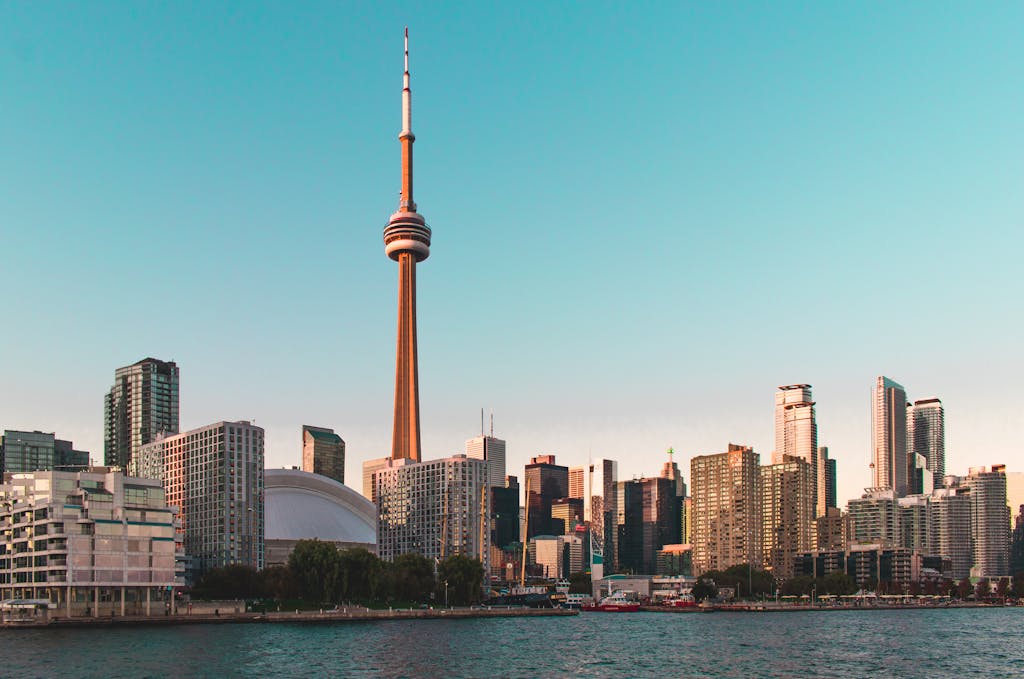
Includes: CN Tower, Union Station, Rogers Centre, King West
If it’s your first time in Toronto and you want to be walking distance from the “big stuff,” this is the obvious pick. You’re close to museums, concerts, sports games, and the lake and the subway, streetcars, and UPExpress all pass through here.
But here’s the thing: this isn’t really what Toronto feels like.
It’s skyscrapers, suits, and chain cafés. Once the 9–5 crowd clears out, it goes quiet, unless you’re clubbing on King West. Locals rarely hang here unless there’s an event. It’s clean and convenient, but it’s not where the city’s personality lives.Still, if you’re short on time or just want the easiest base, it works. You’ll get where you need to go, fast and you can always balance it out by checking out some of the free, more local-feeling things to do elsewhere in the city.
Where to stay in Downtown Toronto
Ritz-Carlton Toronto | If you want five-star everything and don’t care about price, this is as sleek and central as it gets.
Shangri-La Toronto | Sophisticated, stylish, and close to both action and the arts.
Novotel Toronto Centre | More affordable than most downtown options – still walkable to major attractions.
Queen West / Chinatown / Kensington Market
Best for: Foodies, creatives, and people who stay out late
Includes: Eclectic shops, street food, graffiti alleys, quirky cafés
This stretch of the city is where Toronto actually feels alive. Queen West is home to vintage shops, indie galleries, and late-night eats; Chinatown is always buzzing (and one of the best places to eat on a budget); and Kensington Market is a pocket of pure character – slightly chaotic, always colorful, and never boring.
Kensington is also one of my favorite places to walk. It’s low-rise, pedestrian-friendly, and once a month they close it to cars entirely for Pedestrian Sunday. If you want to soak up street life, taste your way through different cultures, and end the night somewhere with a live DJ or good tacos, this is the place. Just west of here, you’ll wander into Little Italy and Little Portugal – quieter, more residential stretches where you’ll find espresso bars, trattorias, bakeries, and some of the best low-key patios in the city.
Where to stay in Queen West
Cozy 2 Bedroom 2 Bathroom with Parking | Great for families or longer stays – walkable to UofT, Queen’s Park, and the ROM.
The Drake Hotel | A hipster icon that doubles as a nightlife venue – artsy, loud, and unapologetically cool.
Planet Traveler Hostel | Hostels get a bad rap, but this one’s clean, social, and in the perfect spot for budget travelers who want to walk everywhere.
Yorkville & The Annex
Best for: Luxury, boutiques, and leafy café mornings
Includes: Designer shops, galleries, indie bookstores, Bloor Street
Yorkville and The Annex sit side by side, but feel like two different worlds. Yorkville is where money lives – polished sidewalks, luxury brands, and the kind of condos I’d need this blog to go really viral to afford. It’s quiet in that manicured, high-end way: think Tesla SUVs and tiny dogs in handbags.
A few blocks west, the Annex slows down. There’s still money, but it’s more old books than old money. You’ll find century homes, students from UofT, café patios, and one of the best bagel spots in town. It feels thoughtful – almost introverted – with a real neighborhood rhythm.
Together, they make a great base: walkable, safe, and well-connected on Line 1. Yorkville’s fancy but sterile after dark; the Annex can be sleepy. But if you want tree-lined streets and a café where the barista knows your order, this is where to go.
Where to stay in Yorkville & The Annex
Four Seasons Hotel Toronto | The gold standard for luxury in Toronto.
Kimpton Saint George | Boutique vibes with thoughtful design.
The Madison Manor | Like staying at your grandparents’ place, in a good way – cozy, creaky, and full of charm.
Harbourfront & Waterfront
Best for: Lake views, ferry access, and a quieter downtown base
Includes: Queens Quay, Harbourfront Centre, Toronto Islands ferry terminal
If you love being near water, this is as close as Toronto gets. The Harbourfront runs along Lake Ontario and gives you front-row seats to sailboats, skyline views, and morning walks by the water. In the summer, it’s lively – with food trucks, outdoor concerts, and quick ferry rides to the Toronto Islands. In the winter though, it slows to a crawl.
I used to think I wanted to live here – and then I realized it’s beautiful, but not built for real life. It’s mostly condos, corporate towers, and big-box hotels. There’s no subway line (which is a pain), and the neighborhood doesn’t really have a local rhythm. But as a visitor, it can work. Especially if you want fresh air, lake views, and to be just a short walk from Union Station.
Where to stay in Harbourfront & Waterfront
Westin Harbour Castle | Great views, solid amenities, a classic pick if you want to be by the lake.
Waterfront Queens Quay West Apartment | Feels more like a condo than a hotel – ideal if you’re staying a while or want your own kitchen.
Delta Suites Toronto | Modern serviced apartments with CN Tower views and space to spread out – great for longer stays.
West End
Best for: Slow travelers, digital nomads, families with strollers
Includes: High Park, Bloor West Village, Roncesvalles, The Junction
This is where I live and I wouldn’t trade it for anything. These neighborhoods make up the old western spine of Toronto, and they still feel like the city before it got glassy. The Junction gets its name from its rail history – it was once a separate town where multiple lines met, and it still has that brick-and-beam, slightly industrial vibe that hasn’t been polished out.
Roncesvalles (or “Roncey”) is all leafy streets and Polish bakeries, Bloor West is suburban calm with a European twist, and High Park is our version of Central Park – especially stunning in the fall. A little further south, Liberty Village has become a hub for tech workers, dog strollers, and smoothie bars – and while it can feel a bit too manicured, it puts you within walking distance of one of my favorite places in the city: Trinity Bellwoods Park, ideal for people-watching or sipping something cold from Bellwoods Brewery nearby. If you’ve got time, this whole part of town is one of the best places to feel the real Toronto life.
Where to stay in West End
Homestay Experiences | A relaxed, local-feeling guesthouse — ideal for travelers who want to feel like they’re actually living here.
Queen Loft in Nature | Private, quiet, and surrounded by green — a cozy stay with a balcony and work desk for longer visits.
This part of town leans heavily toward Airbnbs and guest suites. If you’re looking for hotel-style amenities, you might want to stay elsewhere and just come here for the vibe.
Leslieville, Riverside & East End
Best for: Brunch lovers, second-time visitors, and anyone who hates crowds
Includes: Leslieville, Riverside, The Beaches, parts of East Chinatown and Cabbagetown
Let’s be real: if it’s your first or second time in Toronto, this isn’t where I’d stay.
It’s charming and full of cafés, boutiques, indie bakeries, and low-rise houses with front porch swings but it’s not well-connected. The subway doesn’t reach here. You’re stuck with the streetcar (which locals do use, but mostly with gritted teeth). It’s lovely for a wander or a weekend brunch, but if you’re trying to see Toronto’s biggest sights, you’ll waste time getting back and forth.
That said, if you’ve already done the CN Tower and museum circuit and want a neighborhood that actually feels lived-in, this could be a quiet win. The Beaches are nearby, Cabbagetown has Victorian charm, and the vibe is generally more stroller than selfie stick.
Where to stay in Leslieville / East End
The Broadview Hotel | Historic facade, rooftop bar, and one of the only stylish hotel options this far east — it’s a local favorite for a reason.
There aren’t a lot of traditional hotels in this part of town. If you’re set on staying here, Airbnb or a short-term rental is probably your best bet.
Midtown (Yonge & Eglinton / Davisville / Summerhill)
Best for: Longer stays, second-time visitors, or those with family in the city
Includes: Yonge & Eglinton, Davisville, Summerhill, bits of Forest Hill
Midtown sits in that in-between zone: not quite downtown, not quite the suburbs. It’s residential, clean, and very liveable but that also means it’s not particularly exciting. This is the part of town where people go to live, not necessarily to explore.
That said, if you’re here for a while or visiting someone nearby, it’s a convenient base. You’re right on Line 1, with easy access both north and south, and the new Eglinton Crosstown line (when it finally works) should make east-west travel easier too.
There aren’t a ton of hotels here, and the vibe leans more home stay than boutique.
Where to stay in Midtown Toronto
Suite in Forest Hill | Private guesthouse near Casa Loma — roomy, relaxed, and ideal if you want your own kitchen.
Toronto Midtown Home Suites | A solid home base for longer stays — not flashy, but practical and well-located.
Where Not To Stay (Unless You’ve Got a Good Reason)
If you’re trying to actually see Toronto and not just say you were near it, avoid booking way out in the suburbs. Here’s the deal:
- Etobicoke / Scarborough – Technically part of Toronto, but poorly served by transit. You’ll spend more time getting places than actually being in them.
- Oakville, Vaughan, Mississauga – These are not Toronto. They’re part of the GTA (Greater Toronto Area), which sounds nice until you’re stuck in GO Train limbo.
- Vaughan Metropolitan Centre – Yes, the subway technically goes there. But it’s 45+ minutes from downtown on a good day.
- Kipling / Cloverdale Mall area – Could work if you’re on a strict budget, but expect to transfer twice and lose your will to live before reaching anything central.
⛰️ If you’re coming to Canada for nature, start somewhere else
Toronto is a great city break but it isn’t where you come for wild landscapes or big outdoor adventures. If hiking, road trips, and rugged coastlines are higher on your list, you’ll find much better options out east (or west).
You can read this guide of my favourite hike in Canada, or plan a scenic road trip through Newfoundland’s. And if you’d rather mix city life with easy access to nature, there are plenty of ideas in this post about outdoor-friendly things to do around St. John’s.
What to Consider When Picking a Hotel in Toronto
- Parking isn’t free – Most downtown hotels charge $40–$60/day. If you’re driving, use Green P or Parkopedia to scout your options.
- Transit access matters – Prioritize staying near Line 1 or Line 2 on the TTC. Everything else is slower and less reliable.
- Season counts – A lakefront room sounds great… until it’s February and you’re walking into the wind tunnel off Lake Ontario.
- Match your location to your purpose – Want to explore nonstop? Stay central. Here to relax or work remotely? Pick a quieter neighborhood and settle in.
TLDR: Match the Neighborhood to Your Trip
| Want… | Stay in… |
|---|---|
| To walk to major attractions | Downtown Core – central, convenient, a bit soulless |
| A food scene with real personality | Queen West / Kensington – eclectic, gritty, unforgettable |
| Luxury shopping + quiet nights | Yorkville – polished, posh, and very Prada |
| Brunch and local cafés | Annex or Leslieville – slower pace, real neighborhood vibes |
| Lake views and ferry access | Harbourfront – scenic in summer, bleak in winter |
| A base near family or for long stays | Midtown – practical, quiet, not much “vibe” |
| To feel like a local | Bloor West / Roncesvalles / The Junction – chill, leafy, lived-in |
| To party or work remote | Liberty Village – shiny condos, tech bros, nightlife |
| A budget-friendly place with access | Anywhere on Line 2 (Bloor–Danforth) – easy TTC access without the price tag |
So… where would I stay?
If I were booking a trip to Toronto tomorrow, I’d pick Queen West. It’s got energy, edge, and just enough chaos to feel like the real city, plus you’re never more than a few minutes from good food, good coffee, and a weird vintage shop.
That said, there’s no single “best” neighborhood. Where you stay should match your priorities: walking distance vs. quiet nights, lake views vs. local flavor. Hopefully this guide helped you figure that out.Once you’ve locked in your base, it’s time to figure out what to do. I’ve put together a whole list of free, local-approved ways to explore Toronto – whether you’re into architecture, food, or just aimless wandering, it’s a great place to start.
