
Phnom Penh doesn’t always make the top of people’s Southeast Asia lists. Most travelers breeze through on the way to Siem Reap, spend two days ticking off the Killing Fields and the Royal Palace, and leave before they’ve actually felt the city.
That’s a shame. Phnom Penh is one of the most historically layered capitals in the region – a city that survived near-total erasure under the Khmer Rouge and rebuilt itself into something genuinely alive. The riverfront at sunset, the chaos of the markets, French colonial architecture next to modern high-rises. It’s a lot to take in. In a good way.
Where you stay will shape everything here. The neighborhoods feel distinct, distances add up fast in traffic, and the difference between a good trip and a frustrating one often comes down to your base.
This guide breaks down the best areas to stay in Phnom Penh – what each feels like, who it suits, and where to book.
Getting Your Bearings in Phnom Penh
Phnom Penh sits at the confluence of three rivers – the Mekong, the Tonle Sap, and the Bassac – and the city fans out westward from that riverfront. It sounds compact. In traffic, it rarely feels that way.
The neighborhoods visitors actually care about cluster into a rough north-to-south line through the center. Understanding how they relate to each other saves you from booking somewhere that looks fine on a map and feels inconvenient every single day.
Riverside & Daun Penh is the historic and tourist heart. Sisowath Quay runs along the water for about 3 kilometers – Royal Palace, National Museum, night market, sunset cruise boats, bars spilling onto the street. It’s where most first-timers land and it makes sense why. One honest note: parts of the riverfront smell. City sewage flows into the river in sections, and depending on where you are and what time of day it is, you’ll notice. It doesn’t ruin the area, but it’s worth knowing before you book a riverside-view room and throw open the window.
BKK1 & Tonle Bassac sit just southwest of the center, roughly a $2–3 tuk-tuk ride from Riverside. This is expat Phnom Penh – specialty coffee, international restaurants, yoga studios, embassies, serviced apartments with gyms and pools. Langka Lane and Bassac Lane are the epicenters of the nightlife here: think cocktail bars and good food rather than backpacker chaos. It’s more expensive than the rest of the city, but you get a lot for it.
Toul Tom Poung (everyone calls it the Russian Market area, after Phsar Tuol Tom Poung) sits further south, below Mao Tse Toung Boulevard. The vibe shifts noticeably here – grittier, more residential, cheaper. It’s where younger expats, NGO workers, and digital nomads tend to settle. The market itself is worth a visit regardless of where you’re staying. You’re about a 20-minute tuk-tuk from Riverside, which matters if the main sights are on your list.
Toul Kork is north of the center, and most guides either skip it or tell you to avoid it. I’d push back on that. It’s quieter, more spacious, and feels genuinely local in a way that BKK1, for all its convenience, doesn’t really manage anymore. Wider streets, less congestion, several universities nearby, wealthy Cambodian families rather than expat bubbles. The trade-off is real though: you’re further from everything and tuk-tuks are non-negotiable.
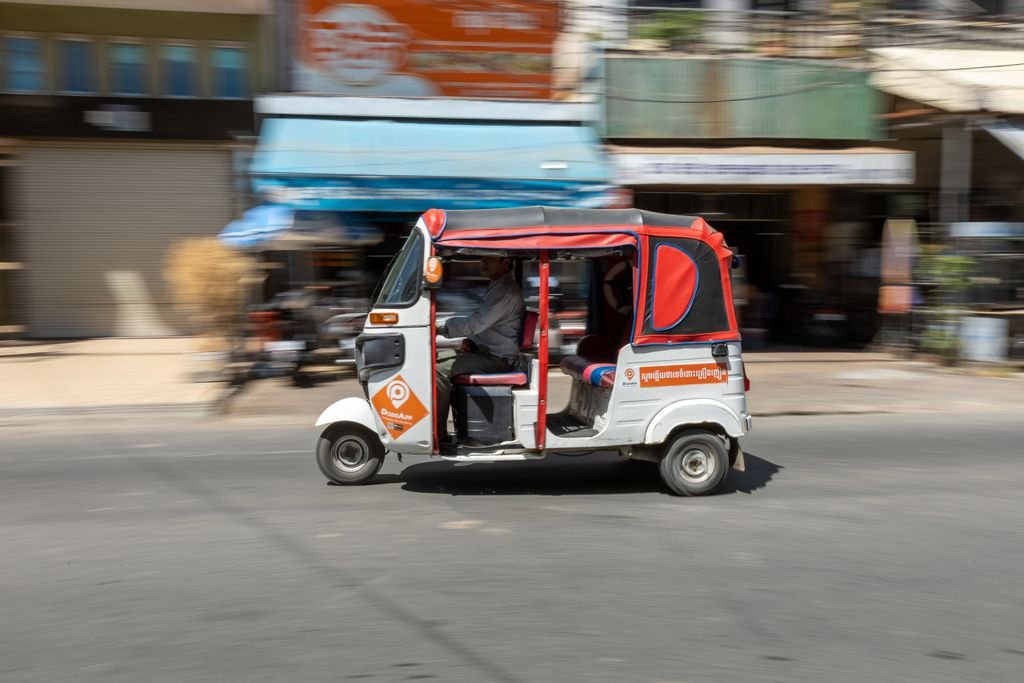
Getting between all of these is straightforward. Tuk-tuks run $1-4 for most city trips. Grab works well – just note that unlike Vietnam where you’ll mostly book motorbikes, here you’ll be in a tuk-tuk. No negotiating, price upfront, short wait times.
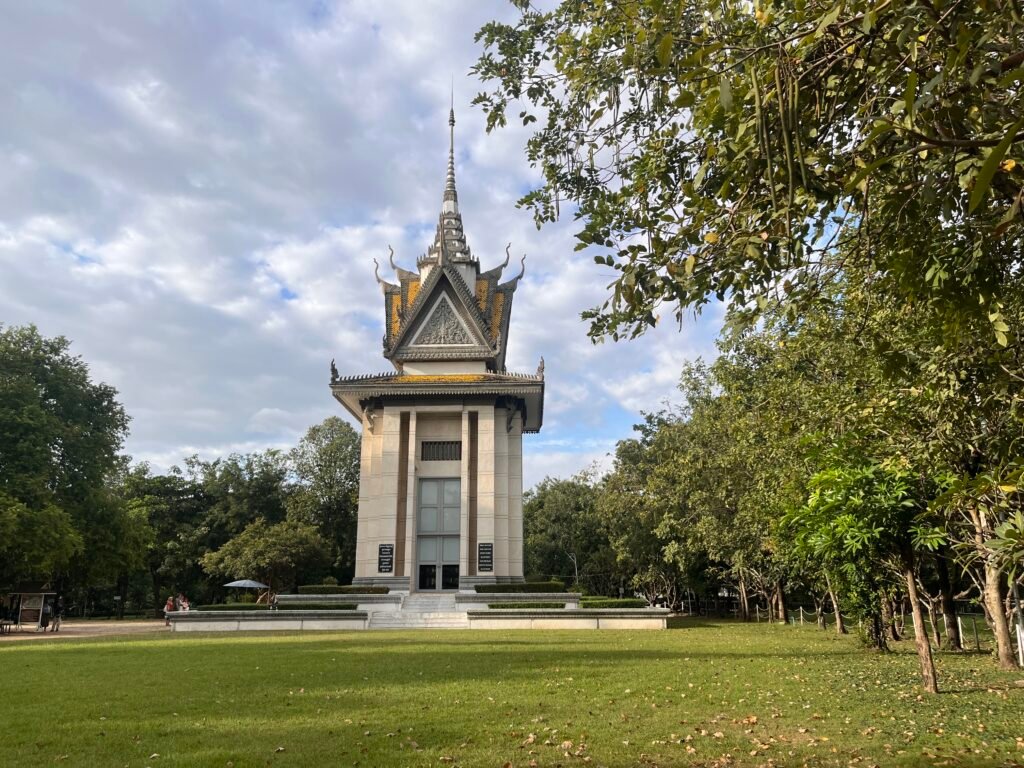
Riverside & Daun Penh: The Classic First-Timer Pick
This is where Phnom Penh’s history lives. Daun Penh is the oldest district in the city. The Royal Palace, the National Museum, Wat Phnom, and the Central Market all sit here. If you want to understand what Phnom Penh was before everything that happened to it, this is where you start.
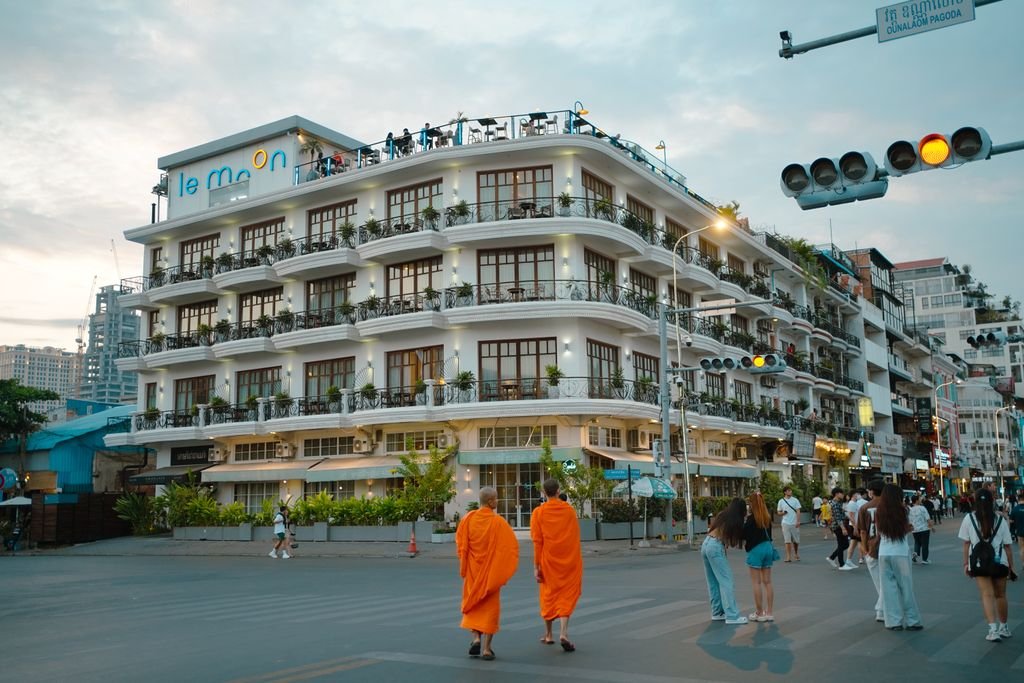
Sisowath Quay is the main artery – a 3-kilometer boulevard running along the Tonle Sap River, lined with palm trees, colonial buildings, cafés, and rooftop bars. In the evening it comes alive. Locals gather for group aerobics, monks pass in saffron robes, street vendors grill squid and bananas, and tourist boats push off from the northern end of the quay for sunset cruises down to where the Tonle Sap meets the Mekong. It’s one of those places that looks exactly like it sounds.
The honest version though: the riverfront smells. City sewage flows into the river in sections, and depending on where you are and what time of day, you’ll notice.
Walk a block or two back from the water and the city gets more layered. The streets behind Riverside mix beautiful French colonial apartments with buildings that have seen better days. Some passages are sketchy – the area has a heavy bar and nightlife scene that can feel uncomfortable to walk through alone at night, particularly for women.
Further back still, toward Street 240, the mood shifts entirely. This little pocket – running along the southern wall of the Royal Palace – is one of the nicest streets in the city. Independent cafés, boutique shops, street art on the laneways. Quieter, more curated, a world away from the Riverside strip two blocks over.
Where to Stay in Riverside & Daun Penh
The Pavilion | An adults-only boutique built from a compound of colonial villas, one of which belonged to King Sihanouk’s mother. Old-school charm, garden pools, and quieter than the city outside its walls.
Plantation Urban Resort & Spa | Sister property to the Pavilion, more recently renovated and slightly more polished. Two pools, a spa, and a central location that works for both sightseeing and unwinding.
TAO Riverside Residence | Apartment-style rooms in a French colonial building right on Sisowath Quay. Most rooms have kitchenettes, wooden floors, and private balconies with river views. A great pick for longer stays.
Aquarius Hotel & Urban Resort | Great value for what you get. Rooftop pool, a bar, solid food, and clean rooms. A reliable pick if you want comfort without the boutique price tag.
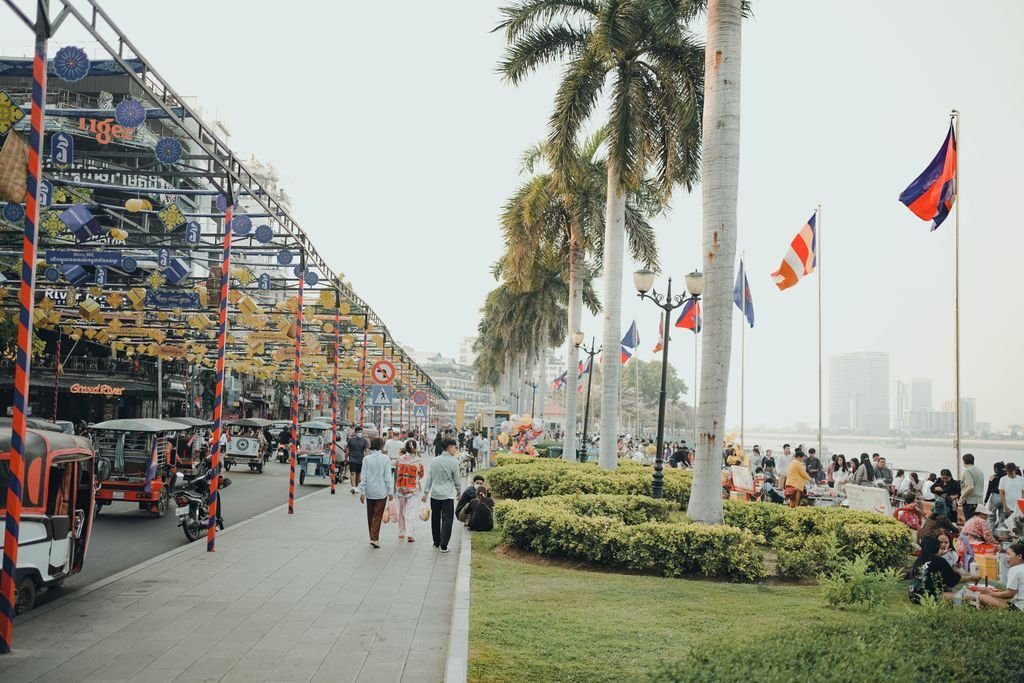
BKK1 & Tonle Bassac: Where Expats and Remote Workers Land
If Riverside is where you go to see Phnom Penh, BKK1 is where you go to actually live in it.
This is the most gentrified part of the city. Embassies, international schools, specialty coffee shops, yoga studios – the infrastructure here is built around a well-heeled expat community that has been growing for decades. The streets feel cleaner, the sidewalks more walkable, the menus more international.
Langa Lane and Bassac Lane are the two streets worth knowing. Langka Lane is where you’ll find smart cocktail bars and restaurants tucked into low-lit laneways, the kind of places that could exist in any Southeast Asian capital with a thriving expat scene.
Bassac Lane is louder, more social, with outdoor tables, live music, and a buzz that picks up after dark. Between the two, you have the best concentration of nightlife in the city that doesn’t feel like a backpacker strip.
The trade-off is real though. BKK1 can feel removed from actual Phnom Penh. The street food gets thinner, the local markets are a tuk-tuk ride away, and prices are noticeably higher than the rest of the city. The further you go into BKK1, the more it starts to feel like an expat bubble with Cambodian weather.
That said – if you’re working remotely, want a gym and a pool on your doorstep, and care about good coffee in the morning and a decent bar at night, this is comfortably the best base in the city. It was where I wish I’d stayed.
Where to Stay in BKK1
Rambutan Resort | A 1960s villa that belonged to the American Embassy, now one of the most characterful hotels in the city. Saltwater pool, tropical garden, Khmer and Western restaurant, free breakfast.
Noden2 Hotel & Apartment | Quiet, modern, and apartment-style. Good for longer stays. Fitness center on site, BKK1 location, walking distance to AEON Mall and many cafés and restaurants.
Check Inn Phnom Penh BKK1 | The value pick. Pool, sauna, steam room, and a gym – more amenities than you’d expect at this price point. Great location and a solid choice if you want the BKK1 address without the boutique price tag.
Toul Tom Poung (Russian Market): The Most Underrated Base in the City
Toul Tom Poung, named after Phsar Tuol Tom Poung – better known as the Russian Market, a nickname it picked up in the 1980s when Soviet expats used to shop there – is the most genuinely lived-in neighborhood on this list. It’s where younger expats, NGO workers, teachers, and digital nomads tend to land when they figure out that BKK1 is too expensive and Riverside is too touristy.
You’ll find street food stalls next to independent cafés, vegan restaurants next to Khmer noodle shops, boutique gift stores next to mechanics and hardware suppliers. It hasn’t been fully gentrified yet, and that’s precisely what makes it interesting.
The market itself is worth a visit regardless of where you’re staying. It’s a dense warren of stalls selling everything from silk scarves and silver jewellery to clothing and local produce. Go in the morning before the heat builds.
The trade-off: you’re about 20 minutes by tuk-tuk from the main sights near Riverside. But if you’re staying longer, or you care more about neighborhood feel than proximity to landmarks, this is the best base in the city.
Where to Stay in Toul Tom Poung
iRoHa Garden Hotel & Resort | Tucked into a quiet residential alley, this Japanese-owned boutique sits in a 1960s Khmer villa surrounded by a lush tropical garden with mango trees.
Ptas Tauch Residence | A locally owned apartment with a setup that makes longer stays work: full kitchen, washing machine, balcony, spacious rooms, and genuinely warm staff. About 15 minutes walk from the market, closer to the BKK1 boundary.
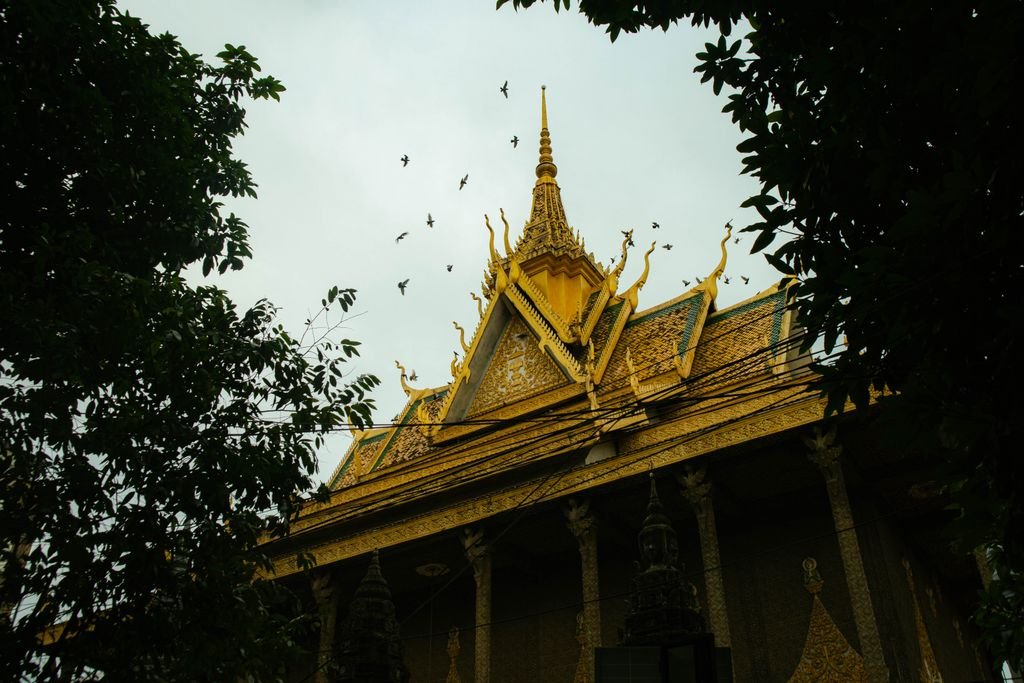
Toul Kork: The One Most Guides Get Wrong
Toul Kork sits north of the city center and it is genuinely different from everywhere else on this list. The streets are wider and less congested. It feels spacious in a way that BKK1 – for all its polish – stopped feeling a long time ago. Wealthy Cambodian families live here. Several universities are nearby. There are good restaurants and cafés, but they serve a local crowd rather than an expat bubble. It’s the closest you’ll get to understanding how the city actually functions day-to-day.
The trade-off is real and worth naming directly: you are not within walking distance of anything on the tourist trail. The Royal Palace, the Riverside, the museums – all of them require a tuk-tuk. And because Toul Kork sits north rather than south, you’re traveling against the main tourist flow. That adds up if you’re only here for two or three days and want to pack in the sights.
Where to Stay in Toul Kork
Fairfield by Marriott Phnom Penh | Occupies the top floors of the 45-storey Chip Mong Tower, one of the tallest buildings in the city. 28th floor infinity pool, rooftop sky bar on the 44th floor, gym, modern rooms and city views.
AMATA Residence | Rooftop pool, sauna, gym, fully furnished apartments with kitchens, daily housekeeping, and a free tuk-tuk service to nearby malls.The pick for remote workers and longer stays.
Sun Apartment | Spacious, well-equipped apartments with a pool, gym, and full kitchen. Quieter setting, friendly staff, and good value for the size of the rooms. A solid choice if you want independence and comfort without paying boutique hotel prices.
Where I Stayed And What I’d Do Differently
I spent a month in Phnom Penh at Orkide The Royal Condominium – a large residential complex in Sen Sok, sitting roughly halfway between the airport and the city center. It doesn’t fall under any of the neighborhoods I’ve described above. It’s further out than all of them.
We found a great deal, and on paper it made sense. Fully furnished, gym, pool, a whole expat community living in the same compound. After months of moving through Vietnam – Hanoi, Da Nang, Hoi An, Ninh Binh – I was exhausted by the nomadic life. I wanted somewhere that felt like a home base rather than another stop.
But it was terrible for exploring Phnom Penh.
This was the period when I was building this blog from the ground up, so most of my time was spent working, not exploring. I’d take tuk-tuks into the city when I needed to, go for evening walks around the complex, and then come back. It worked for what I needed at that point in my life. But if you’re coming to Phnom Penh to actually experience the city, Sen Sok is not where you want to be based.
Looking back, I’d have stayed in BKK1. The gym and pool priorities could have been met there, and I’d have been close enough to feel like I was actually in the city.
If you’re in a similar situation – remote working, longer stay, need amenities over proximity – Orkide is genuinely good for that. The apartments are spacious, well-equipped, and the compound has everything you need without leaving. There are two options within the complex worth looking at: Orkide The Royal Condominium – Studio and Orkide The Royal Condominium – One Bedroom. Just go in knowing what you’re signing up for.
🛂 Pakistani passport holders can enter Cambodia on an e-visa. I’ve also mapped out visa requirements for every other country, including e-visa, visa-on-arrival, and visa-free destinations, plus what you unlock with a US, UK, Canadian, or Schengen visa. Check the visa tool!
What to Think About Before You Book
The single most important question is how long you’re staying and what you actually need from a base. First-timers on a short trip should stay central – Riverside or BKK1 – where the main sights are walkable and nothing requires planning. If you’re staying longer, working remotely, or you’ve been before and want something with more local texture, Toul Tom Poung or Toul Kork will serve you better.
Budget matters too – Riverside and BKK1 are the priciest, Toul Tom Poung sits in the middle, and Toul Kork offers the most space for the price. Get the neighborhood right and the rest of the trip tends to follow.
And if you’re still building out your Cambodia itinerary beyond Phnom Penh, this guide covers everything from how many days to spend where to what not to miss
