
I’m already feeling nostalgic writing this.
I was born and raised in Lahore, I lived here for 23 years before moving abroad. My parents and most of my closest friends are still here, and no matter how far I go, this city keeps pulling me back at least once a year.
Lahore is home, but not in a simple way.
It’s the kind of place you love and resent at the same time. I miss it constantly, and I also know I could never live here again. It’s loud, chaotic, frustrating, deeply familiar, and somehow comforting all at once. You’ll hear people say “Lahore Lahore hai” like it explains everything, and in some ways, it does.
Let’s get one thing out of the way, I don’t think Lahore has the best food in Pakistan. Karachi wins that fight. What Lahore does have, though, is history. Layers of it, Mughal, Sikh, colonial, post-partition, modern chaos, all stacked together in a way that feels messy but real.
And that’s what this guide is, a collection of places and experiences I’ve grown up with, and the ones that show you what Lahore feels like beyond the surface.
Explore Lahore’s Mughal & Historical Landmarks
1. Lahore Fort (Shahi Qila)
Lahore Fort is one of the most important Mughal-era sites in South Asia, originally established in the 11th century but largely rebuilt and expanded under Emperor Akbar in the 16th century, with later additions by Jahangir and Shah Jahan. What you see today is a layered complex of palaces, audience halls, and private quarters that reflect how the Mughal court actually functioned, not just how it presented power.
It’s genuinely impressive in scale and what makes it interesting are the details that hint at how it was used day to day:
- Sheesh Mahal (Palace of Mirrors): Built under Shah Jahan in 1631, designed so even minimal light reflects across thousands of mirror fragments. It’s one of the few places in Lahore that still manages to feel a bit theatrical. (Cost: extra 100 PKR)
- Elephant Stairs: Wide, shallow steps built so royal elephants could ascend into the fort, a reminder that this wasn’t just symbolic architecture, it was functional.
At the same time, walking through the fort makes it hard to ignore how uneven the preservation is. Some sections are carefully restored, while others feel neglected, which reflects a broader inconsistency in how Lahore treats its own history.
Timings: ~9AM – 5PM (can vary slightly)
Entry Fee: 500 PKR
2. Badshahi Mosque
Built in 1673 under Emperor Aurangzeb, Badshahi Mosque was designed to assert Mughal authority at a time when the empire was expanding rapidly. It has a massive courtyard that can hold around 100,000 worshippers.
Sunrise is the best time to visit. There are fewer people, the light is softer, and the space feels calmer in a way that’s difficult to find later in the day. By sunset, it’s still striking, but significantly more crowded.
Timings: Open daily, dawn to dusk
Entry Fee: Free
Dress Code: Modest clothing covering arms and legs; women should bring a scarf to cover their heads. Shoes must be removed and can be left at the designated booth at the entrance
3. Wazir Khan Mosque
Built in 1634 during the reign of Shah Jahan, Wazir Khan Mosque was part of a larger urban complex that included the nearby Shahi Hammam.
Unlike Badshahi Mosque, which sits in a more open, controlled space, Wazir Khan is fully embedded in the city. Markets, vendors, and everyday life continue right up to the mosque walls, and then suddenly it opens into this enclosed, intensely detailed space.
The mosque is known for its kashi kari (tile work) and hand-painted frescoes, covering nearly every surface in intricate floral and geometric patterns, more aligned with Central Asian and Persian styles than typical Mughal structures.
It’s possible to access one of the minarets through the attendants at the entrance for a small tip. From the top, you can see both the mosque’s layout and the chaos of the Walled City surrounding it.
Timings: Open daily (restricted during prayer times)
Entry Fee: Free (tip for minaret access)
Dress Code: Same as Badhashi Mosque
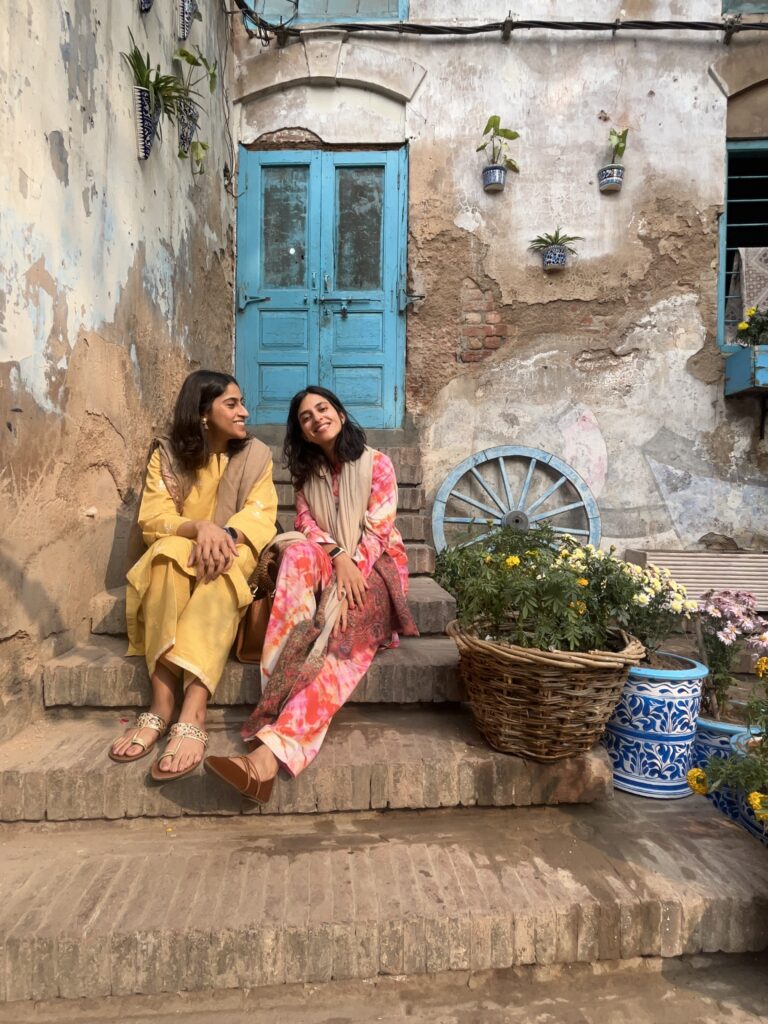
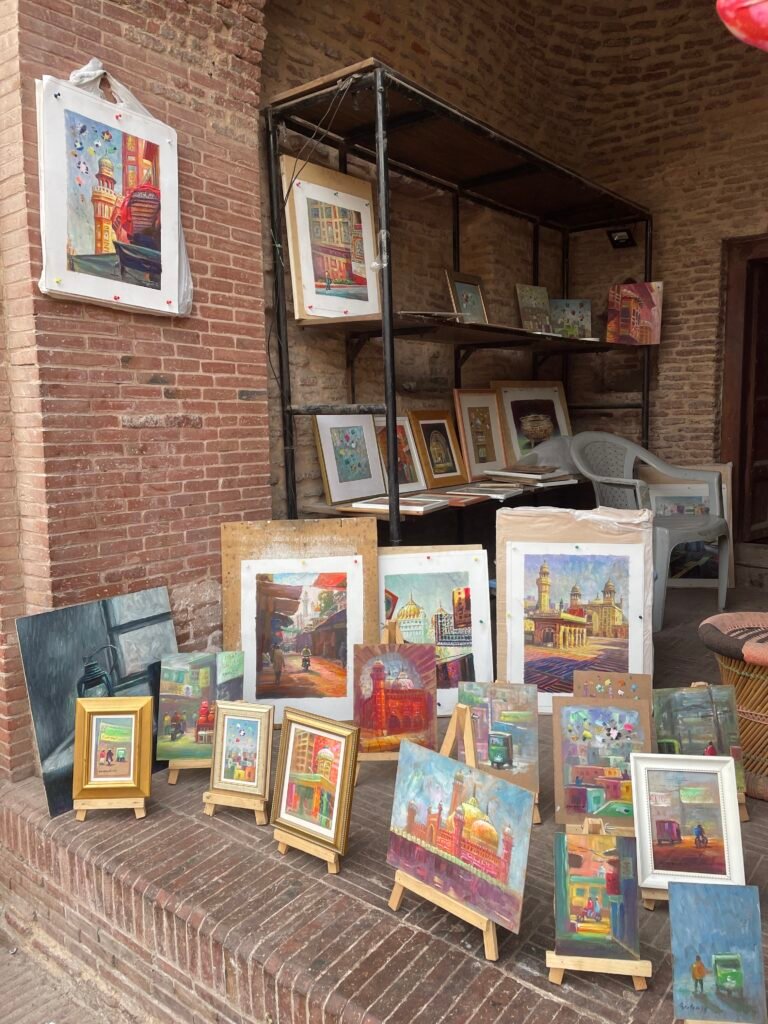
4. Minar-e-Pakistan
Minar-e-Pakistan marks the site where the Lahore Resolution was passed in 1940, the formal demand for a separate Muslim homeland that eventually led to the creation of Pakistan.
If I’m being honest, no one really “goes” to Minar-e-Pakistan. It’s mostly local families sitting around in the park, kids running around, people hanging out. It feels more like a regular public space that happens to have a very important monument in the middle of it.
That said, it’s not irrelevant. This space keeps getting reused for politics. From the original resolution to rallies, protests, and massive gatherings, it’s still where people come to project power, identity, and whatever version of Pakistan they’re trying to claim.
So while it might feel like just a park with a monument, it carries more weight than it lets on.
Timings: Open daily
Entry Fee: Free
5. Tomb of Jahangir & Noor Jahan
The Tomb of Jahangir is located across the Ravi River, about 30–40 minutes from central Lahore depending on traffic, which already makes it less visited than most of the sites in the city.
Jahangir was the fourth Mughal emperor, the son of Akbar, and Noor Jahan was his wife and one of the most politically influential women in the Mughal court.* She wasn’t just a consort, she actively shaped decisions, issued orders, and held power in a way that was unusual for women at the time.
The tomb complex reflects that era of the empire, more restrained than later Mughal structures, but still detailed, especially in its fresco work and garden layout.
Compared to places like Lahore Fort or Badshahi Mosque, there are far fewer people here. You can actually walk around without constantly navigating crowds. If you’re interested in Mughal history, it’s worth the effort to get here. If you’re short on time, this is usually the first place people skip.
Timings: ~9AM – 5PM
Entry Fee: Separate pricing for locals and foreigners
*Here’s a mughal emperor family tree if you want to dive deeper
6. Sikh Gurdwara (Gurdwara Dera Sahib)
Gurdwara Dera Sahib sits right next to Lahore Fort and Badshahi Mosque, but most people walk past it without really noticing it.
It marks the site where Guru Arjan Dev, the fifth Sikh Guru, was executed in 1606 on the orders of Mughal Emperor Jahangir. He was arrested, tortured, and killed after refusing to alter Sikh scripture and convert to Islam. His execution is widely seen as the moment when Sikhism shifted from a more spiritual movement into one that also organized itself around resistance and self-defense.
The gurdwara is still active. Sikh pilgrims visit, cover their heads, and move through the space like any other place of worship.
Lahore used to have a large Sikh population before Partition. Today, that presence is minimal. Sites like this are maintained, but the community they belonged to isn’t really visible in the city anymore. That’s not unique to Lahore, it’s part of a broader pattern of how religious minorities exist in Pakistan now.
Timings: Open daily
Entry Fee: Free
7. Data Darbar Shrine
Data Darbar is the largest Sufi shrine in South Asia, built around the tomb of Ali Hujviri, a Persian scholar and Sufi saint from the 11th century. It’s one of the oldest continuously active religious sites in the region, and one of the most important spiritual centers in Pakistan.
The complex includes the mausoleum, the Jamia Hajveria mosque, and a constantly moving flow of people. People come here to pray, to sit, to eat, to rest. There’s free food (langar), people sleeping in corners, others deep in prayer, and some just passing through.
During the annual urs (death anniversary of the saint), around a million people gather here, and the entire area becomes packed, intense, and overwhelming.
The shrine has been targeted by extremist groups in the past, most notably a major suicide bombing in 2010. Groups like the Taliban have historically opposed Sufi practices, viewing them as un-Islamic. That tension still sits in the background, even if day-to-day life at the shrine continues as normal.
Timings: Open daily, nearly 24/7
Entry Fee: Free
8. Delhi Gate & Night Tour of the Walled City
Originally, Lahore’s old city was surrounded by a wall with 13 gates controlling access in and out. These gates were functional, tied to trade routes, security, and movement. Delhi Gate, in particular, faced the road toward Delhi, which is where it gets its name.
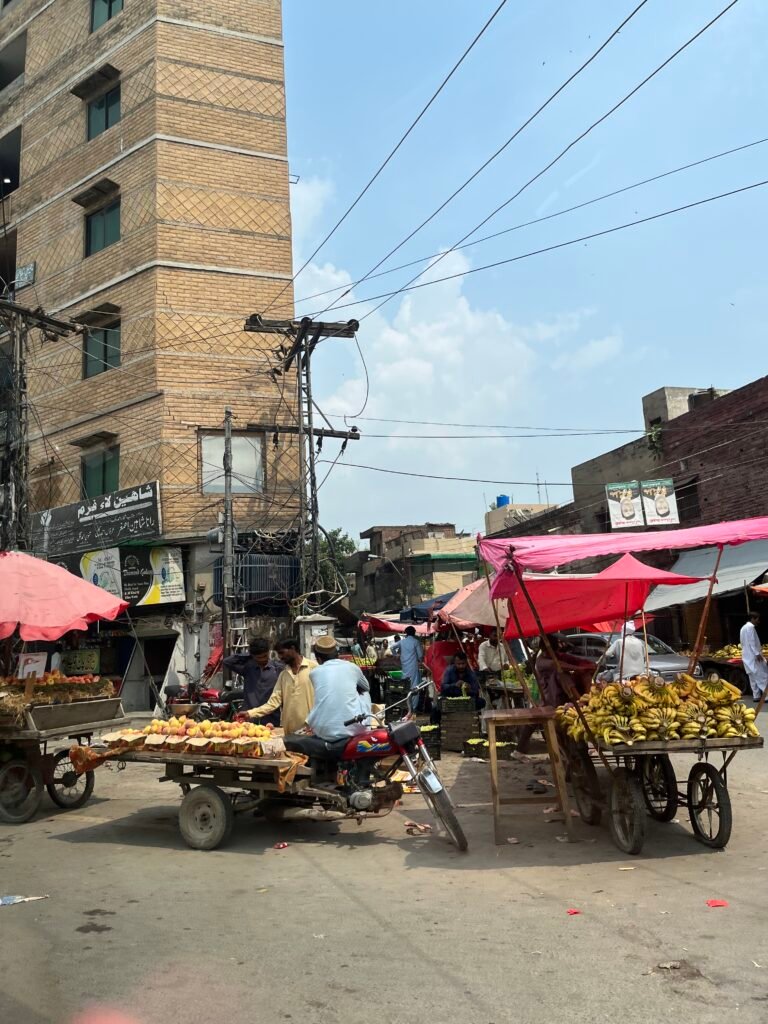
Today, only a handful of these gates still exist or have been reconstructed, but Delhi Gate remains accessible. During the day, it’s crowded, loud, and a bit overwhelming. Narrow streets packed with vendors, motorbikes squeezing through impossible gaps, layers of shops stacked on top of each other.
I highly recommend the History by Night tour to see the area. It’s a guided 2-hour experience that runs on weekends (around 7:30PM to 9:30PM), and it takes you through parts of the Walled City and Lahore Fort with curated lighting, storytelling, and performances layered in.
There are classical music performances, a Kathak dance performance, and different storytelling stops that explain the history in a way that actually sticks. I believe it’s available in both English and Urdu.
🧐 If you’re interested in going deeper into the country’s past beyond Lahore, I’ve put together a full guide to the historical sites in Pakistan.


Markets & Food Streets You Can’t Skip
10. Anarkali Bazaar
One of the oldest surviving markets in South Asia, Anarkali is steeped in legend, named after a slave woman said to have been executed by Emperor Akbar for having an affair with his son, Salim.
The bazaar is split into Old Anarkali (food) and New Anarkali (shopping). Old Anarkali feels closer to what Lahore used to be, chaotic, dense, and full of traditional food stalls.
11. Food Street (Fort Road)
Located right next to Badshahi Mosque, Fort Road Food Street is a pedestrian strip lined with restaurants and small shops.
It’s popular for one reason, the view. At night, the mosque lights up, and rooftop restaurants like Andaz give you one of the best dining backdrops in the city. The food itself is hit or miss depending on where you go.
12. Liberty Market
I used to hate coming here as a kid, now it’s one of the places I go every time I’m back.
It’s chaotic, crowded, and you can buy almost anything, clothes, jewelry, books, random household stuff, all in one place. Think a smaller, more chaotic version of a traditional bazaar, but in the middle of modern Lahore.
13. Traditional Desi Nashta
Lahore does not believe in light breakfasts.
A typical nashta is heavy, oily, and honestly a lot, halwa puri, channay, and sometimes nihari.
- Halwa puri: Capri or Bundu Khan
- Nihari: Muhammadi Nihari
- If you’re adventurous: try paaye
14. Street Food Crawls
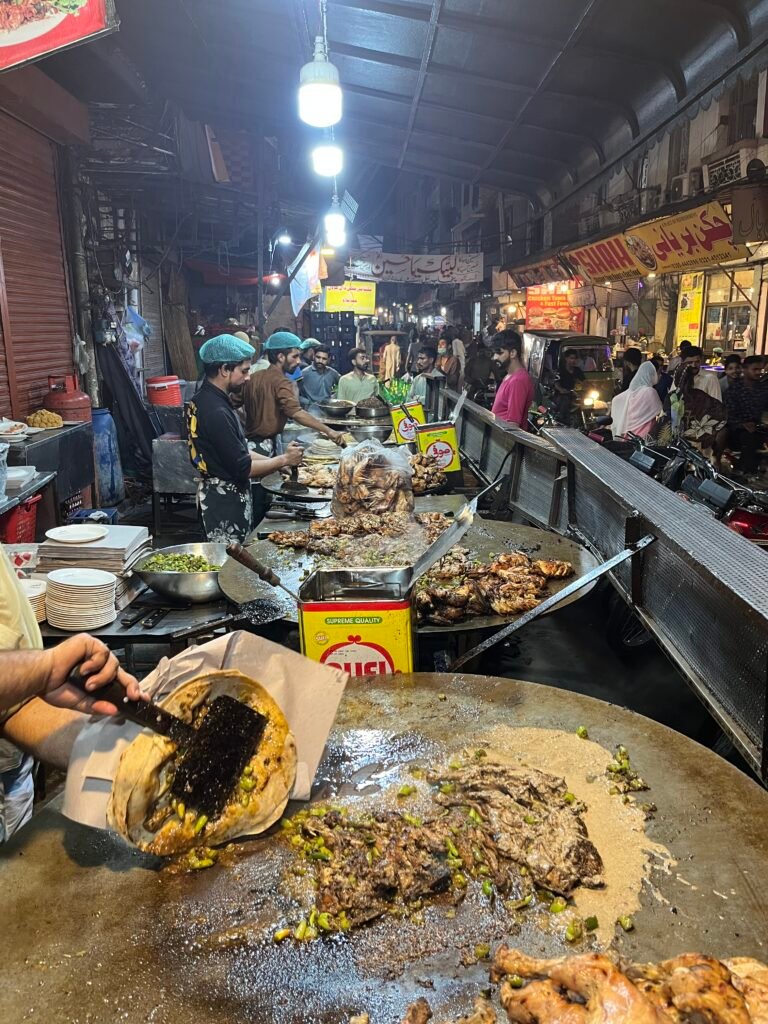
If you want to eat properly in Lahore, skip the fancy restaurants and go where locals go.
- Lakshmi Chowk: classic Lahori dishes like karahi and fried fish
- Gawalmandi: one of the oldest food streets, busy late into the night
It’s chaotic, sometimes questionable hygiene-wise, but this is where some of the best food in the city is.
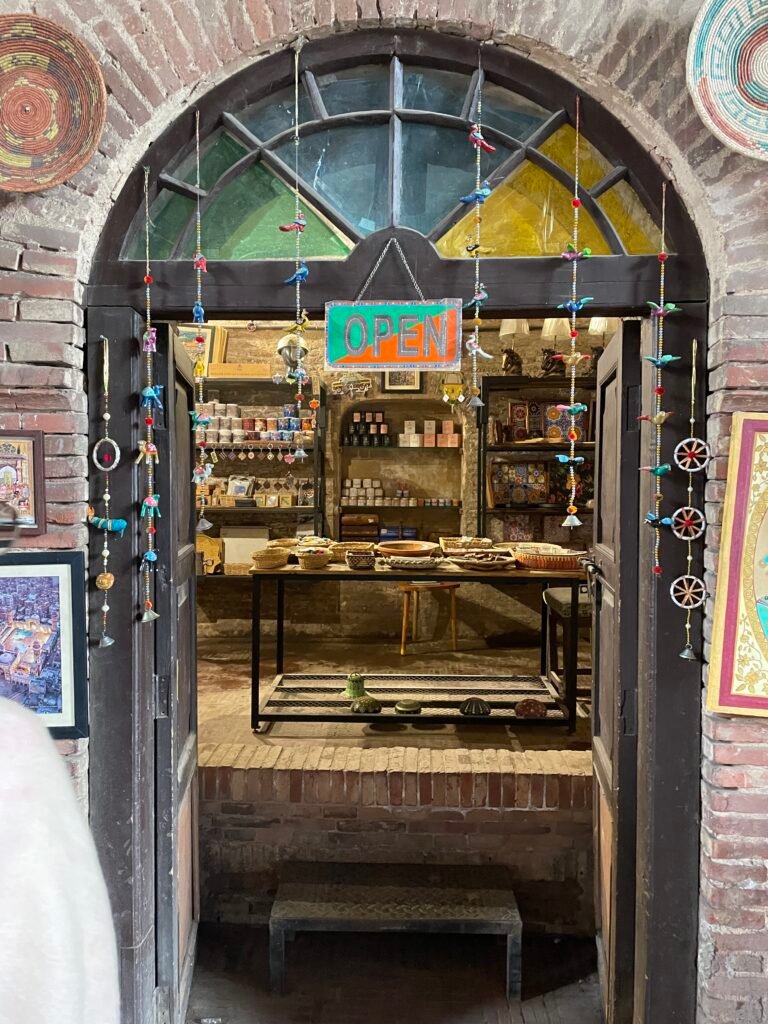
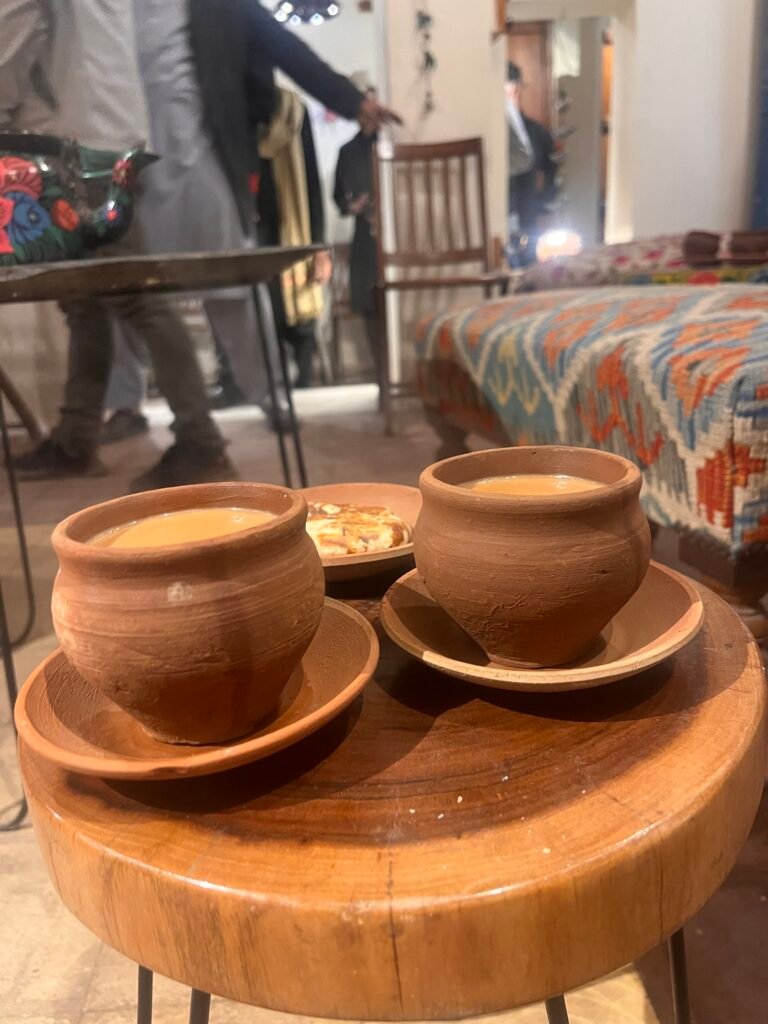
Museums & Cultural Experiences
15. National History Museum
This is one of the few museums in Lahore that actually feels modern and intentional.
It focuses on Pakistan’s early years (1940s–1960s), but what makes it stand out is how it tells those stories, through audio narratives from real people who lived through those stories, through audio narratives from people who actually lived through them. The sections on Partition especially stay with you, around 14 million people were displaced in one of the largest mass migrations in history, and hearing individual accounts makes that scale feel real.
It’s well-maintained, well-lit, and surprisingly engaging. If you’re only doing one museum in Lahore, make it this.
16. Lahore Museum
This is the classic museum everyone mentions… and honestly, it’s a bit underwhelming.
It houses Gandhara artifacts, Mughal pieces, and colonial-era items, so historically it’s important. But the layout feels dated, and unless you’re really into history, it can feel like a slow walk through glass cases.
17. Army Museum Lahore
Only in Pakistan would the army have its own museum. It’s very well curated, detailed exhibits, organized timelines, and a strong narrative of Pakistan’s military history. But it’s also very clearly one-sided.
You’re seeing history through a specific lens, so take everything with a huge tub of salt.
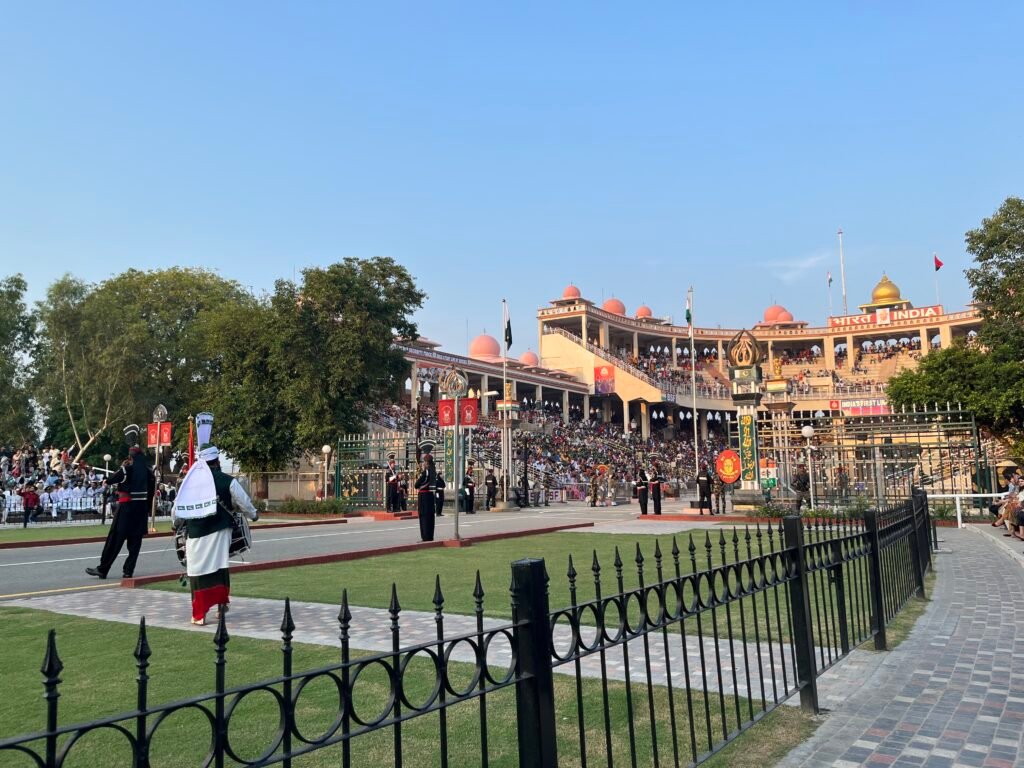
18. Wagah Border Ceremony
This is easily one of the most bizarre border experiences you’ll ever have.
Every evening, India and Pakistan perform a synchronized military ceremony, aggressive marching, dramatic gestures, and a crowd that treats it like a full-on sporting event.
It’s loud, nationalistic, and honestly a bit surreal. It’s about 30–40 minutes from Lahore, so it works well as a half-day trip.
☀️ If you’re planning to explore beyond the city, I’ve shared more ideas for daytrips here.
19. Attend a Qawwali Night
Qawwali is a form of Sufi devotional music, usually performed live with harmoniums, drums, and a lead singer building repetition until the whole room is pulled in.
It starts slow, then gradually takes over. You stop following the lyrics at some point and just sit there, or sway along without really thinking about it.
Peeru’s Café does regular nights with live performances and a crowd that actually stays. I used to go almost once a month during undergrad, always thinking I’d leave early, never did.
It’s also BYOB if you want, and I recommend it.
20. Basant
Basant marks the arrival of spring, and growing up, it felt like the entire city flipped overnight.
Roofs packed, yellow everywhere, kites in the sky from morning till night, music blasting from every house, people yelling “bo kata!” across buildings when they cut someone’s string. It was chaotic in the best way.
Then it got banned for almost two decades after a series of fatal accidents, mostly from metal strings. 2026 was the first year they brought it back. If it’s happening while you’re there, go, but you’ll need locals to actually experience it properly.
21. Attend a Desi Wedding
I’m kidding. Maybe. No, I’m not.
If you somehow get invited to a Pakistani wedding, go. They’re loud, chaotic, heavily choreographed, and go on for days. Multiple events, endless food, overdressed guests, and a level of energy that’s hard to explain.
Urban Lahore: Cafes, Shopping & City Life
22. MM Alam Road
One of the main pastimes in Lahore is getting dressed up and going out to eat, not for an occasion, just because.
MM Alam Road used to be the center of that. It’s still packed with restaurants and cafes, but a lot of the newer, better places have spread out across Gulberg and beyond.
That said, it still has some of the most popular spots in the city. I still end up here on a lot of the nights out.
23. Packages Mall / Emporium Mall / Dolmen Mall
These are exactly what you think they are, big, polished, international-standard malls.
Air conditioning, global brands, food courts, the usual.
If you need a break from the chaos of the city, they’re convenient and easy. If you’re traveling across Pakistan, this might be the most familiar environment you’ll find.
24. Lahore’s Coffee Scene
If you work remotely, Lahore’s coffee scene has quietly gotten pretty solid.
Spots like Double Shot, Third Culture and Coffee Bean & Tea Leaf are reliable, decent WiFi, comfortable seating, and you can sit there for hours without being rushed.
25. Fortress Stadium & Joyland
Fortress Stadium is more of a mixed-use space than a single attraction, shopping, food, and occasional cultural events depending on what’s happening in the city.
Right next to it is Joyland, an old-school amusement park that I used to go to a lot as a kid.
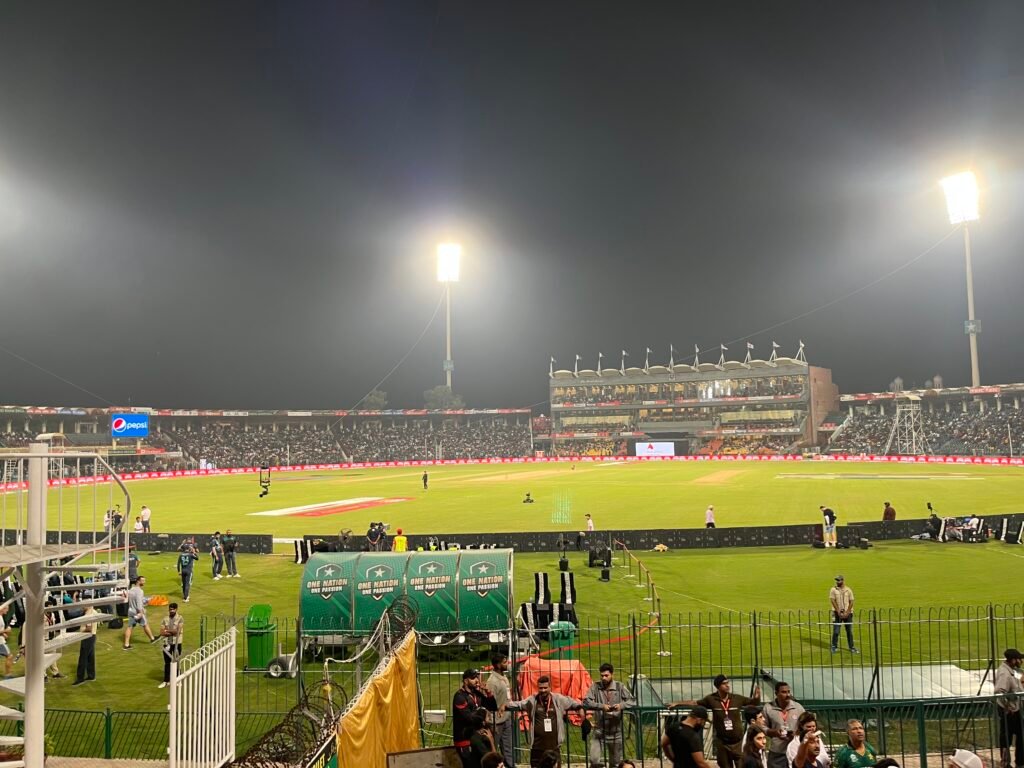
26. Gaddafi Stadium
Gaddafi Stadium is one of Pakistan’s main cricket grounds, and if there’s a match on while you’re in Lahore, it’s worth going.
Cricket here isn’t just a sport, it’s tied to identity, history, and, in many ways, a legacy of colonialism, learning the game from the British and then beating them at it.Affiliate box or any extra infomration that might be helpful.
Parks, Walks & Everyday Life
27. Shalimar Gardens
Built during the Mughal era, Shalimar Gardens is all about symmetry, terraces, and water engineering that was way ahead of its time. It’s one of the most important historical sites in Lahore.
Maintenance is inconsistent, and parts of it can feel neglected compared to what you’d expect from something this significant.
Still, if you’re already interested in Mughal history, it’s worth seeing, just adjust your expectations a bit.
28. Model Town Park
This is probably my favorite park in Lahore.
It’s large, relatively well-maintained, and actually feels like a place people use, families walking, kids playing, people just sitting around doing nothing in the best way.
It’s not a “must-see” in the traditional sense, but it gives you a more normal, everyday version of the city.
29. Jilani Park (Racecourse Park)
Jilani Park is where you go if you want to see Lahore in motion.
Early mornings especially, people walking, jogging, stretching, entire friend groups doing laps together. It’s one of the few places where you can quietly observe daily life without it feeling staged.
It’s also centrally located, so it’s easy to stop by.
30. Bagh-e-Jinnah (Lawrence Gardens)
Built during the British colonial period, Bagh-e-Jinnah still carries that layout, wide paths, old trees, and a more structured, almost formal atmosphere.
It’s calmer, less chaotic, and doesn’t feel as densely used as other parks.
💡 If safety is something you’re thinking about, especially as a solo female traveler, I’ve written a full breakdown on whether Pakistan is safe for women.
Where to Stay in Lahore
Gulberg and DHA are the most convenient for first-time visitors, they’re cleaner, easier to navigate, and close to most restaurants and cafes. The Walled City is more atmospheric, but not the easiest place to base yourself.
🏠 I’ve broken down the best areas and hotels in detail here.
How Many Days You Need in Lahore
You can see the main highlights in 3 days, Lahore Fort, Badshahi Mosque, Walled City, and a few food spots. I’d highly recommend more. If you’re thinking about how to structure your itinerary, I’ve broken down all the logistics in my guide to planning a trip to Pakistan.
Best Time to Visit Lahore
Lahore is extreme. Summers (June-Aug) are brutally hot, often above 40°C. Winters (Dec–Jan) are mild but foggy. November brings smog that can genuinely affect your trip.
The best time to visit Lahore is February–March, when the weather is manageable and the city feels more alive.
But that timing doesn’t really line up with the rest of Pakistan.
Even though Lahore is the second largest city, the real magic of the country is in the mountains. And for that, your window is much shorter, roughly May to September.
If you do head north, places like Hunza Valley or hikes like Nanga Parbat base camp (Rupal Face) are easily some of the most memorable experiences in the country.
Getting Around Lahore
Getting around is fairly easy.
- Careem & Uber: cheapest and most reliable
- Rickshaws: good for short distances, negotiate or use apps
- Metro & buses: exist, but not always practical for visitors
Exploring Beyond Lahore
Lahore is a good place to start, but it’s not really the reason people end up loving Pakistan.
At the end of a day, it’s a big city. You come here, you deal with the noise, the traffic, the chaos, you try to make sense of it, and then at some point you leave. And that’s when the country starts to feel different.
Most people head north after this. The pace slows down, the landscapes open up, and the whole experience shifts into something else entirely.
If you’re planning to keep going, I also have a list of things to do in Islamabad, as well as a northern Pakistan itinerary that maps out how that actually works.
