
Punta Cana is worth visiting without an all-inclusive, but only if you understand what it actually is. This isn’t a walkable Caribbean town with street food on every corner. Punta Cana was built as a tourism corridor, developed around large resorts, private beach access points, and airport-to-hotel convenience.
I stayed outside the resort system, took a $20 Uber from the airport, stocked groceries instead of eating at a buffet, and based myself in Bávaro so I could walk to the beach. We chose Punta Cana because it was easy, direct flights from Toronto, guaranteed sun, and visa-free for me. We were working remotely and wanted beach access without committing to a curated wristband experience. I figured all I really needed was the ocean.
What I learned quickly is that Punta Cana isn’t designed for wandering. Resorts dominate the coastline, many services assume you’re arriving from a hotel shuttle, and costs add up fast when you’re paying for everything individually.
If you’re staying in an Airbnb or guesthouse, here’s what actually makes sense to do, and what doesn’t.
How Punta Cana Was Built (And Why That Matters)
Punta Cana didn’t grow around a historic center or a fishing village that slowly turned into a beach town. It was developed deliberately.
Beginning in the 1970s, private investors partnered with the Dominican government to turn this stretch of coastline into a large-scale tourism zone. The Punta Cana International Airport was built to funnel travelers directly into gated hotel complexes. Roads were designed for transfers and tour buses, not for wandering between neighborhoods.
All-inclusive resorts became the dominant model. Guests sleep, eat, drink, book excursions, and often shop without ever leaving the property. From a business perspective, it’s efficient. Revenue stays inside the resort. From a traveler’s perspective, it’s convenient.
But that model shapes everything around it.
Restaurants price for short-stay visitors. Excursions assume hotel pickups. Sidewalks and public transit aren’t priorities because most guests move between airport, resort, and organized tours. Even though beaches in the Dominican Republic are legally public, much of Punta Cana’s coastline is fronted by private resorts, which makes access less obvious than you’d expect.
None of this makes Punta Cana “bad.” It just means it was built for a specific type of trip. And if you’re not taking that trip, it helps to know what you’re walking into.
What That Means If You’re Traveling Punta Cana on Your Own
If you’re staying outside a resort, your biggest decision is location.
are the only areas where walking to the beach, groceries, and restaurants feels manageable. Outside of that, you’ll depend on Uber regularly.
Costs also feel different when they’re unbundled. Beach chairs, taxis to Macao, day tours, everything is separate. Even casual restaurants near Bávaro were more expensive than we anticipated, and a few places charged more for card payments than cash.
Infrastructure is functional but not built for digital nomads. Internet handled writing and emails, but video calls were unreliable, and we had a couple of short power cuts. If you’re relying on mobile data as backup, I’d set that up before landing. I usually use an Airalo e-sim so I’m not scrambling for airport SIM counters.
None of this made independent travel impossible. It just meant Punta Cana felt less spontaneous and more situational. If you stay in the right neighborhood and budget realistically, it works. If you expect it to function like a backpacker beach town, it won’t.
🛂 A US green card or Canadian PR grants visa-on-arrival access to Dominican Republic, a benefit that applies across a number of countries. Details on Pakistani passport-specific access are available on the visa tool. Check the visa tool!
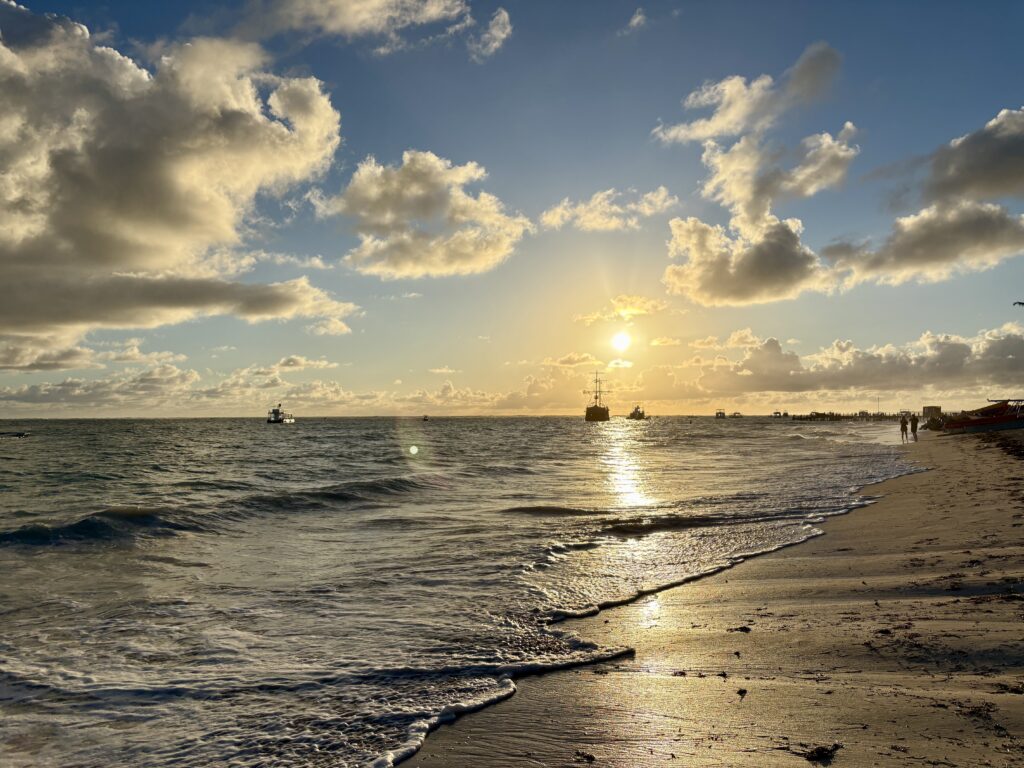
What I Actually Did in Punta Cana
Sunrise at Playa Bávaro
Most mornings, I walked to Playa Bávaro before 9AM. Early hours were (relatively) quiet. The sand was smooth, the water was calm, and there were only a few people out for swims or long walks.
Later in the morning, resort loungers filled in, tour vendors started circulating, and the beach shifted into its daytime routine. The coastline is legally public, but access isn’t always obvious. You enter through narrow walkways between hotels or residential buildings.
Once you’re on the sand, no one asks where you’re staying. But the infrastructure around you reminds you that the resorts dominate the view.
Walking El Cortecito (All Three Blocks of It)
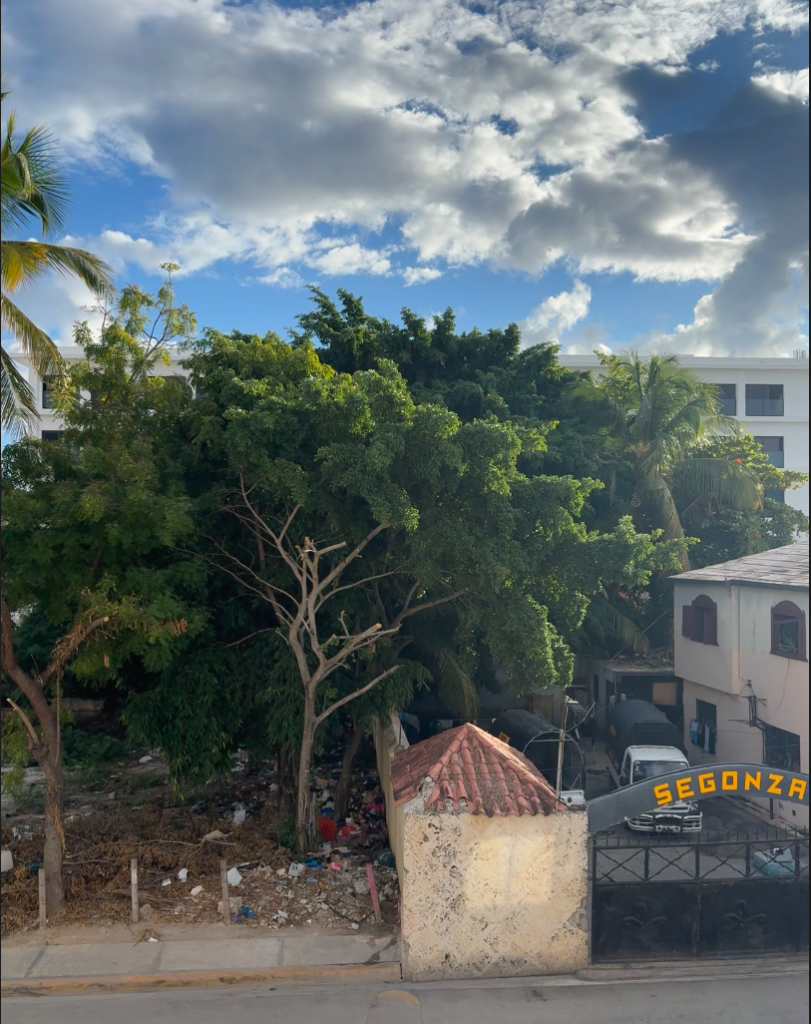
We stayed in El Cortecito, which sounds bigger than it is.
You can walk most of it in ten minutes. A few small supermarkets. A handful of restaurants. Souvenir shops. A couple of coffee spots. Beach access tucked between buildings.
That’s the town. It’s not a place you wander for hours discovering hidden streets. It’s functional. You walk to the beach. You walk to dinner. You pass the same shops again the next day.
During the day it feels quiet, almost transitional — people moving between Airbnb, beach, and grocery store. At night, a few bars light up.
Macao Beach
Macao felt different immediately.
It’s north of the main resort strip and requires a car or Uber to reach. The water was rougher, the sand more open, and the scene less uniform. There were local families, informal food stalls, and beginner surfers taking lessons.
It’s not polished. There aren’t endless rows of matching loungers. But that’s also why it feels less controlled.
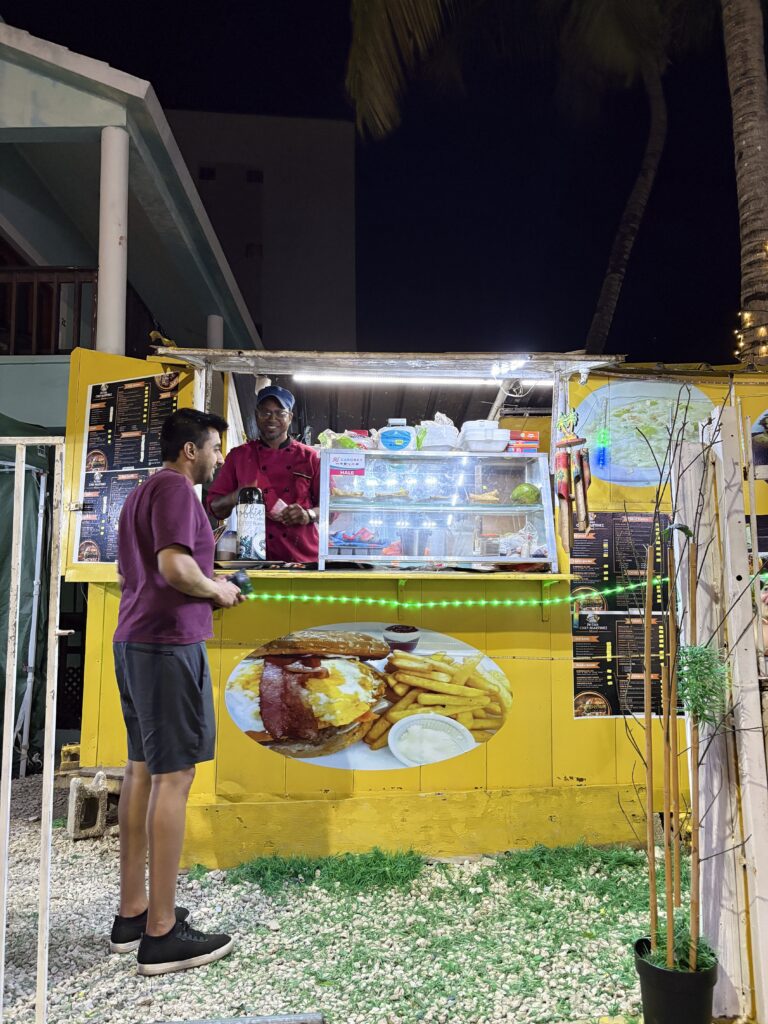
Trying to Find Dominican Food
Food is where the cost difference hits fastest in Punta Cana.
Most restaurants near Playa Bávaro price for short-stay visitors. Even casual meals ran about $20USD for two at minimum. Beachfront spots cost more.
Finding distinctly Dominican food near the resort strip took more effort than I expected. Many menus leaned international – burgers, sushi, pasta, smoothie bowls.
The places that felt more local were slightly off the beachfront:
- De Casa Chef Martinez – The best Dominican meal we had. Home-style cooking, properly seasoned mofongo, and noticeably better pricing than restaurants facing the beach. If you want something closer to traditional, start here.
- La Cocinita de Yara – Straightforward grilled fish. Just fish, rice, salad.
- Eco Gusto – A small Polsko-Dominican spot with a rotating dish of the day for around $5USD, which is rare in Punta Cana pricing terms.
Grocery Stores and Cooking: Because we weren’t on a meal plan, we shopped for groceries. Supermarkets stocked everything from imported cereal and wine to local fruit and staples.
Imported goods were noticeably expensive. Local products were more reasonable, but still higher than what I’m used to elsewhere in Latin America. Self-catering saves money compared to eating out for every meal, but Punta Cana isn’t a budget destination.
Cooking most breakfasts and some dinners made the math work.
Saona Island Tour
Saona Island is the classic Punta Cana excursion. Almost every tour desk advertises it, and it’s usually done by catamaran, speedboat, or a mix of both.
The catamaran option tends to be slower and more social, music playing, drinks flowing. Speedboats get you there faster, often with a stop at a shallow sandbar on the way. Prices typically range from about $70–$120USD depending on group size and inclusions.
🌊 Spend one day doing Punta Cana the easy way – this small-group Saona catamaran handles transport, lunch, and the sandbar stop so you can just show up and float.
Parasailing
I did end up parasailing. It’s one of those activities that’s right there in front of you on Bávaro — boats constantly heading out, people lifting off above the water. It’s easy to book and takes less than an hour.
🪂 If you want something quick and scenic without committing to a full-day tour, this parasailing, snorkeling, and catamaran combo is the easiest yes.
Nightlife
Most nights we stayed in El Cortecito. There are a few casual bars along the main strip, places like Koho, where you can walk in, grab a drink, and sit outside. Nothing fancy. Just music, tourists, expats, and people drifting between tables.
If you want something bigger, there’s Coco Bongo.
It’s less a bar and more a staged show with music, performances, and a packed crowd. We didn’t go, mostly because we were working and keeping costs down. But if you’re traveling with friends and want a high-energy night, that’s what it’s built for.
Choosing the Right Public Beach in Punta Cana
Not all public beaches in Punta Cana function the same way. They’re legally open to everyone, but access, atmosphere, and logistics vary a lot. If you’re staying outside a resort, choosing the right one makes a difference.
Playa Bávaro – Best for Convenience
If you’re based in Los Corales or El Cortecito, Playa Bávaro is the easiest option. You can walk in through public access paths between hotels and apartments, lay down a towel, and swim without anyone questioning where you’re staying.
It’s developed. Expect loungers, vendors, tour reps, and steady foot traffic after mid-morning. But it’s reliable. Calm water, wide shoreline, and no transportation cost if you’re staying nearby.
This is the most practical choice if you don’t have a car.
Macao Beach – Best for Space
Macao requires an Uber or rental car, but it immediately feels less structured.
There are fewer high-rise hotels, more open sand, and rougher waves. On weekends, local families show up with coolers. During the week, it’s calmer and more spread out.
It’s not polished. Facilities are basic. But if you want a beach that doesn’t feel fully engineered around resorts, Macao is the closest you’ll get in this area.
Juanillo Beach (Cap Cana) – Calm but Gated
Juanillo sits inside Cap Cana, a luxury development south of the airport. The beach itself is wide, calm, and noticeably quieter than Bávaro. Getting in usually involves passing a security checkpoint to enter Cap Cana. Some days access is straightforward. Other times, visitors report being asked about reservations or parking fees.
It’s technically public, but you’re entering a controlled residential and resort zone. If you want calm water and a cleaner atmosphere and don’t mind navigating a gate, Juanillo works.
If I Came Back With More Money, Here’s What I’d Book
Most of Punta Cana’s activities are designed for short, high-energy vacation days. I didn’t book many excursions while I was there because we were working during the week and trying to keep costs down.
But if I came back with an actual vacation budget instead of a remote-work schedule, these are the ones I’d seriously consider.
Buggy / ATV Tour Near Macao
This looked chaotic in the best way.
The buggy and ATV tours near Macao are loud, muddy, and unapologetically tourist-heavy. You drive through dirt tracks, splash through puddles, and usually stop at a cave or beach along the way.
I skipped it purely because we were watching expenses, otherwise it’s the kind of pure adrenaline I usually love.
🛺 These tours are dusty or muddy depending on the season. Wear clothes you don’t care about. You can see what’s included here → buggy tour details
Party on a Boat (Group Energy vs Private Charter)
If I had come with a group of friends, this is probably where I would’ve spent my money.
There are two versions of this experience. One is high-energy and social. The other is private and flexible.
The first is an adult-only boat party with snorkeling and open bar. This is built around music, dancing, and group energy. It’s not romantic and it’s not quiet. It’s a floating day party.
If you’re traveling with friends and want something more controlled, a private catamaran charter in Punta Cana makes more sense. It’s a splurge, but split between a group, it becomes more reasonable and you control the vibe entirely.
If you want social chaos, look at the adult-only party boat option.
If you want privacy and flexibility, compare pricing for a private catamaran charter.
Scape Park & Hoyo Azul
If you want something more structured but not alcohol-focused, Scape Park in Cap Cana is the main adventure complex in the area.
It includes zip lines, caves, and access to Hoyo Azul — a bright blue cenote-style lagoon you can swim in.
You pay entry (usually around $120–$140USD depending on package), and everything is organized inside one controlled space. It’s easy. It’s clean. It’s designed for visitors.
Where To Stay In Punta Cana (No Resorts)
Los Corales and El Cortecito are the two areas that actually work for independent travelers. They’re walkable, have public beach access, and you can easily reach restaurants, grocery stores, and small cafés without constantly calling an Uber.
HM Bavaro Beach – Adults Only | A smaller beachfront hotel if you want something comfortable but still walkable to restaurants and cafés.
Costa Atlantica Punta Cana – Beach Vacation Condos | Spacious multi-room apartments a short walk from Los Corales Beach. Good option if you want more space, a full kitchen, and the flexibility of an apartment rather than a hotel.
Honky Tonk Punta Cana | A simple but well-located boutique stay in the middle of El Cortecito. Rooms are smaller and more basic, but the location is excellent if you want to walk to the beach, bars, and restaurants.
Getting Around Punta Cana Without a Resort
If you’re staying in Los Corales or El Cortecito, you can walk to the beach and a handful of restaurants. For anything outside that bubble, you’ll use Uber or a taxi.
Uber works reliably around Bávaro. We paid about $20USD from the airport to our Airbnb, and short rides within the area were easy. If you’re only planning beach days and local dinners, you don’t need a car.
That changes the moment you want to leave Punta Cana.
Macao Beach is simpler with your own vehicle. Juanillo and other gated beach areas are easier to access. And once we rented a car at the end of our stay, the entire country felt different. You’re no longer moving between resort zones, you’re actually traveling.
If you’re thinking about exploring beyond the resort corridor, book the car in advance. Airport desks tend to be more expensive and less transparent.
🚗 If you’re planning to drive beyond Punta Cana, compare rental companies before you land. DiscoverCars lets you see multiple providers at once, filter by insurance coverage, and avoid inflated last-minute airport pricing. I’d book early and choose free cancellation in case plans change.
→ Compare rental car options in Punta Cana
Is Punta Cana Worth It Without an All-Inclusive?
Yes – if you understand what you’re signing up for.
Punta Cana works well if you want reliable beach access, direct flights from places like Toronto, and predictable Caribbean weather without overcomplicating the trip. It’s easy, warm, and structured.
It doesn’t work as well if you’re on a tight budget, expecting street culture and spontaneous wandering, or relying on strong internet for full-time remote work. We drove to Las Terrenas, and I’d hands down recommend that as a better spot if you have the time.
| Pros | Cons |
|---|---|
| More flexibility — No buffet hours, no wristbands, no structured entertainment. You decide when you eat, where you go, and what you skip. | Designed around resorts — Infrastructure, pricing, and transportation assume you’re staying inside one. Outside that system can feel awkward or disjointed. |
| More real-world interaction — Grocery store staff, Airbnb hosts, small restaurant owners. It’s not deep cultural immersion, but it’s less insulated. | Still expensive — Unbundling doesn’t magically make it cheap. Food, transport, and excursions add up quickly. |
| Can be cheaper if you’re strategic — Cooking some meals and skipping daily excursions meant we spent less than many mid-range resort packages. | You can feel out of place on the beach — No matching loungers, no included drinks, just you and your towel among rows of paid setups. |
| You control your energy level — Quiet mornings and low-key evenings are easier when you’re not surrounded by pool music and organized activities. | More logistics on you — Beach access points, transportation planning, and restaurant research all fall on you. Nothing is bundled. |
🤔 If you’re trying to decide between Punta Cana and Santo Domingo as a starting point, I break it down here.
Why I’d Only Use Punta Cana as a Starting Point
Punta Cana is worth it without a resort, especially if you want easy beach access, reliable sun, and a low-effort Caribbean escape. It just isn’t the full picture of the Dominican Republic.
We rented a car and drove around the island and that was my favourite part of the entire trip. The resort corridor ended. The scenery changed. Mountains replaced manicured entrances. Beaches felt less organized. Towns felt lived in instead of serviced.
Punta Cana works as a soft landing. It’s accessible, structured, and predictable. But the country gets more interesting the farther you move from that structure.
If you’re planning to explore beyond the resort corridor, I break down how to connect Punta Cana, Las Terrenas, and Santo Domingo in this Dominican Republic itinerary.
Is Punta Cana safe without staying at a resort?
Generally, yes — especially in areas like Los Corales and El Cortecito. It felt safe walking during the day and early evening. Like anywhere, avoid isolated areas at night, don’t flash valuables, and use Uber instead of negotiating random taxis. It’s not chaotic, but it’s not heavily policed for independent travelers either.
Is Punta Cana expensive without an all-inclusive?
Yes. Unbundling doesn’t make it cheap. Meals, beach rentals, taxis, and excursions add up quickly. You can control spending by cooking and skipping daily tours, but Caribbean pricing still applies.
Do you need a car in Punta Cana?
No — if you’re staying in Los Corales or El Cortecito and mostly going to the beach.
Yes — if you want to visit Macao, Cap Cana, or explore beyond Punta Cana. A car changes the experience significantly.
Is Punta Cana good for remote work?
It’s workable, not ideal. Internet handled emails and writing, but video calls were unreliable and we experienced short power cuts. If your job depends on stable high-speed internet, have a backup plan.
Is Punta Cana worth it for budget travelers?
Not really. There are cheaper Caribbean and Latin American destinations with stronger street culture and lower daily costs. Punta Cana works better for short, predictable beach trips than long-term budget travel.
