
Antarctica was the plan. White continent, actual penguins, ice so old it predates most of recorded history. Then I looked at the price of getting there and closed the tab.
So I did what any budget-conscious person with a decent sense of direction does: picked the next best thing. Ushuaia, the southernmost city in the world, a scrappy port town clinging to the edge of Argentina where the Andes finally run out of land.
I landed there straight off a flight from my own wedding in Pakistan, jetlagged and still buzzing, and spent three weeks slow-traveling through it. Turns out you don’t need an Antarctic expedition to justify the trip south. Ushuaia holds its own: glacier hikes, a coastal national park, penguin colonies, a prison-turned-museum with a genuinely dark history, and a lot of centolla.
This list covers everything I did and would do again, from free hikes to the kind of splurge you book once and don’t regret. Whether you’ve got three days or two weeks, here’s what’s actually worth your time in Ushuaia.
1. Start in the Heart: Wandering Downtown Ushuaia
Ushuaia’s downtown is small enough to walk in an afternoon, which is exactly what I did on my first day there, still half-asleep and not ready for anything more strenuous than a coffee. Avenida San Martín is the main strip, a stretch of wooden shopfronts and puffin-themed street art.
I ended up at Ramos Generales more than once. It’s an old general store turned café, and it looks like an antique shop exploded in the best possible way: shelves of dusty tins, old typewriters, a counter that’s seen a hundred years of use. Get a coffee and a medialuna.
The other thing downtown is good for is gear. There are outdoor shops lining San Martín selling crampons, fleece-lined everything, and camping supplies, which came in handy for us when we made a last-minute call to sleep in the national park with none of the right equipment.
What’s easy to miss walking around is how recent all of this is. Ushuaia was a town of about 5,000 people in the 1970s. It’s over 60,000 now, thanks to a mix of tax incentives, cruise ship tourism, and Argentina’s decision to lean hard into branding the place as the end of the world.
In summer, from December to February, the daylight barely quits before 10pm and the streets fill with people prepping for Antarctica or just chasing the novelty of being this far south. It’s the first sign that this isn’t really a sleepy port town anymore, even if it still looks like one from the right angle.
2. Ride the End of the World Train
The Tren del Fin del Mundo sounds dramatic because it is. Once used to transport prisoners from Ushuaia’s jail to the forests they were forced to chop down (fun), it now carries tourists through scenic bits of Tierra del Fuego National Park, complete with a moody narration in your language of choice
It’s a short ride, about 7 kilometers, but packed with history. You’ll pass La Macarena Waterfall and the Cementerio de Árboles, a field of tree stumps left behind by that forced labor. Slightly eerie. Very photogenic.
Board from a station just outside town, either by taxi or as part of a tour. Multiple classes exist, but the views don’t change, so pick whatever fits your budget. Wear layers. It gets cold once the train slows in the shade.
🚊 If you don’t want to figure out logistics yourself, a combined National Park and Train tour covers both in one go. It takes you through Ensenada Zaratiegui Bay, End of the World Post Office, and ends at Lapataia Bay, the actual terminus of the Pan-American Highway.
3. Hiking in Tierra del FuegoNational Park
Parque Nacional Tierra del Fuego is Argentina’s only coastal national park, and it shows. Lenga forests, snow-streaked peaks, and cold silver inlets where the Andes finally give up and meet the sea.
Entry fee: Check current rates before you go, since foreign visitor pricing changes with the peso. Cash is safest.
Getting there: No public bus. Rent a car, book a tour, or take a taxi and arrange a pickup time. Weather: Changes hourly. Morning sun means nothing by lunch. Pack layers and something waterproof.
Top Trails in Tierra del Fuego
1. Senda Costera (Coastal Path)
Distance: ~8 km (one-way)
Time: 3–4 hours
This is the classic route, tracing the Beagle Channel through mossy forest and rocky beach until you hit Lapataia Bay, where the Pan-American Highway officially ends. There’s a sign. Take the photo.
2. Hito XXIV Trail
Distance: ~6 km (round-trip)
Time: 2–3 hours
A forested walk to a quiet viewpoint over the water into Chile. You’re technically hiking to the Argentina-Chile border. No passport required, just decent shoes.
3. Cerro Guanaco (For the Gluttons for Punishment)
Distance: ~12 km round-trip
Time: 5–6 hours
The leg-burner. Muddy forest first, then a steep climb above the tree line. On a clear day, the views over Lake Roca and the Olivia Range are worth every bit of mud. On a bad day, you’ll have a good story instead.
If this kind of elevation gain is your thing, Confluencia near Aconcagua (the second highest mountain in prominence after Mount Everest) is a solid way to build up to something bigger.
Short walks near Lapataia Bay
Not doing a full trek? Several short, flat trails near the bay wind through lenga forest and wooden boardwalks over marsh, past beaver dams that are invasive here but still fun to spot. Good option if you’re short on time or just don’t want to commit to a full day.
4. Hike to Laguna Esmeralda
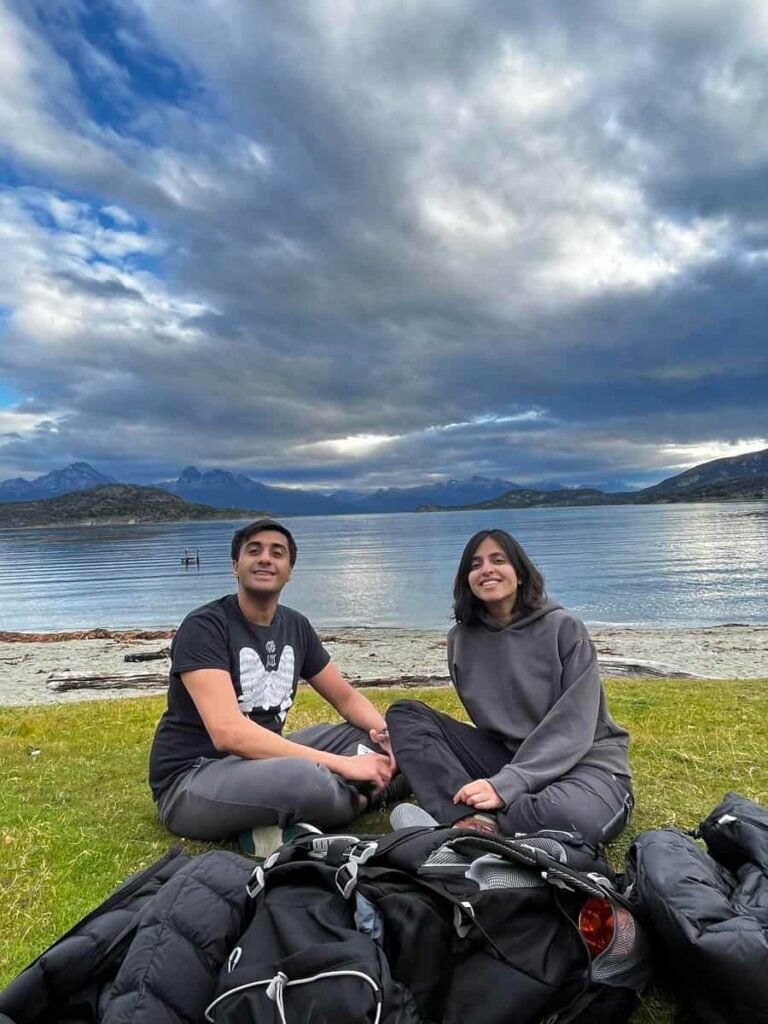
Laguna Esmeralda is Ushuaia’s other big hike, and it earns the hype. About 9km round-trip, mostly flat, which makes it doable even on a lazy hiking day. The payoff is a turquoise lagoon framed by snow-capped peaks and lenga forest.
The trail cuts through peat bog, and it gets seriously muddy, especially after rain. Waterproof shoes or accept the squelch. It’s well-marked and busy in high season, so you don’t need a guide. Bring a snack, sit by the water for a while, and brace for the temperature drop the second you stop moving.
🌿 Don’t want to navigate the bog alone? This guided trek comes with trekking poles, crampons if the trail needs them, and a box lunch by the lagoon.
5. Camp Under the Stars in Tierra del Fuego
The park has four free campsites: Río Pipo, Ensenada, Laguna Verde, and Laguna del Caminante. The first three have chemical toilets between November and April and not much else. No showers, no shops, no signal. Laguna del Caminante has neither toilets nor much of anything, since it sits eight hours into the Andorra-Oveja trail, not off the main road.
We did two days here. First night, we camped at one of the accessible sites inside the park, glacier-fed river running somewhere close enough to hear, lenga trees dripping with mist by morning. Second day, we hiked out to Laguna del Caminante itself: the full route is its own post if you want the trail-by-trail breakdown, but the short version is six hours, a lot of mud, and a mirror-still lagoon at the end that makes the whole slog worth it.
6. Cruise the Beagle Channel
You don’t need to book a separate “Beagle Channel Cruise” to actually cruise the Beagle Channel. Most catamaran tours default to including it, which is how I ended up gliding through these waters between Argentina and Chile without really planning to.
The ride passes rocky islets covered in sunbathing sea lions, seabird colonies, and mountains rolling out on both sides of the water. Most routes swing by Les Éclaireurs Lighthouse, which gets marketed as “the lighthouse at the end of the world,” a title it never asked for but leans into anyway.
Most boats sail past Martillo Island rather than stopping there, mine included. Piratour is the only company licensed to actually land small groups on the island, so if getting off the boat matters to you, book with them specifically rather than assuming any catamaran tour will get you there. On a clear day, the whole channel is spectacular regardless of which one you pick. On a windy one, it’s dramatic in a different way, but still worth the layers.
7. Walk With Penguins on Martillo Island
Let’s set expectations: the penguins here are Magellanic penguins, the small, tuxedoed variety, roughly the size of a large crow. Cute, yes. Majestic, not really. If you’re picturing the noble emperor penguins from a BBC documentary, adjust accordingly.
I only saw the colony from the water, and there’s a real difference between watching penguins from a boat railing and actually walking among them while they go about their day. Landing tours put you on foot in the colony itself, guided, for about an hour.
One thing no one warns you about: the smell. Hot ammonia mixed with fish guts, more or less. Still worth it, just don’t stand downwind for longer than you have to.
🐧 This combined tour handles both in a single day: a Beagle Channel cruise past Sea Lion Island and the lighthouse in the morning, then the Martillo Island landing and walk in the afternoon. It’s the version I’d book next time, since it skips the mistake I made of only doing the cruise.


8. Step Inside Ushuaia’s Prison Museum
Ushuaia exists because Argentina needed somewhere remote enough for its most dangerous prisoners. The Museo Marítimo y del Presidio sits inside the actual former prison. Inmates built it themselves, starting in 1902, finishing in 1920. It ran until 1947. That’s the same train you rode earlier, and the same town you’re standing in, both built on forced convict labor at the edge of the continent.
The museum winds through the original cell blocks, five wings off a central hall, each one holding a different piece of the story: shipwrecks, Antarctic expeditions, the prison’s most notorious inmates, and the Yaghan people who lived here long before it became a dumping ground for Argentina’s justice system. Life-sized prisoner statues sit in some of the cells. Effective or excessive, depending on your tolerance for museum theater.
9. Visit Estancia Harberton
Estancia Harberton, about 85km from Ushuaia, was founded in 1886 by Thomas Bridges, an English missionary who arrived to convert the Yaghan people and ended up compiling the first Yaghan-English dictionary. He’s remembered locally as “the father of Tierra del Fuego.” The Yaghan population didn’t fare nearly as well: decades of missionary contact, disease, and displacement reduced a group of roughly 3,000 to a few dozen within a century. The estancia is still run by Bridges’ descendants, which makes “family-run since the 1800s”.
Most visitors come on a guided day tour that includes transport, a walk through the original buildings, and a stop at the small marine mammal museum. It pairs naturally with a Martillo Island penguin trip, since boats often depart from Harberton’s dock.
10. Eat Your Way Through Ushuaia
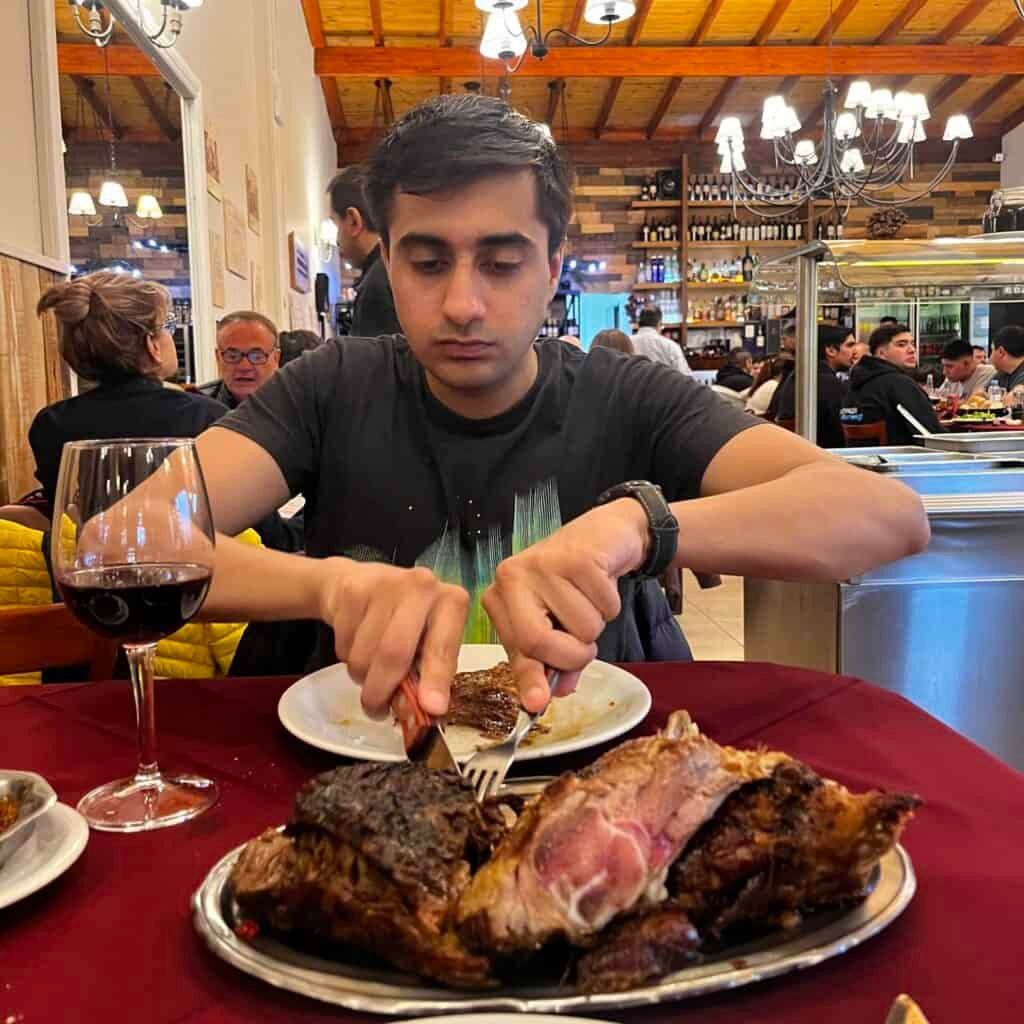
Ushuaia takes its seafood seriously, especially centolla (king crab), which shows up on menus across town in towering, gloriously messy portions. Pair it with mussels, grilled fish, or shrimp and you’ve got a meal that feels properly earned after a day out in the cold.
Some of my favourites:
- Parilla La Estancia for classic Argentine barbecue and portions that don’t hold back
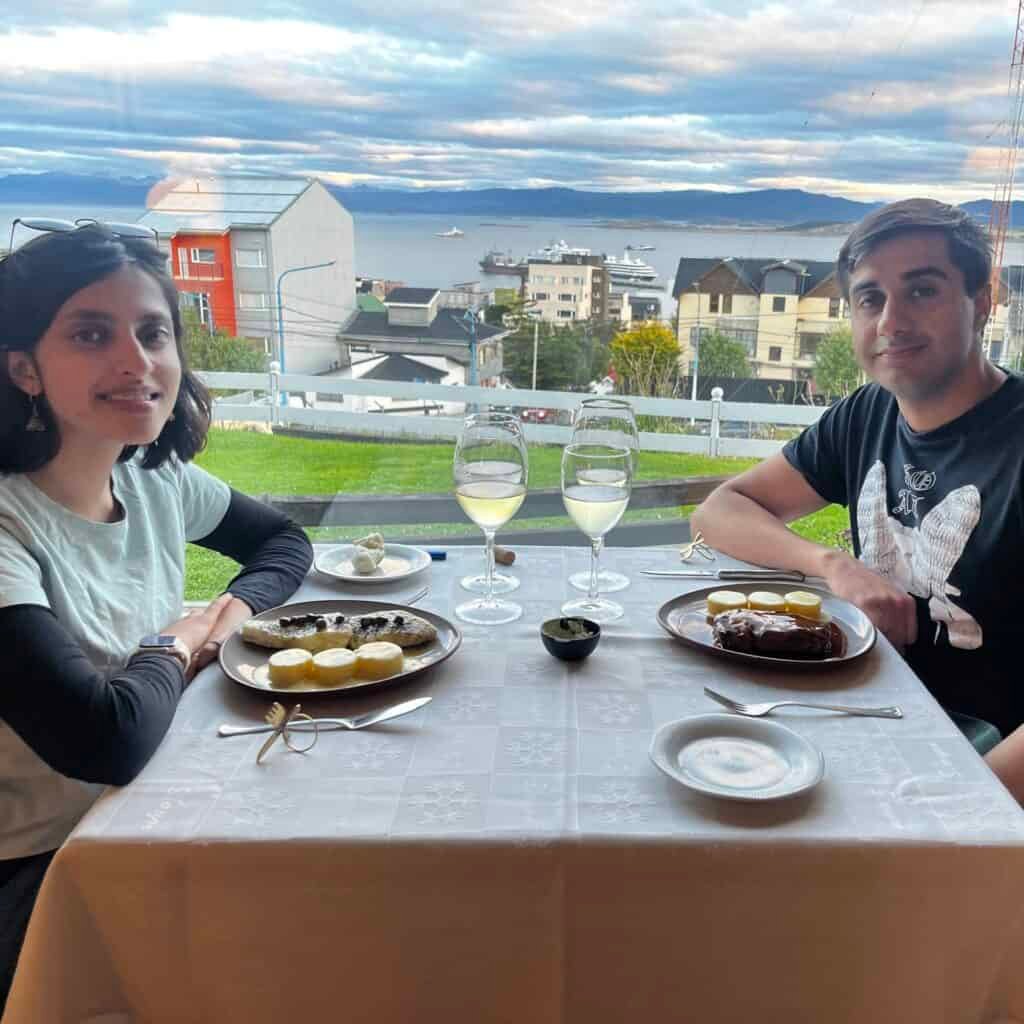
- Kaupe Restaurant for crab and a proper view, reservation required
- Jeremy Button Gintonic for cocktails and some of the best post-hike people-watching in town
And if you’ve got a sweet tooth, find something stuffed with dulce de leche. It’s Argentina’s unofficial national treasure.
11. Hike to Martial Glacier
The trail to Glaciar Martial starts just a few kilometers outside Ushuaia, which makes it one of the easiest half-day hikes you can do without leaving the city. It’s a 6km round-trip climb along a rocky trail, with views over Ushuaia, the Beagle Channel, and the mountains ringing the bay.
The glacier itself is modest these days. Climate change hasn’t been kind to it, and what’s left looks more like a stubborn patch of snow than the wall of ice photos from decades ago suggest. The trail is what makes it worth doing anyway: well-marked, steady climb, and you can start it in the morning and be back in town for a late lunch.
🏔️ This guided hike to Martial Glacier comes with poles, crampons, and lunch at the top.
12. Take a Helicopter Tour Over Ushuaia
If you’ve got the budget and a decent tolerance for turbulence, this is as scenic as Ushuaia gets. Both real options here fly you over the Andes, Ushuaia Bay, and the surrounding glaciers and valleys, and both land somewhere in the mountains for a champagne toast. The real difference is scope and price.
🚁 The shorter version runs about 40 minutes in the air, flies past the Emerald Lagoon and Cerro Castor, and lands for a quick champagne toast before heading back. At $130, it’s the more accessible splurge.
🚁 The longer version costs considerably more, around $525, but gives you real time on the ground: landing on a plateau high in the Cordillera with room to actually walk around and take photos before flying back.
13. Catch (and Eat) Your Own King Crab in Puerto Almanza
About an hour outside Ushuaia is Puerto Almanza, a tiny fishing village where you can catch your own centolla and then eat it within the hour. Local outfits run this as a combined boat trip and lunch: you help pull up the traps, then watch your catch get cleaned and cooked right there on the dock.
14. Recover at Arakur’s Spa
I landed in Ushuaia straight off a flight from my own wedding in Pakistan, still running on adrenaline and almost no sleep. Jetlagged, overstimulated, held together by bobby pins and airport coffee, I checked into Arakur and, for the first time in weeks, actually exhaled.
The hotel sits above the city in a private nature reserve, with panoramic views over Ushuaia, the Beagle Channel, and the mountains beyond. Glass, stone, warm wood, the kind of place that makes you forget you own a phone. I spent three full days moving between hot tubs and napping under wool blankets with the curtains open. I’ve rarely felt like I earned something as completely as I earned that.
You don’t have to stay overnight. Arakur sells spa day passes if you just want a few hours of it. But if you’re arriving from far away and need to reset before the trip actually starts, book the night.

15. Mail a Postcard from the End of the World
There’s a small wooden post office on stilts inside Tierra del Fuego National Park, right on the edge of the Beagle Channel. It claims to be the southernmost post office in the world, and whether that’s technically true or just good marketing, it’s worth the five minutes.
You can mail a postcard (expect delays measured in weeks, not days), get a stamp in your passport, or just talk to whoever’s running it that day. Hours are seasonal and loosely enforced, so if you see it open, go in. Bring cash.
16. Ski at the World’s Southernmost Resort
Cerro Castor sits about 30 minutes outside Ushuaia and runs a short but solid season from late June to early October. The slopes are mostly gentle, the infrastructure holds up, and you’re skiing through lenga forest with glaciers visible in the distance.
I didn’t ski myself, but I visited during the season and the energy was somewhere between Patagonia and a European après-ski bar. Gear rental is on site, and prices run cheaper than Bariloche or Europe, though not by a huge margin. It’s popular with locals and Brazilians escaping their own winters, so book ahead if you’re going during peak season. Even without skiing, the drive out is worth it, especially paired with a snowshoe walk or mulled wine at the lodge.

Final Tips Before You Go
When to Visit
November to April is the sweet spot—Patagonia’s version of spring, summer, and autumn all rolled into one unpredictable weather system. That’s when you’ll get the best shot at clear skies, long hiking days, and functioning trail access. Winter (June–September) is ski season, but unless you’re here for the slopes, you’ll be missing most of what makes Ushuaia worth the trip.
How Long to Stay
I spent two weeks in Ushuaia. You don’t need that long unless you’re slow-traveling, working remotely, or developing a deep personal relationship with centolla. For most travelers, 2–3 days is enough to hit the highlights. Add an extra day or two if you’re camping or doing longer hikes.
After Ushuaia, most travelers head north into Patagonia proper. If you’re torn between jagged peaks or massive glaciers, this breakdown of El Calafate and El Chaltén might help.
Where To Stay In Ushuaia
Ushuaia has something for every budget—just book early in summer, especially if penguin season overlaps with cruise season.
Luxury | Arakur Resort & Spa. Worth the splurge for the views, the spa, and the quiet. I stayed five nights post-wedding and have never needed hot tubs and silence more. Free hourly shuttles into town.
Mid-range | Southern Suits B8. Central, comfortable, walking distance from most of downtown.
Budget | Selknam. Friendly, simple, and better spent on crab than on bedding.
Practical Tips for Visiting Ushuaia
Best time to visit
November through April is the sweet spot, covering Patagonia’s version of spring, summer, and autumn in one unpredictable weather system. That’s your best shot at clear skies and full trail access. Winter (June to September) is ski season, and unless Cerro Castor is the whole point of your trip, you’ll miss most of what makes Ushuaia worth visiting.
Getting there and around
Ushuaia’s Malvinas Argentinas International Airport has direct flights from Buenos Aires, El Calafate, and occasionally Santiago. Expect $100 to $250 USD one way depending on season and airline. If you’re staying at Arakur, the hourly shuttle covers transport into town. Otherwise, taxis are easy and reasonably priced, and most day trips include transfers, so a rental car isn’t essential unless you want full flexibility in the national park. After Ushuaia, most people head north into Patagonia proper. If you’re deciding between jagged peaks or massive glaciers next, this breakdown of El Calafate and El Chaltén should help.
Money
Cash is king in Argentina, and Ushuaia is no exception. If you’re routing through Buenos Aires first, change your USD there to take advantage of the blue rate, the unofficial exchange rate that gets you significantly more than the official one. Ushuaia’s cambios offer worse rates, which holds true for most smaller Argentine cities. Don’t count on your card working everywhere. Some places won’t take it at all.
Is Ushuaia Worth the Flight South?
If you’re already in Argentina and even remotely tempted, go. This isn’t Antarctica’s consolation prize. It’s its own trip, worth the flight south on its own terms.
It’s not overhyped. It’s not overrun. It’s just far, and that distance is most of the charm. Bring layers, bring cash, and expect the weather and the prices to test your patience at some point. It’s worth it the moment you’re standing at Lapataia Bay with the Beagle Channel in front of you, thinking: this is genuinely the edge of something.
Ushuaia is also just one stop on a much longer route south. If you’re mapping out the rest of it, here’s the full route I took through Argentina, Ushuaia included.
