
Most Dominican Republic itineraries fall into two extremes. They either tell you to stay inside a Punta Cana resort for a week, or they try to squeeze half the country into a rushed trip that doesn’t make much logistical sense.
Flights from Toronto were cheapest to Punta Cana, but I already knew I didn’t want to spend my entire trip inside a resort corridor. Instead, I turned the trip into a road loop.
Over three weeks, we traveled from Punta Cana to Las Terrenas on the Samaná Peninsula and finished in Santo Domingo. The moment we left the resort strip, the country felt completely different. The highways were easy to drive, the landscape turned intensely green, and the beach towns felt like real places rather than vacation infrastructure.
If you’re trying to plan a Dominican Republic itinerary with great beaches without getting stuck in a resort bubble, this route works well. It’s ideal for a 1–2 week trip but flexible enough to adjust depending on how slowly you want to travel.
Dominican Republic itinerary overview
This itinerary follows a simple route across the country: Punta Cana → Las Terrenas → Santo Domingo. Each stop shows a different side of the Dominican Republic, from resort-heavy coastlines to small beach towns and the oldest European city in the Americas.
I spent about three weeks traveling this route, but it works just as well for a 7–14 day trip. Distances are manageable, and the contrast between destinations keeps the trip interesting instead of repeating the same beach experience in different places.
Punta Cana functions mostly as the country’s tourism gateway. Las Terrenas offers the slower beach-town rhythm many people hope to find in the Caribbean. And Santo Domingo adds something most Caribbean itineraries skip entirely: 500 years of colonial history layered into a modern capital city.
Las Terrenas ended up being the highlight of the entire itinerary.This route works especially well for independent travelers, couples, and remote workers who want to see more than an all-inclusive resort while still keeping logistics simple. If you land in Santo Domingo instead of Punta Cana, you can easily reverse the route and travel north toward the Samaná Peninsula instead.
How many days do you need in the Dominican Republic?
The biggest mistake I see in Dominican Republic itineraries is trying to move too fast. Caribbean destinations often look close together on a map, but constantly changing bases means you spend more time in transit than actually enjoying where you are.
As a general rule, I plan at least three nights in each destination. That gives you enough time to settle in, explore the beaches, and get a real feel for a place instead of rushing through it.
This matters even more in places like Las Terrenas, where the appeal isn’t a long checklist of attractions. Most days there naturally revolve around the same simple routine, beach in the morning, lunch somewhere casual, maybe a short drive or walk, then dinner in town. If you only stay one or two nights, you barely get a chance to experience that slower pace.I tend to travel slower than most people, which is why I spent about ten days in Las Terrenas alone. You don’t need that long, but giving each stop a few days makes the entire trip far more enjoyable.
Where to start your trip: Punta Cana or Santo Domingo?
Most international travelers arrive in Punta Cana, largely because flight connections are easier. From Toronto alone there are usually seven or eight flights a day, which tells you how heavily this route is traveled. Prices also tend to be lower compared to flying into Santo Domingo.
That convenience is the main reason many people start their trip in Punta Cana, even if they don’t plan to stay long. It’s simply the easiest gateway into the country.
That said, Santo Domingo can be the better starting point if you’re planning to explore beyond resorts. The city has stronger infrastructure, reliable WiFi, and a walkable historic center in Zona Colonial. It also places you closer to the Samaná Peninsula if Las Terrenas is one of your main stops.
✈️ Find the cheapest flights to the Dominican Republic
Before booking, I usually compare routes on Skyscanner. Flights into Punta Cana are often significantly cheaper, especially from cities like Toronto.
→ Search flights on Skyscanner
If you’re still unsure which airport makes more sense, I break it down in detail in my comparison of Punta Cana and Santo Domingo.
Driving in the Dominican Republic
For me, driving completely changed how the trip felt. The moment we left the Punta Cana resort corridor, the scenery shifted quickly. Resorts and manicured entrances disappeared, and the landscape opened into rolling hills, roadside fruit stands, and dense shades of green that you just don’t see if you stay near the airport zone.
Road trips also give you a very different sense of the country. Instead of moving between organized transfers, you see everyday life along the way, small towns, roadside shops, people selling coconuts or plantains along the highway. I genuinely enjoy road trips anyway, but this was one of those places where driving made the experience far more interesting.
Later in the guide I’ll explain how to do this itinerary without renting a car, but if you enjoy driving, it’s a great way to explore.
Is it safe to drive in the Dominican Republic?
Yes, it’s generally safe to drive in the Dominican Republic, and a lot of the warnings online are exaggerated.
Before visiting I read plenty of posts making it sound chaotic, but the reality felt much more manageable. The highways between major destinations are in good condition, road signs are clear, and distances between places like Punta Cana, Las Terrenas, and Santo Domingo are straightforward.
A lot of the panic online seems to come from travelers who are only comfortable driving in places that function exactly like North America or Western Europe. If you’ve driven anywhere outside that bubble, this probably won’t feel particularly shocking.
Yes, motorbikes move around freely. Yes, people merge confidently. But that’s normal in a lot of the world. You just stay aware, don’t drive on autopilot, and go with the flow of traffic.
We were stopped by police once while driving through the countryside. As soon as we said we were tourists, they smiled, waved us through, and that was the end of it.
Overall, it ended up being far easier than the internet made it sound.
Renting a car and road trip logistics
Renting a car in Punta Cana is straightforward. The rental desks are all located together at the airport, so you can compare options easily once you arrive.
A few practical things to know:
- You drive on the right-hand side of the road, the same as in Canada and the US
- Toll booths are common on the highways
- Tolls typically cost 100–400 Dominican pesos
- Bring cash in pesos, as toll booths don’t usually accept cards or USD
- Download offline maps before leaving the airport
🚗 Compare car rentals before landing
I used DiscoverCars to compare providers and check insurance coverage before arriving. It’s much easier than trying to sort through rental desks at the airport counter.
→ Compare rental options in Punta Cana

Punta Cana
Punta Cana is where most trips to the Dominican Republic begin. It’s the country’s main tourism hub and one of the busiest Caribbean destinations for North American travelers.
Unlike many beach towns that grew gradually, Punta Cana was deliberately developed as a large-scale tourism corridor starting in the 1970s. Resorts, private entrances, and airport transfers shape how the entire area functions. The goal was convenience for short vacation stays, not necessarily building a walkable coastal town.
That development model explains why the experience can feel a bit strange if you’re traveling independently.
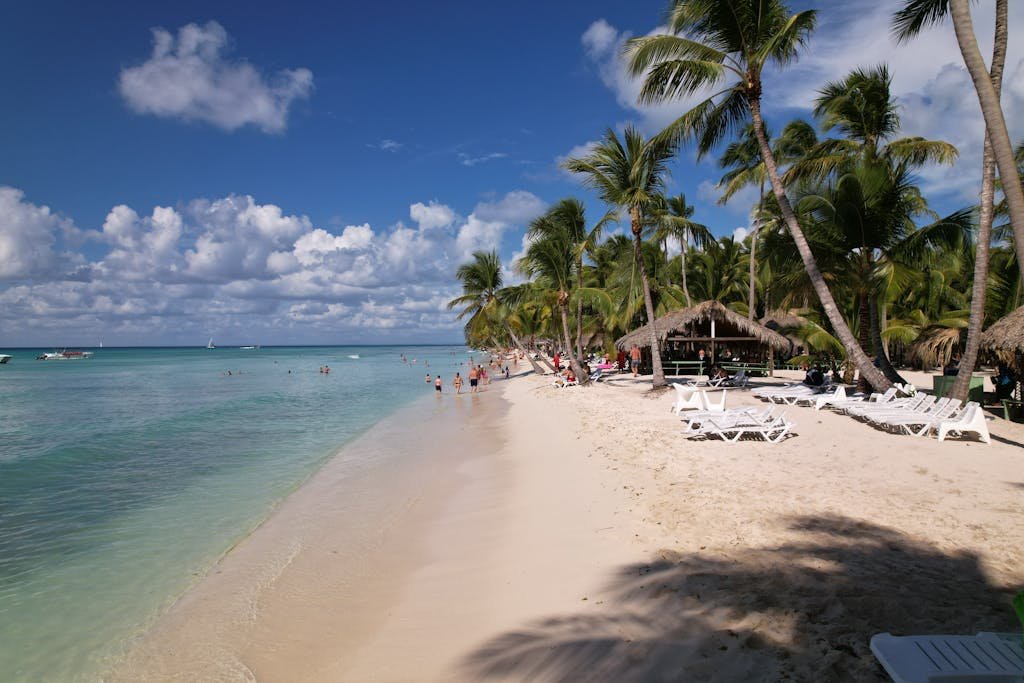
When I was there, the beaches themselves were beautiful, wide sand, calm turquoise water, everything you expect from the Caribbean. But the social dynamic felt noticeably segmented. Most people on the beach were tourists staying in nearby resorts, while locals were usually working rather than spending time there themselves. Even staying outside the resort system, I felt that separation.
It doesn’t make Punta Cana bad, it just means it’s designed for a specific type of trip. For this itinerary, I think of Punta Cana less as the main destination and more as a practical starting point before heading deeper into the country.
What to see and do in Punta Cana
If you’re only staying briefly before continuing the road trip, keep Punta Cana simple and focus on the beaches.
- Playa Bávaro – The most famous stretch of sand in the area. Calm water, soft sand, and the classic Caribbean look most people expect from Punta Cana. Early mornings are the best time to walk the beach before the excursion boats and vendors arrive.
- Macao Beach – About a 30-minute drive north and noticeably less polished than Bávaro. Rougher waves, fewer large resorts, and a more open stretch of sand.
- Saona Island – The most popular day trip from Punta Cana. Tours usually combine a catamaran or speedboat ride with stops at shallow sandbars where the water is waist-deep and bright turquoise.
- Parasailing and boat excursions – You’ll see these constantly leaving from the main beaches. They’re easy to book on the spot and don’t require much planning.
If you’re visiting independently rather than staying inside a resort, I go into much more detail in my guide to experiencing Punta Cana without staying in an all-inclusive.
Where to stay in Punta Cana
Los Corales and El Cortecito are the two areas that actually work for independent travelers. They’re walkable, have public beach access, and you can easily reach restaurants, grocery stores, and small cafés without constantly calling an Uber.
HM Bavaro Beach – Adults Only | A smaller beachfront hotel if you want something comfortable but still walkable to restaurants and cafés, this is a great middle ground.
Grand Bavaro Princess | If you do want to experience the classic Punta Cana resort setup for a night or two, this is one of the better options.
The drive from Punta Cana to Las Terrenas
The drive from Punta Cana to Las Terrenas takes about 3.5–4 hours and passes near Santo Domingo before heading north toward the Samaná Peninsula.It’s an easy highway drive, but I recommend doing it during the day if you can. The countryside becomes noticeably greener as you head toward Samaná, and the hills start appearing in the distance the closer you get to the peninsula.
Las Terrenas
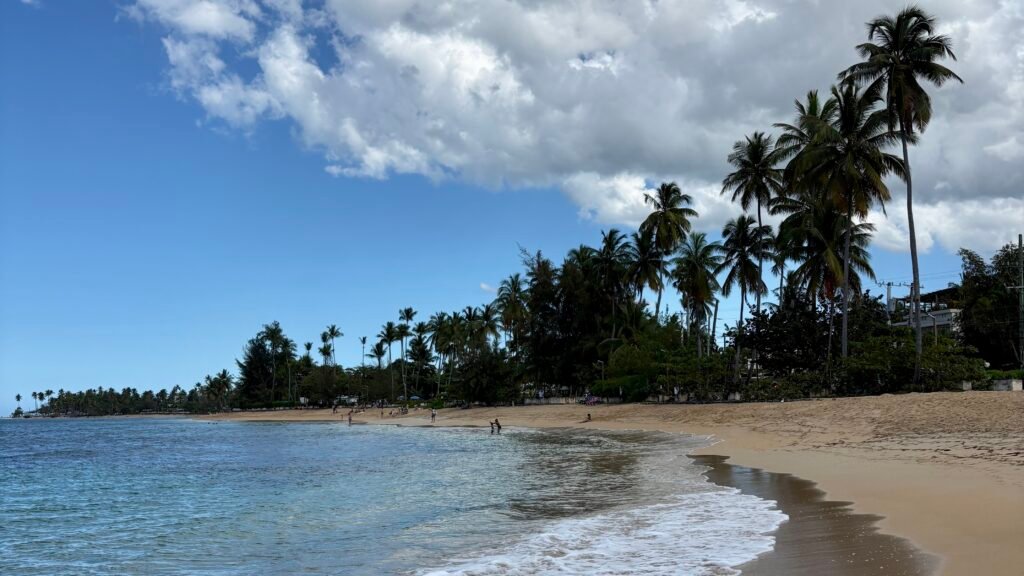
Las Terrenas ended up being the best stop of the entire trip.
After Punta Cana, the difference is immediate. Las Terrenas feels like an actual town where people live. It’s a small beach community on the Samaná Peninsula with a mix of Dominican life and a surprisingly large European expat population, which explains the French bakeries, good restaurants, and overall slower pace.
The beaches here are swimmable, the internet is reliable, and everything is close enough that you can walk between the beach, groceries, and dinner without much effort. That combination is probably why Las Terrenas has quietly become a favorite base for remote workers and long-stay travelers.
What to see & do in Las Terrenas
Las Terrenas isn’t about checking off a list of attractions. Most days revolve around simple routines: beach, lunch somewhere casual, maybe a short ride across town.
A few places worth spending time:
- Playa Punta Popy – The easiest beach to reach from town and usually calm enough for swimming.
- Playa Bonita – A wider, more scenic stretch of sand with several relaxed beach clubs.
- Las Terrenas town center – Small streets lined with cafés, bakeries, colmados, and grocery stores.
- Beach clubs – Order lunch or a drink and you’ll usually get access to loungers for the afternoon.
- ATV rentals & moto taxis – Easy ways to explore nearby beaches if you don’t have a car.
If you want a deeper breakdown of restaurants, neighborhoods, and daily life, I wrote a full guide to Las Terrenas covering where to stay, eat, and what daily life looks like in town.
Where to stay in Las Terrenas
Staying near the town center keeps you within walking distance of the beach, restaurants, and grocery stores, which makes the entire stay much easier.
Leeloo Boutique Hotel | A boutique hotel close to the center of town with great service and walkable beach access.
El Mambo Boutique Hotel | If you want something more upscale, this beachfront property is one of the most beautiful places to stay in the area.
Detours around Samaná if you have more time
If you have a few extra days, the Samaná Peninsula has some great day trips.
- Porto de Mosquito – A quieter beach we visited for my husband’s birthday. Fewer people, more open space.
- El Limón Waterfall – A well-known waterfall about 30–40 minutes from town with a swimmable pool at the base.
- ATV or motorbike rides – One of the easiest ways to explore the hills and smaller villages around the peninsula.
🌿 Explore the Samaná mountains
If you want to see more of the peninsula without planning logistics, guided ATV rides or waterfall tours make things simple.
→ See El Limón and ATV tours
The drive from Las Terrenas to Santo Domingo
The drive from Las Terrenas to Santo Domingo takes about 2–2.5 hours and follows a smooth highway south toward the capital.
After spending days in a quiet beach town, arriving in Santo Domingo feels like entering a completely different side of the Dominican Republic. Traffic picks up, buildings get taller, and the energy shifts from relaxed coastal life to a busy Caribbean capital.
Santo Domingo
After beach towns and quiet coastal roads, the capital feels dense, historic, and energetic.
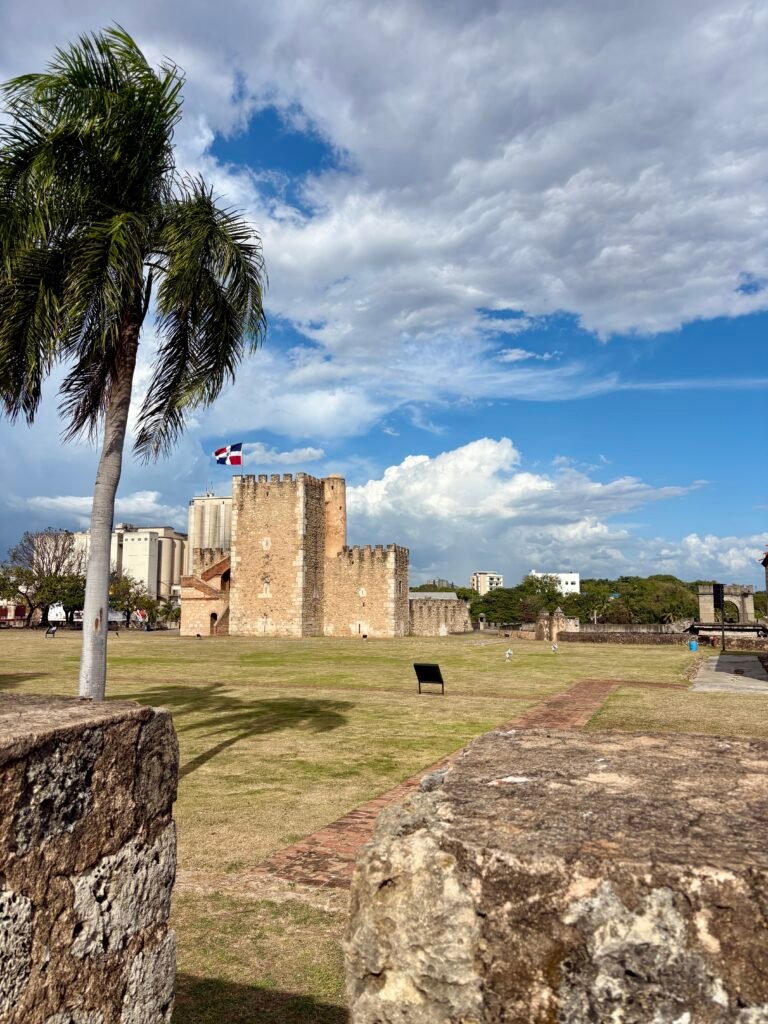
Santo Domingo is the oldest European city in the Americas, founded in 1496, and it served as the Spanish Empire’s main base in the New World. The first cathedral, the first university, and some of the earliest colonial fortifications in the Americas were built here. Walking through the historic center means moving through more than 500 years of layered history.
At the same time, it’s still a functioning capital. Traffic is chaotic, music spills out of bars at night, and the contrast between colonial streets and modern high-rises is immediate.
After the slower rhythm of Las Terrenas, Santo Domingo brings architecture, history, and nightlife into the itinerary.
What to see and do in Santo Domingo
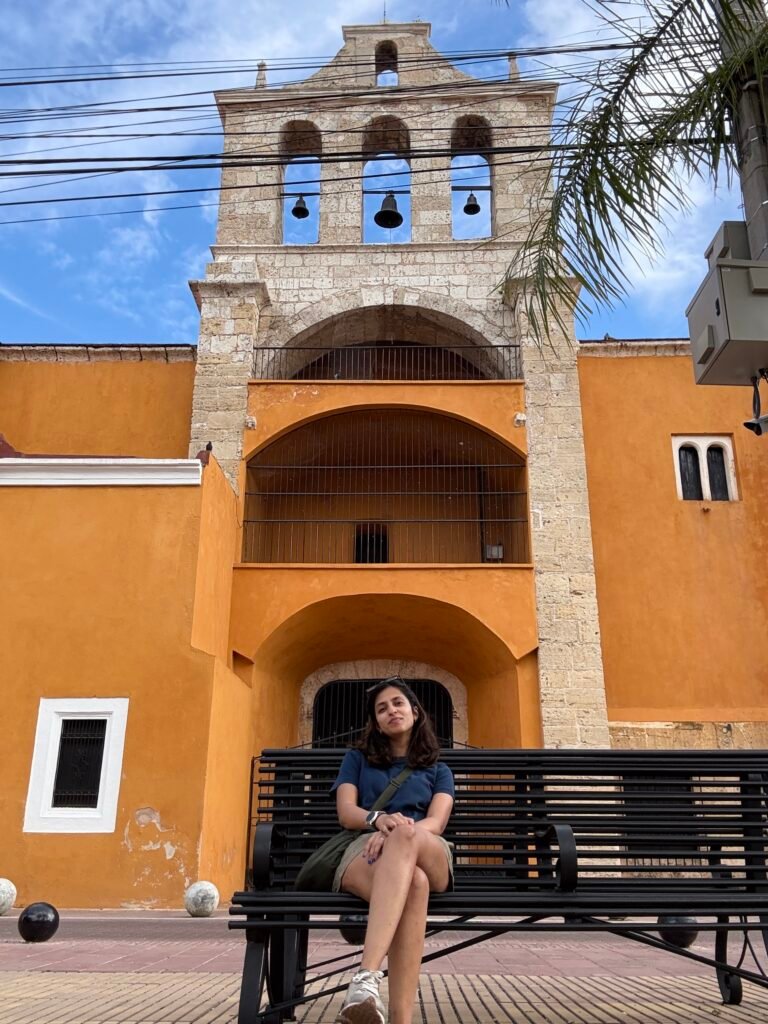
Most of the main sights are concentrated in Zona Colonial, the historic district and a UNESCO World Heritage Site. This is where the city feels most walkable.
A few places worth exploring:
- Zona Colonial – The heart of the historic center, filled with cobblestone streets, pastel buildings, cafés, and small plazas.
- Alcázar de Colón – The former residence of Diego Columbus, Christopher Columbus’ son. It’s one of the best-preserved colonial buildings in the Americas.
- Fortaleza Ozama – A 16th-century fortress overlooking the river, built to protect the Spanish colony from pirates.
- Catedral Primada de América – Considered the oldest cathedral in the Americas, built in the early 1500s.
- Rooftop bars – One of the best ways to end a day in the city, with views over the colonial rooftops and Caribbean sunset.
Where to stay in Santo Domingo
If it’s your first time in Santo Domingo, stay in Zona Colonial. The historic center is compact and walkable, and most of the main sights, restaurants, and bars are within a few blocks of each other.
Hotel Villa Colonial | A beautiful small boutique hotel inside a restored colonial house with a quiet courtyard and pool.
El Beaterio Casa Museo | A unique hotel set inside a 16th-century building that used to be part of a convent. The architecture alone makes it worth staying here, and the location is perfect for exploring the historic district on foot.
Doing this Dominican Republic roadtrip without a car
If you don’t want to drive, this itinerary is still completely doable using buses. The trade-off is a bit more coordination, but the main routes are straightforward.
Punta Cana → Las Terrenas without a car
There’s no direct bus from Punta Cana to Las Terrenas, so the easiest route is via Santo Domingo.
First take a bus from Punta Cana to Santo Domingo with Expreso Bávaro, then transfer to the Asotrapusa bus heading to Las Terrenas. The second leg takes about 2.5–3 hours.
→ You can check schedules here.
Las Terrenas → Santo Domingo without a car
This leg is simpler. Asotrapusa buses run regularly between Las Terrenas and Santo Domingo and take about 2–3 hours depending on traffic.
Buses are comfortable, inexpensive, and commonly used by both locals and travelers.
Who should skip the rental car entirely
You’ll probably be fine without a car if you:
- stay centrally in each destination
- prefer buses over driving
- are doing a shorter trip and don’t want to deal with logistics
Once you’re in places like Las Terrenas or Zona Colonial, you can easily get around on foot, with moto taxis, or occasional Ubers.
How I would plan this itinerary again
This route works well if you want to see several sides of the Dominican Republic in one trip. Punta Cana is easy to fly into, Las Terrenas gives you the beach town experience many people are actually looking for, and Santo Domingo adds a layer of history most Caribbean itineraries skip.
But if I were planning the trip again, I’d probably do it a little differently.
I’d fly into Santo Domingo, drive north to Las Terrenas, and spend most of my time exploring the Samaná Peninsula. That area felt far more relaxed and connected to everyday Dominican life than the resort-heavy east coast.
From there, I’d likely continue toward Cabarete, which is widely known as the kite surfing capital of the Caribbean. I tried kite surfing in Las Terrenas but didn’t get consistent wind, which is something Cabarete is much better known for.
In other words, the most interesting parts of the country start to appear once you move beyond Punta Cana. If you’re thinking about spending more time on the peninsula, I go into much more detail about neighborhoods, restaurants, and what daily life looks like in my full guide to Las Terrenas.
