
Las Terrenas, on the Samaná Peninsula in the Dominican Republic, had everything I thought I wanted: swimmable beaches, solid WiFi, and enough infrastructure to work remotely without stressing about power cuts.
It’s a small, expat-heavy beach town that doesn’t fit neatly into the usual Dominican Republic categories. It’s not an all-inclusive strip of identical resorts, and it’s not a chaotic backpacker beach town either. It sits somewhere in between – calm and integrated into everyday Dominican life rather than separated behind resort gates.
I spent 10 days here while working remotely for part of the trip, which gave me a good sense of what day-to-day life in Las Terrenas actually looks like. We flew into Punta Cana because the flight was significantly cheaper, and I already knew I didn’t want another resort-style beach experience.
If you’re deciding whether Las Terrenas is worth your time and money, this guide breaks down what it’s actually like – including where to stay, what it costs, whether you need a car, and why I’d go back despite the price.
What Is Las Terrenas Actually Like?
Las Terrenas is small. You can walk across the main part of town in about 10 minutes. Most of what you’ll need – beaches, restaurants, grocery stores – sits within a few blocks of each other.
Spanish is dominant, but you’ll hear French regularly, especially in restaurants and bakeries. There’s a noticeable European expat presence, along with retirees and a growing number of remote workers. It’s not overrun, but it’s not undiscovered either. Mass tourism hasn’t hit in a Punta Cana way. There are no mega-resorts or cruise ship crowds.
During the day, the town moves slowly. People walk to the beach with towels over their shoulders. Motorbikes pass constantly. Small colmados sit next to beach clubs. There are no wide boulevards or polished storefronts. Roads are uneven. ATVs and motos are part of the background noise.
Infrastructure works. Electricity was reliable. Internet speeds were consistently strong. Grocery stores were well stocked.
It’s also not cheap. Dinner prices reflect the tourist and expat crowd, and the more affordable local spots tend to close earlier. Las Terrenas is stable, comfortable, and easy to live in for a while – which is probably why so many people stay.
Where Is Las Terrenas?
Las Terrenas sits on the northeastern coast of the Dominican Republic on the Samaná Peninsula.
It feels noticeably separate from the resort-heavy eastern coastline and from the density of Santo Domingo. You’re on a peninsula surrounded by beaches, small fishing villages, and pockets of jungle.
Despite feeling removed, Las Terrenas is still reasonably connected to the rest of the country. Most travelers reach it by driving from either Punta Cana or Santo Domingo.
I’ve embedded a map below with the neighborhoods I recommend, the beaches we spent the most time at, and the restaurants and bars I’d go back to. If you’re planning your stay, you can open it and save it.
I’ve embedded a map below with the neighborhoods I recommend, the beaches we spent the most time at, and the restaurants and bars I’d go back to. If you’re planning your stay, you can open it and save it.
Click on the top right corner to open in the Google Maps app. Click on the star to save to your google account.
How Long to Spend in Las Terrenas?
I was in LT for 10 days and would have extended it without hesitation.
We usually stay longer than the average visitor. We work remotely, and I don’t like forming opinions about a place after a weekend. A few extra days changes how you see it.
Las Terrenas isn’t packed with major sights. You’re not moving between landmarks all day. Most days look similar: beach, lunch, maybe a short drive, dinner. Everything works on beach time.
If you’re short on time, 3-4 days are good to see the main beaches and do one excursion. You’ll understand the layout and the pace. The more time the better, of course!
Internet & Working Remotely in Las Terrenas
Electricity was reliable the entire time I was there. Internet speeds were consistently strong, noticeably better than what I experienced in Punta Cana. If you’re working remotely, Las Terrenas is a practical base.
📱 I used an Airalo eSIM when we landed so I had data immediately for the drive and first grocery run. It’s the easiest way to avoid dealing with airport SIM cards.

Getting to Las Terrenas
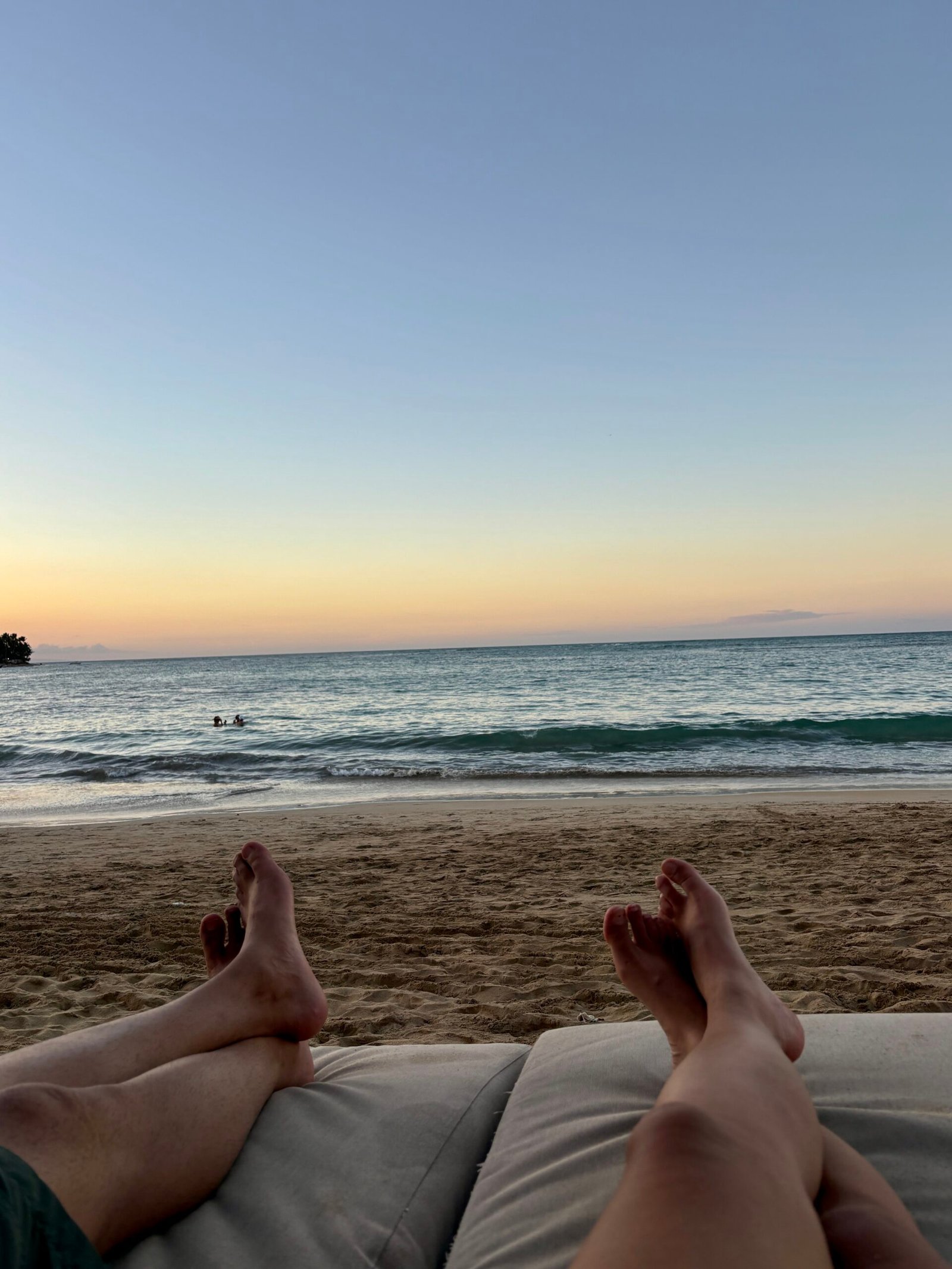
You can land directly at Las Terrenas airport. Alternatively, you can land in Punta Cana (PUJ) or Santo (SDQ) and make the drive.
We flew into Punta Cana because the flight was significantly cheaper and then drove across the island.
If you’re planning to spend time there first, especially outside of a resort, here’s what to do in Punta Cana without staying at a resort.
Driving to Las Terrenas
From Punta Cana, expect roughly a 3.5–4 hour drive. From Santo Domingo, closer to 2–2.5 hours depending on traffic.
The highways are well maintained, mostly smooth toll roads, with a hillier final stretch as you enter the Samaná Peninsula.
Tolls (as of 2026) range between 100–200 DOP per booth, and they accept Dominican pesos only. Convert cash before leaving the airport or city.
We rented a car because we were combining multiple destinations and wanted flexibility. If Las Terrenas is your only stop and you’re staying centrally, you can comfortably do the trip using public transportation and skip the rental entirely. Once you’re in town, you don’t really need a car.
If you’re planning a multi-stop itinerary across the island, driving makes more sense – especially if you’re structuring it as a broader Dominican Republic road trip
🚗 When comparing rental prices, I usually check Discover Cars first since it aggregates different companies and sometimes ends up cheaper than booking directly. We ended up with Budget, but another company was cheaper the week before.
Public Transportation Option
From Santo Domingo to Las Terrenas
The most direct option from Santo Domingo is the Asotrapusa bus. The fare is 500 DOP per person, luggage is allowed, and there are several departures throughout the day. You pay once you’re seated and the bus is already moving.
The journey takes around 2.5–3 hours depending on traffic.
If you’re landing at Santo Domingo airport (SDQ), you’ll need to take a taxi from the airport to the Asotrapusa bus station first. Arrive early to secure your seat, and check the official listing before you go since schedules can change.
From Punta Cana to Las Terrenas (Without Driving)
If you land at Punta Cana (PUJ) and aren’t renting a car, you’ll need to get to Santo Domingo first.
From the airport, take a short taxi or local ride to the bus stop in Verón. From there, buses operated by APTPRA or Expreso Bávaro run to Santo Domingo roughly every four hours. The journey takes about 2 hours and 30 minutes depending on traffic, and tickets typically cost $5–$7.
The final stop in Santo Domingo is Parque Enriquillo.
Another option is taking Cocotours or a taxi to Higüey (about 40 minutes from Punta Cana airport), where frequent APTPRA buses also run to Santo Domingo.
Once in Santo Domingo, transfer to the Asotrapusa bus to Las Terrenas.
This route is completely doable, but it adds time and coordination. If you’re short on days, driving is more efficient. If you’re staying longer and based centrally in Las Terrenas, public transport works fine.
Best Time to Visit Las Terrenas
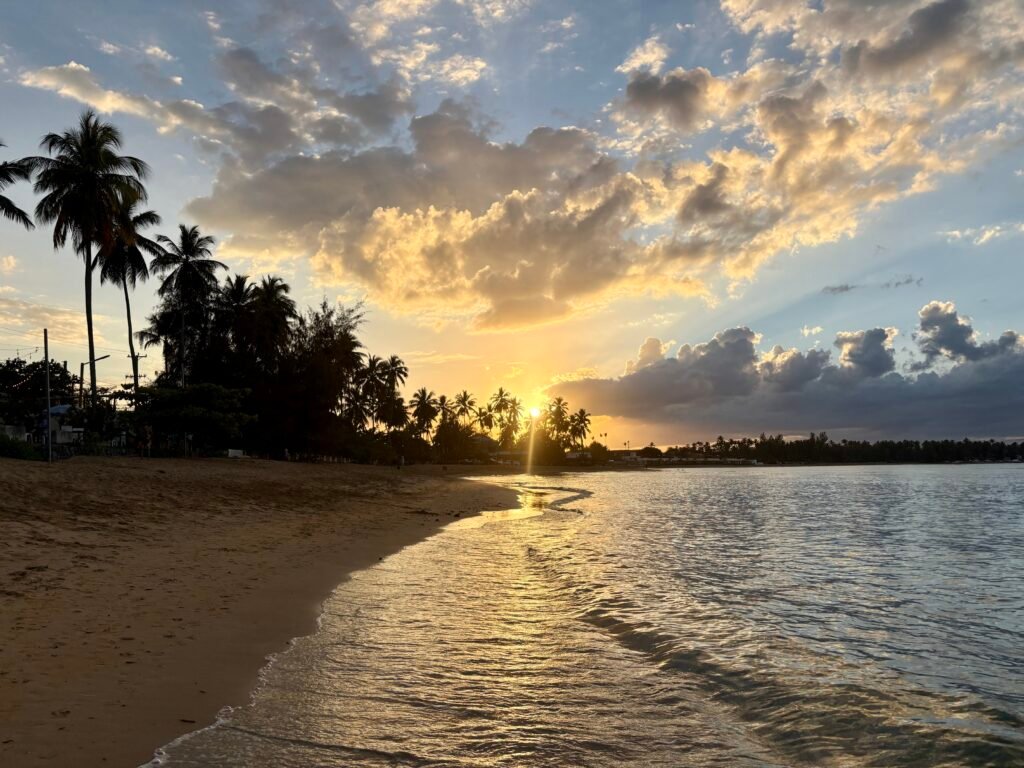
Las Terrenas is warm year-round, but conditions shift depending on what you’re coming for.
December to April is the driest period and generally the most stable weather. Expect lower humidity, less rain, and more predictable beach days. It’s also peak season, which means higher accommodation prices.
May to November is wetter and more humid, with a higher chance of afternoon rain. It doesn’t rain all day, but showers can be frequent. This is also hurricane season, so keep that in mind.
If you’re coming specifically for kite surfing, wind conditions matter more than sunshine. The north coast of the Dominican Republic, especially Cabarete, is more consistent for wind sports. Las Terrenas can have wind, but it’s less predictable. We had three days set aside for kite surfing and didn’t get usable wind.
If your priority is swimming and general beach time, most months work. If your priority is wind, choose your timing carefully or consider Cabarete instead.Affiliate box or any extra infomration that might be helpful.
Getting Around
Do You Need a Car in Las Terrenas?
If you’re staying in the town center or near the main beaches, you probably don’t need a car.
Las Terrenas is compact and walkable. You can reach the beach, restaurants, and grocery stores on foot. For slightly longer distances, moto-taxis are everywhere. You’ll see drivers in reflective jackets waiting along the main roads. You can flag one down easily, but helmets are not typically offered.
Uber does operate in Las Terrenas, but availability is very limited. It’s useful when it works, just don’t rely on it late at night or during busier periods.
A car becomes useful if:
- You’re staying outside the center
- You want to explore multiple beaches
- You’re short on time
- You’re combining destinations
We had a car because we flew into Punta Cana and were continuing on to Santo Domingo afterward. If you’re structuring a multi-city trip, I break down the trade-offs in my Punta Cana vs Santo Domingo comparison.
If Las Terrenas is your only stop and you’re staying centrally, you can skip the rental.
ATVs and Motos
You’ll notice the number of ATVs immediately.
Typical rental prices:
- ATVs: around $50 USD per day
- Motos: around $40 USD per day
They’re convenient for beach hopping or short errands, but not necessary for most visitors. Roads are uneven in parts, occasionally sandy, and traffic includes a steady flow of motorbikes.
For most people staying near town, walking + occasional moto-taxi is sufficient.Affliate box or any extra infomration that might be helpful.

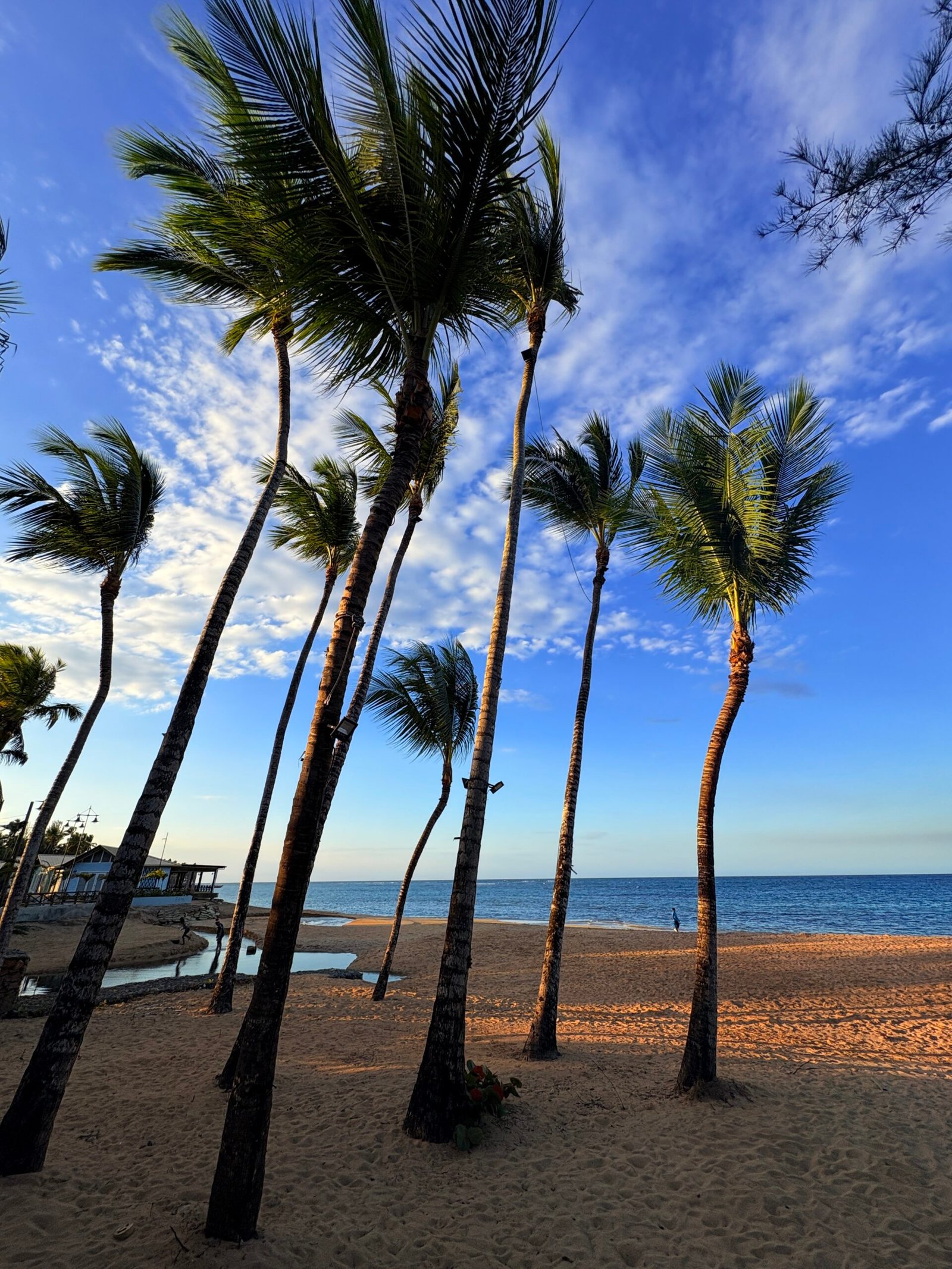
Beaches and Some Fun Things to Do in Las Terrenas
Las Terrenas Town
Las Terrenas town is small. The main activity is concentrated within a few blocks around Calle Duarte and the beachfront road. You can walk across the core in about 10 minutes.
You’ll find local colmados, fruit stands, hardware stores, and affordable Dominican lunch spots alongside French bakeries, wine shops, and interior design boutiques clearly catering to expats. There are small supermarkets selling both basic staples and imported European products, the latter noticeably expensive.
Playa Las Terrenas
Playa Las Terrenas runs directly along the town center and is the most convenient beach to access on foot. It’s functional and swimmable, with casual restaurants lining the edge and small fishing boats pulled up on the sand.
This is where daily life and beach life blend together. It’s not the most visually impressive stretch of coastline in the area, but it’s the easiest to use if you’re staying centrally.
Playa Punta Popy
Playa Punta Popy sits just east of the town center and is the second easiest beach to reach on foot from Calle Duarte. It stretches long and flat, with yellow sand and generally calm water.
Small wooden stalls sell fried fish, grilled chicken, tostones, and beer at lower prices than most dinner spots. A few beach clubs offer loungers if you order.
This is also where kitesurf schools operate when there’s wind.
Playa Las Ballenas & Playa Bonita
Both beaches stretch west of town.
Playa Las Ballenas is walkable from the center but feels more residential. Villas sit behind palms, vendors are fewer, and you can walk for 20–30 minutes without interruption.
Playa Bonita requires a short drive or moto ride. The sand is wider, the setting more dramatic, and beach clubs are more established.
El Limón Waterfall
El Limón is the standard half-day excursion, about 30–40 minutes away by car. Most visits involve a guided tour with a short hike or horseback ride to reach a 40-meter waterfall and swimming pool.
Personally, it didn’t look compelling enough for me to prioritize. If you’re a fan of waterfalls, it’s worth renting an ATV and doing it on your own. If you came primarily for beach time, it’s easy to skip.
Porto de Mosquito
We drove to Porto de Mosquito for my husband’s birthday. It’s less developed than the main beaches – fewer vendors, more open sand, fewer people.
It doesn’t feel dramatically different, just more stripped back. If you have a car or moto and want a quieter stretch of beach for a few hours, it’s a good option.
Kite Surfing (If the Wind Cooperates)
There are kitesurf schools along Punta Popy, but wind isn’t guaranteed. We set aside three days and only got a chance to try it out on the last day. I’ve added my recommended kite school to the map above as well.
If wind sports are your main reason for visiting the Dominican Republic, Cabarete on the north coast is more consistent. Las Terrenas works better as a swimming and slow-stay beach town than a dedicated kite destination.
Where to Stay in Las Terrenas
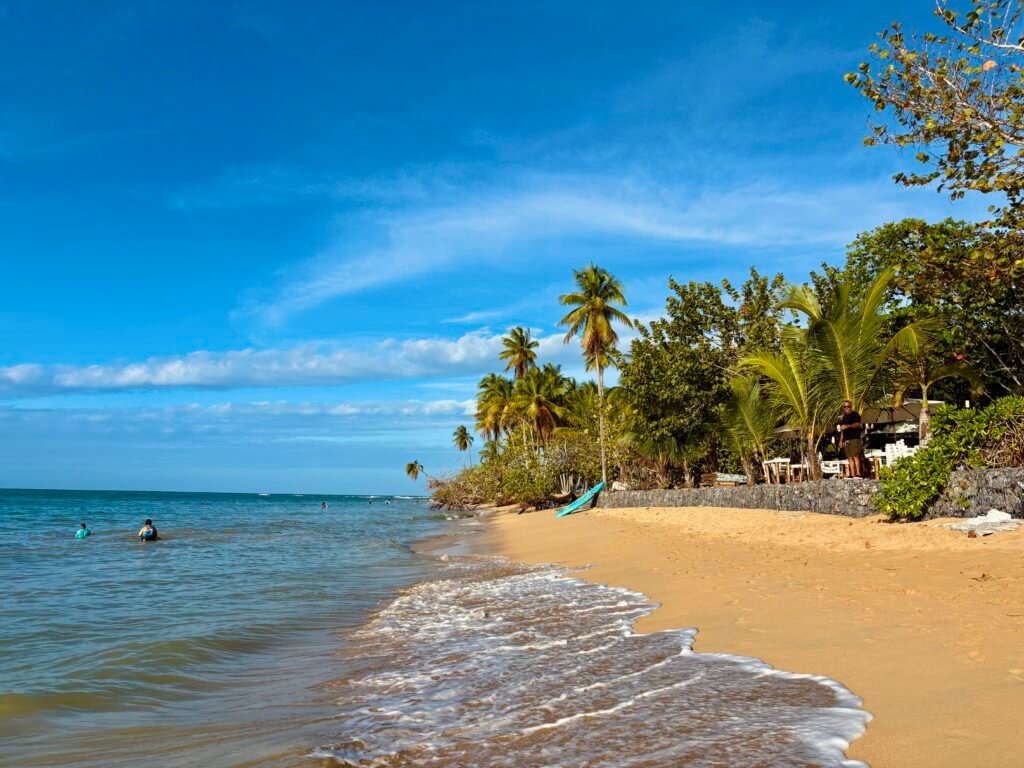
Las Terrenas isn’t huge, but the better-rated places book out quickly in high season (December–April). If you’re coming then, don’t leave it to the last minute.
We stayed in an Airbnb near Calle Duarte (about a 5-minute walk to the beach). It covered the basics – strong WiFi, working kitchen, solid location – and that’s what mattered most. But at that price point, I think I could have found something slightly nicer if I had booked a bit earlier.
Location-wise though, I wouldn’t change it. My priority was simple: walk to the beach, walk to groceries, walk to dinner.
Las Palmas Eco Residence($) – apartment-style units, good for longer stays and very practical. A strong option if you want a kitchen and independence.
Leeloo Boutique Hotel($$) – smaller, well-rated, central. Good middle ground if you want something more polished than an Airbnb but still walkable.
El Mambo Boutique Hotel($$$) – more design-forward and higher comfort level. Better if you want a boutique feel without going full resort.
Restaurants in Las Terrenas
Las Terrenas isn’t cheap when it comes to food. The general pattern is this: affordable local spots close early, and the tourist-facing restaurants stay open later.
We started structuring our days around that.
Cheap Local Lunch
Lunch is where you can keep costs reasonable.
Charlie’s Seafood is reliable for simple plates at fair prices.
Local pollo stands sell fried chicken and sides – basic, filling, inexpensive.
Casa Azul is good for pizza if you want something familiar without dinner-level pricing.
Most of these places wind down earlier in the evening.
Dinner & Drinks
Dinner is where prices climb. This is also when the expat and tourist crowd becomes more visible.
Etno Beach Club – solid setting, especially if you want dinner with your feet near the sand.
Tapas – good drinks, more social energy.
Tropical – strong grilled whole fish.
Hispaniola Spanish Home Kitchen – good paella.
Porto de Mosquito – we went for a birthday dinner. The shrimp ravioli was excellent; the rest was average.
If you’re at a beach club during the day, ordering food usually covers your lounger.
Tours in Las Terrenas (If You Get Restless)
Las Terrenas works well without a packed itinerary. But if you want something structured for a day, these are the two tours that consistently deliver.
El Limón Waterfall Horseback Tour
The ride to El Limón is steep, rocky, and muddy in sections. The horses are used to the terrain, and experienced local guides handle the route confidently. The payoff is a large waterfall with a swimmable pool – cold, refreshing, and worth it after the descent.
Some tours include a home-cooked lunch afterward at a local family property. Expect simple Dominican food, strong fried chicken, homemade mamajuana, chocolate, and low-pressure souvenir stalls. It’s a well-run, family-operated setup rather than a mass-tour conveyor belt.
🐎 Ride to El Limón with experienced local guides, waterfall swim included – a smooth way to do it without navigating the mud solo. View El Limón tour details here.
Coffee Trail ATV Tour (Samaná Mountains)
If you’d rather combine activity with culture, the ATV coffee trail is a strong option. You ride through the hills above Las Terrenas, stopping at a local farm to sample coffee, cacao, and honey. It’s a side of the Dominican countryside you’re unlikely to see on your own.
The route includes mountain views, rural villages, and often a beach stop on the way back. Guides provide context about the region without turning it into a lecture.
☕ Ride through the Samaná hills, sample local coffee and honey, and see a side of the Dominican Republic most visitors miss. Book the Coffee Trail ATV tour here.
Leaving Las Terrenas – Where to Go Next?
Las Terrenas works best when you give it time and place it correctly within a broader itinerary. On its own, it’s a functional beach base with reliable infrastructure and solid swim conditions. It doesn’t demand constant movement, and that’s the point.
From here, most routes either loop back toward Punta Cana or continue south to Santo Domingo. We continued to Santo Domingo, which added urban contrast after nine days on the coast.
If you’re planning to combine multiple stops, I break down how to structure that in my Dominican Republic road trip guide.
FAQs
How much did 10 days in Las Terrenas cost?
For two people, about $2,500–$3,000 USD total including Airbnb, car rental, food, beach clubs, and one nicer dinner. Accommodation averaged $120–150/night. Food was $40–70/day for two. It’s manageable, but not a budget destination.
Is Las Terrenas safe?
I felt safe the entire time. It’s calm, walkable, and doesn’t have an aggressive atmosphere. Normal precautions apply, but it never felt tense or chaotic. Compared to larger Dominican cities, it felt low-stress.
Is it better than Punta Cana?
For me, yes. Las Terrenas felt more authentic and less controlled than Punta Cana. No resort bubbles, no wristbands, no artificial polish. If you prefer independent travel over all-inclusives, it’s a better fit.
Samaná vs Las Terrenas?
Las Terrenas has better beaches, more restaurants, stronger WiFi, and more accommodation variety. Samaná town is quieter and more local but less convenient for a longer stay. For digital nomads or 7+ day visits, Las Terrenas is the stronger base.
Which airport do you fly into for Las Terrenas?
Samaná El Catey (AZS) is closest — about 30 minutes away — but has limited routes. Santo Domingo (SDQ) is around two hours by car and offers more international flights. Punta Cana (PUJ) has the most routes but requires a 3.5–4 hour drive.
