
There are mountains you hike for the scenery, and then there are mountains that completely change your sense of scale.
Nanga Parbat is the second kind.
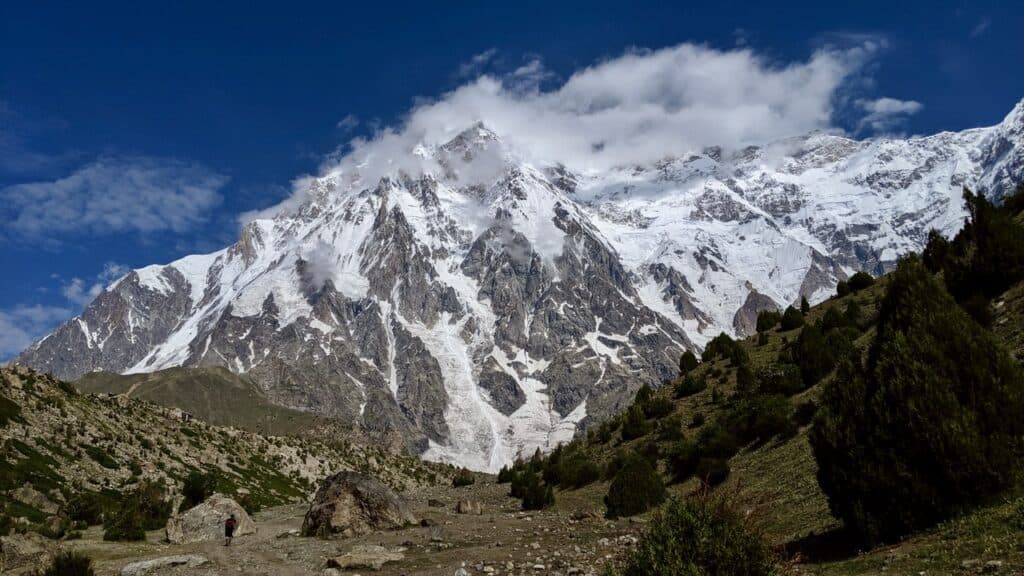
Standing at 8,126 meters, it’s Pakistan’s second-highest peak, but what makes it different isn’t just the height. The Rupal Face, the side you reach on this trek, is the largest mountain face in the world. A single wall of rock and ice rising over 4,500 meters from the valley floor.
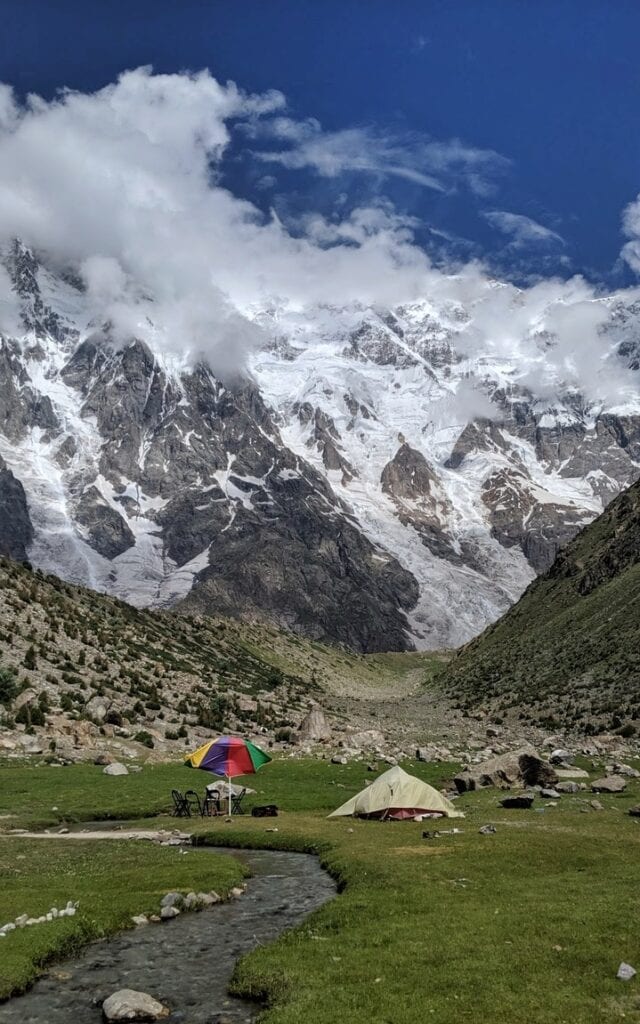
You don’t really understand what that means until you’re standing in front of it. There’s no buildup. One moment you’re walking through a wide valley, and the next, the entire skyline is taken over by this wall that doesn’t look real.
The Nanga Parbat Base Camp (Rupal Face) trek takes you right to the base of it. It’s not a technical climb, but it’s not a casual hike either. You’ll be camping the entire way, crossing glaciers, and moving through terrain that feels far more remote than most treks at this altitude.
This guide covers everything you need to plan the trek properly, how to get there, what the route looks like day by day, what to pack, and what to expect once you’re out there.
About Nanga Parbat
Nanga Parbat isn’t just a single peak. It’s a massive mountain system stretching over 20 kilometers, with steep ridgelines and faces that rise sharply from the surrounding valleys. At 8,126 meters, it’s the second-highest mountain in Pakistan, and one of the most difficult 8,000-meter peaks to climb.
The Rupal Face is what makes this trek stand out. It’s the highest mountain face in the world, rising roughly 4,500 meters from the valley floor to the summit. Most people never see this side of the mountain.
You don’t have to trek to base camp to get a glimpse of Nanga Parbat. I first saw it from the Deosai Plains while traveling through northern Pakistan, and later from the Khaltaro Valley on a separate hike. Both give you a sense of its scale, but from a distance.
The Nanga Parbat Base Camp (Rupal Face) trek takes you directly to the base of that wall. It’s a short trek in terms of distance, but the terrain is rough, the route is remote, and you’ll be camping the entire way.
Nanga Parbat has three main faces, each leading to a different base camp:
- Rakhiot Face (North): Leads to Fairy Meadows, the most accessible and busiest side
- Diamir Face (West): Used by most climbing expeditions
- Rupal Face (South): The least visited, and the route this trek follows
🚦If you’re deciding between them, Fairy Meadows is easier and more developed. The Rupal Face is quieter, more remote, and requires more effort to reach.
Trek Overview
Trail Type: Out-and-back
Distance: ~26–30 km
Duration: 3–4 days
Difficulty: Moderate to challenging (terrain-dependent)
Max Elevation: ~3,550 m (Herligkoffer Base Camp)
Min Elevation: ~2,900 m (Tarashing)
Accommodation: Camping only (no guesthouses on route)
Guide: Recommended, especially for first-time trekkers in Pakistan
Phone Signal: None on the trail
Best Season: June to September
Trek Logistics
When to Go
The best time to do the Nanga Parbat Base Camp (Rupal Face) trek is from June to September.
- June–July: Snow has mostly cleared, rivers are manageable, and conditions are stable
- August: Warmer, but with a higher chance of rain and cloud cover
- September: Quieter trails and clearer views, but colder nights
Outside of this window, conditions become unpredictable. Snowfall can block sections of the trail, and river crossings become more difficult.
How to Get to Tarashing (Trailhead)
The trek starts from Tarashing, a small village in the Rupal Valley. Getting there is a bit of a journey.
From Islamabad
Most routes begin in Islamabad.
Option 1: Fly to Skardu (fastest, but unreliable)
- 1-hour flight from Islamabad to Skardu
- Flights are often delayed or cancelled due to weather
From Skardu:
- Drive ~6–7 hours to Astore
- Then another ~2 hours by jeep to Tarashing
If you have time, it’s worth spending a day in Skardu. There’s plenty to explore, and it helps break up the journey.
Option 2: Travel by road (long, but consistent)
- Islamabad to Astore: ~14–16 hours
- Astore to Tarashing: ~2-hour jeep ride
The road journey is long, but it’s the more reliable option if flights aren’t running.
Getting Back
You’ll return to Tarashing the same way you came. From there:
- Jeep back to Astore
- Then continue to Skardu or Islamabad
If you’re building a longer trip, this trek fits well into a broader route through northern Pakistan. I’ve mapped out a full itinerary that connects places like Skardu, Hunza, and Deosai in a way that actually makes sense logistically.
Route Breakdown
Day 0: Astore → Tarashing (Getting to the trailhead)
Before the trek starts, you’ll need to get to Tarashing, the last village in the Rupal Valley.
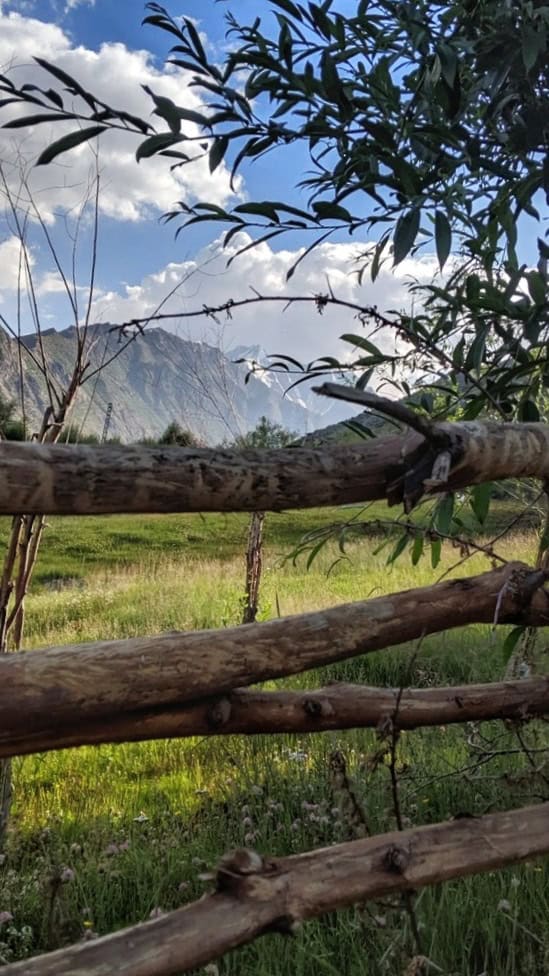
From Astore, it’s a 2-hour jeep ride along a rough, unpaved road. The ~30km drive cuts through a wide valley with the river running alongside you, gradually narrowing as you get deeper into the mountains. It’s not technical driving, but it’s slow and uneven the whole way.
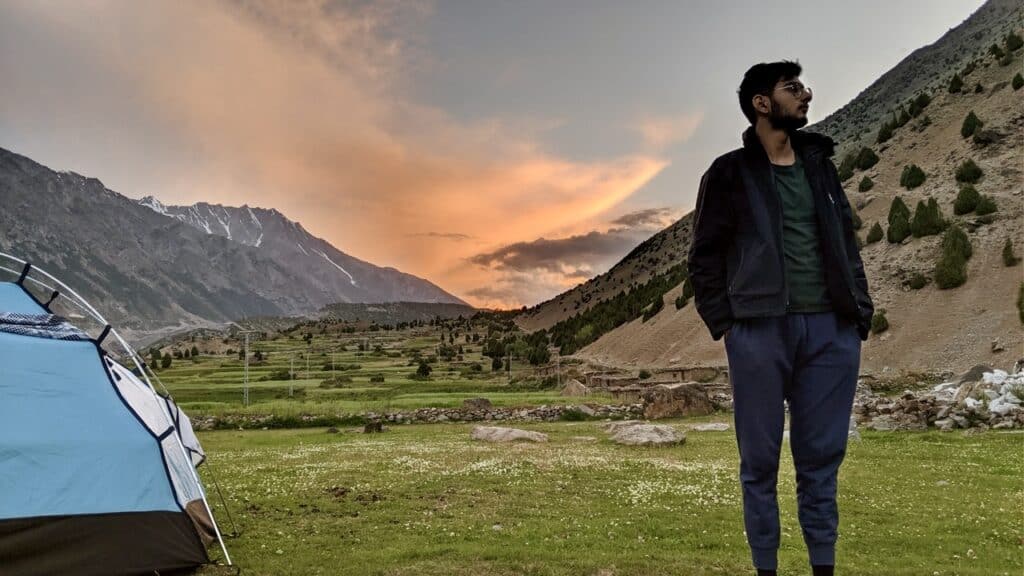
Tarashing itself is small and quiet, with a few basic guesthouses and open space to camp. Most people spend the night here before starting the trek the next morning.
Day 1: Tarashing → Herligkoffer Base Camp
Distance: ~10 km
Time: 5–7 hours
Elevation Gain: ~630 m
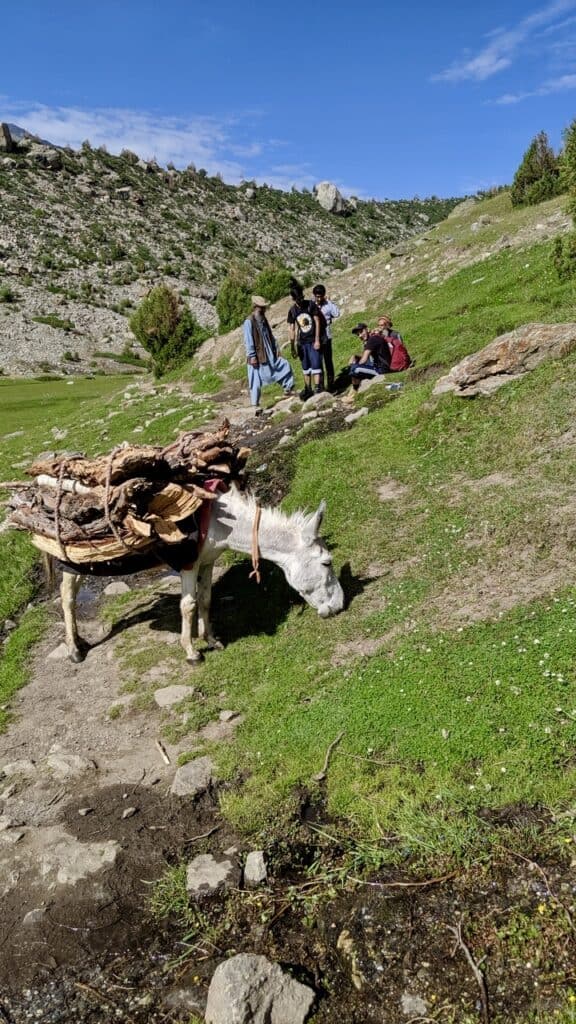
The trail starts just outside Tarashing and follows the valley inward toward Nanga Parbat. For the first stretch, it’s a gradual incline along a wide path, with the river off to one side and open valley views behind you.
As you move further in, the terrain becomes rougher. The trail shifts between dirt paths, loose rock, and sections of glacial moraine. It’s not a technical route, but footing can be uneven, especially closer to the glacier.
Navigation is relatively straightforward here. The valley funnels you in one direction, and there are usually visible paths to follow, though they split and rejoin in places. This is where having a guide helps, especially if conditions have changed.
The final stretch to Herligkoffer Base Camp feels longer than it looks on paper. The elevation gain isn’t extreme, but the terrain slows you down, and there’s very little shade along the way.
Herligkoffer sits at around 3,500 meters, on a flat, exposed area near the glacier. This is your first proper camp, and the point where the scale of the Rupal Face starts to become clear. You’re still not directly beneath it, but it’s close enough to dominate the skyline.
Day 3: Herligkoffer to Latobah – 3 km, ⬇ 20 m
The trek from Herligkoffer to Latobah on day three is a shorter one, but don’t let the distance fool you—it still requires some focus. You’ll be crossing the Bazhin Glacier, where the trail becomes rockier and more challenging. After about 3-4 hours, you’ll reach camp 3 at Latobah, a meadow where local herders often bring their livestock. It’s a peaceful spot, and you can feel the imposing presence of Nanga Parbat looming above.
Day 4: Latobah to Tarashing
The final day brings you back down the same path to Tarashing. Although descending is easier on the legs, you’ll still want to take it slow and steady. By the time you make it back to Tarashing, you’ll likely be exhausted but also filled with a sense of accomplishment from completing one of the most memorable treks of your life.
Option to Extend Your Trip!
If you’re not quite ready to leave the mountains just yet, there are a couple of ways to extend your trek:
- Day 6: Latobah to Shigiari – A two-hour trek from Latobah leads you to Shigiari, where you can camp right at the foot of Nanga Parbat.
- Day 7: Latobah to Mazeno Base Camp – For those looking for more of a challenge, you can continue trekking to Mazeno Base Camp, adding more time to explore the less-visited side of the mountain.
Afterward, you can head back to Latobah and then return to Tarashing to complete your journey.
If you’ve got extra time, you can explore Minimarg or Deosai Plains before heading back. This trek was part of a larger itinerary—check out my full journey through Northern Pakistan.
Hiring a Guide
Pakistan isn’t exactly known for well-marked trekking routes, and the Nanga Parbat Base Camp Rupal Face trek is no exception. If you’re used to clearly defined trails and signposts, prepare for a reality check—there aren’t any. The terrain shifts, glaciers move, and paths that were fine last year might be impassable now. Unless you’re confident navigating rocky crossings, river fords, and unpredictable weather, hiring a local guide is a smart move.
A good guide keeps you on track, helps with acclimatization, and knows where to find water sources and safe camping spots. They also know seasonal trail changes, which is critical since what looks like a path can sometimes lead straight onto unstable glacier debris.
If you’re trekking solo or don’t have prior experience with high-altitude, remote treks, you’ll be better off with a guide. Expect to pay around $25–$50 per day, depending on experience and whether they’re providing meals or carrying gear. The best way to find one is through word of mouth—ask trekkers who’ve done the route before, check with guesthouses in Astore or Tarashing, or, if you want to set something up in advance, reach out—I can put you in touch with someone reliable.
What to Bring on the Hike
Packing the right gear can make or break your experience on any trek, I learned that the hard way. This isn’t just about comfort; it’s about being well-prepared for everything the mountain might throw at you. Here are some essentials to bring along:
Hiking boots – My Lowa hiking boots have been with me since 2013 and are still one of my best investments for long treks.
Warm layers
Waterproof jacket and pants – Essential for sudden weather changes.
Sun hat and sunglasses – The mountain sun is intense, even in cooler weather.
Trekking poles – Useful for steep sections and rocky terrain.
Backpack
Sleeping bag and mat – Nights can be quite cold, so a good-quality sleeping bag is essential.
Water bottles or hydration system – Staying hydrated is key, especially at altitude.
Headlamp with extra batteries – For early starts or late finishes.
Toiletries – Bring toilet paper, wet wipes, and hand sanitizer.
Basic first aid kit – Include any medications you might need, especially for altitude sickness.
⛺️ I’ve put together my full backpacking gear list here if you want to see everything I carry. You can also browse it in my Amazon storefront.
Where To Stay
Since this trek is a full-on camping experience, you’ll need to bring your own tent, sleeping bag, mat, and cooking gear. There are no hotels or lodges on the route—just you, the mountains, and your campsite. If you’re trekking with a tour, they usually handle the camping equipment for you.
For the nights before and after the trek, you have a few options depending on where you’re starting from:
Astore (Closest town to Tarashing) | If you want to stay somewhere close to the trailhead, Astore is your best bet. Guesthouses here are basic but comfortable.
DeJani Hotel and Resorts Astore – I personally haven’t stayed here so I can’t vouch for it.
Skardu (If you’re coming via flight) | If you’re flying into Skardu, you might want to spend a night here before heading to Astore. There’s a mix of budget and high-end stays
Serena Shigar Fort – If you feel like splurging, this restored fort-turned-hotel is stunning
Baltistan Fort Skardu – More budget-friendly, solid option for a short stay
Hunza | If you’ve got extra time, Hunza is 100% worth a visit after your trek. It’s one of the most beautiful valleys in Pakistan and a great place to recover from the hike.
Serena Alti Fort – The best place to wind down after a trek
Old Hunza In. Centrally located in Karimabad, this is a reliable and comfortable option
Alternatives to the Southside Basecamp
If you’re looking for a shorter, easier trek, Fairy Meadows is the most well-known alternative. Located on the northern side of Nanga Parbat, it offers stunning views of the Raikot Face and is far more accessible.
The trek to Fairy Meadows starts with a jeep ride from Raikot Bridge to Tato Village, followed by a 2-3 hour hike. Unlike the Southside Base Camp trek, this route is tourist-friendly, with guesthouses, tea stalls, and a steady stream of visitors—especially during peak season.
That said, if you’re after solitude, a real challenge, and the raw wilderness experience, the Rupal Face trek is the way to go.
FAQs
Is the Southside Nanga Parbat Base Camp Trek suitable for beginners?
The Southside Nanga Parbat Base Camp Trek is moderately challenging and best suited for experienced hikers or those with a high level of fitness. The route includes steep climbs, rocky paths, and varying weather conditions, so prior trekking experience is recommended.
Can I go on the Southside Nanga Parbat Base Camp Trek solo?
While solo trekking is possible, it’s strongly recommended to go with a guide or join a trekking group. A guide offers valuable expertise, ensures safety, and enhances the overall experience of the trek.
Are there restroom facilities along the Southside Nanga Parbat Base Camp Trek?
Restroom facilities are minimal along the trek. Since you’ll be camping, most stops have basic, outdoor setups. It’s advised to carry personal supplies like toilet paper, wet wipes, and hand sanitizer.
How can I book a guided trek for the Southside Nanga Parbat Base Camp Trek?
To book a guided trek, research and select a reliable trekking agency that matches your needs and budget. Numerous agencies offer guided treks, and booking in advance is highly recommended.
