
If you’re trying to decide between Punta Cana vs Santo Domingo, you probably want someone to just tell you which one is better.
I spent hours debating this before booking. Flights to Punta Cana were cheaper. The beaches looked unreal. A friend who honeymooned there wouldn’t shut up about it. But I had a feeling it wasn’t my vibe. I didn’t want to fly all the way to the Dominican Republic and end up trapped in a resort corridor when what I actually wanted was something real.
I worked remotely in Punta Cana, then spent five days walking around Santo Domingo’s Zona Colonial, doing the museums, taking a free walking tour, and driving across the country. The difference was immediate. Punta Cana is built for curated beach vacations. Santo Domingo feels like a capital city with history, energy, and actual depth.
If your priority is white sand and zero effort, Punta Cana makes sense. If you want culture, walkability, and better infrastructure, Santo Domingo wins. And if you have a week, there’s a smarter way to structure this trip.
Quick Comparison: Punta Cana or Santo Domingo?
If you’re deciding between Santo Domingo vs Punta Cana, the difference isn’t subtle. One is a purpose-built beach destination. The other is a capital city with history, nightlife, and actual infrastructure. They serve completely different types of trips.
But neither Punta Cana nor Santo Domingo needs to be your entire Dominican Republic itinerary. They work best as starting points, not endpoints.
| Category | Punta Cana | Santo Domingo |
|---|---|---|
| Best For | Beach vacations, honeymoons, short winter escapes | Culture, history, city energy |
| Beaches | Postcard white sand, calm turquoise water | Urban coastline, not the main draw |
| Vibe | Resort corridor, curated, controlled | Capital city, lived-in, layered |
| Walkability | Limited (mainly Los Corales / El Cortecito) | Very walkable, especially Zona Colonial |
| Cost Style | Expensive when unbundled | More flexible daily spending |
| Digital Nomad Friendly | Weak WiFi, occasional power cuts | Reliable WiFi, better infrastructure |
| Flights | Usually cheaper & more frequent | Fewer direct options (from Canada) |
What Is Punta Cana Actually Like?
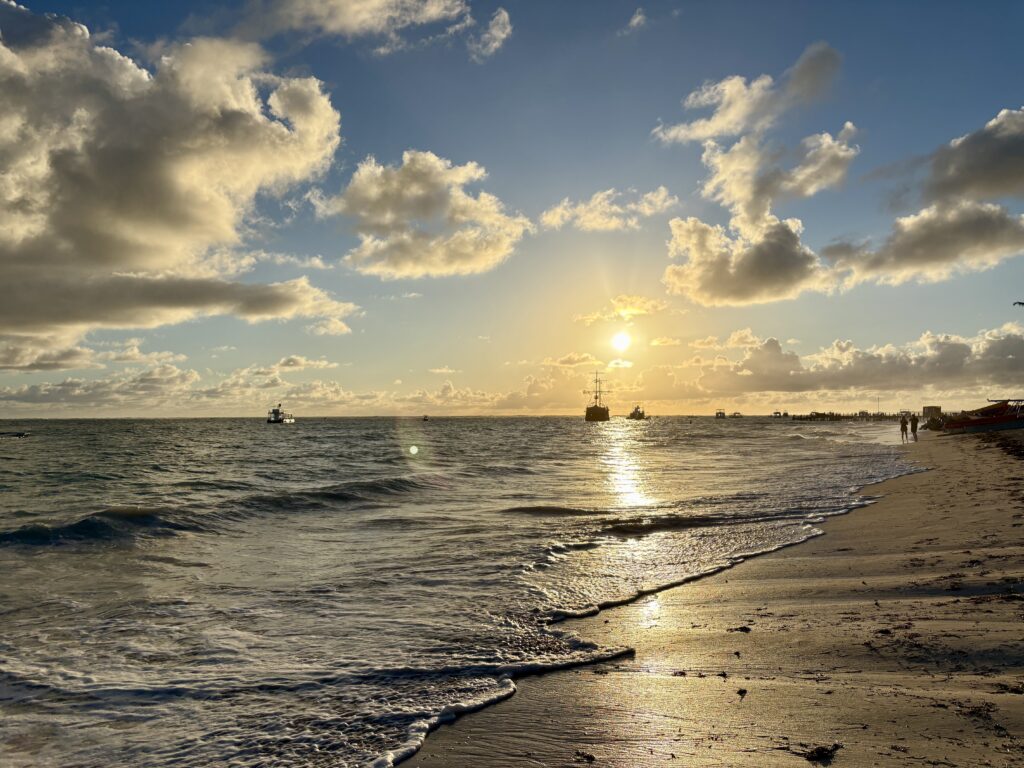
Long stretches of white sand are fronted by large resorts with private entrances and matching loungers. Roads are designed for airport transfers and tour buses, not wandering between neighborhoods. Outside of Los Corales and El Cortecito, you won’t stumble into much.
It’s easy. You land, transfer, swim, repeat. Everything is built around convenience and short-stay visitors. Even traveling independently, you’re operating inside a system built for all-inclusives. I wrote a full breakdown of what that actually looks like in my guide to visiting Punta Cana without a resort.
The beaches are objectively beautiful. Calm turquoise water, soft sand, reliable sun. That part delivers. What it doesn’t offer is spontaneity. It’s controlled, curated, and self-contained.
If you want minimal decision-making and maximum beach time, it works. If you’re looking for texture or depth, you’ll feel the edges of the bubble quickly.
Punta Cana Highlights
Even with its resort-heavy setup, there are solid reasons people choose Punta Cana.
Playa Bávaro – Wide, postcard-perfect beach with calm water and easy swimming. Early mornings are peaceful before the tour boats and vendors roll in.
Macao Beach – Less polished and more open than Bávaro. Rougher waves, fewer high-rise hotels, and a slightly less controlled feel.
Saona Island – The classic full-day catamaran or speedboat trip. Shallow sandbars, bright water, and social energy.
Parasailing & Boat Excursions – Fast, easy-to-book activities right off the beach. High on convenience, low on effort.
Flight Access – From places like Toronto, flights are frequent and often cheaper than Santo Domingo.
Where to stay in Punta Cana
Los Corales and El Cortecito are the two areas that actually work for independent travelers. They’re walkable, have public beach access, and you can easily reach restaurants, grocery stores, and small cafés without constantly calling an Uber.
HM Bavaro Beach – Adults Only | A smaller beachfront hotel if you want something comfortable but still walkable to restaurants and cafés, this is a great middle ground.
Grand Bavaro Princess | If you do want to experience the classic Punta Cana resort setup for a night or two, this is one of the better options.
What Is Santo Domingo Actually Like?
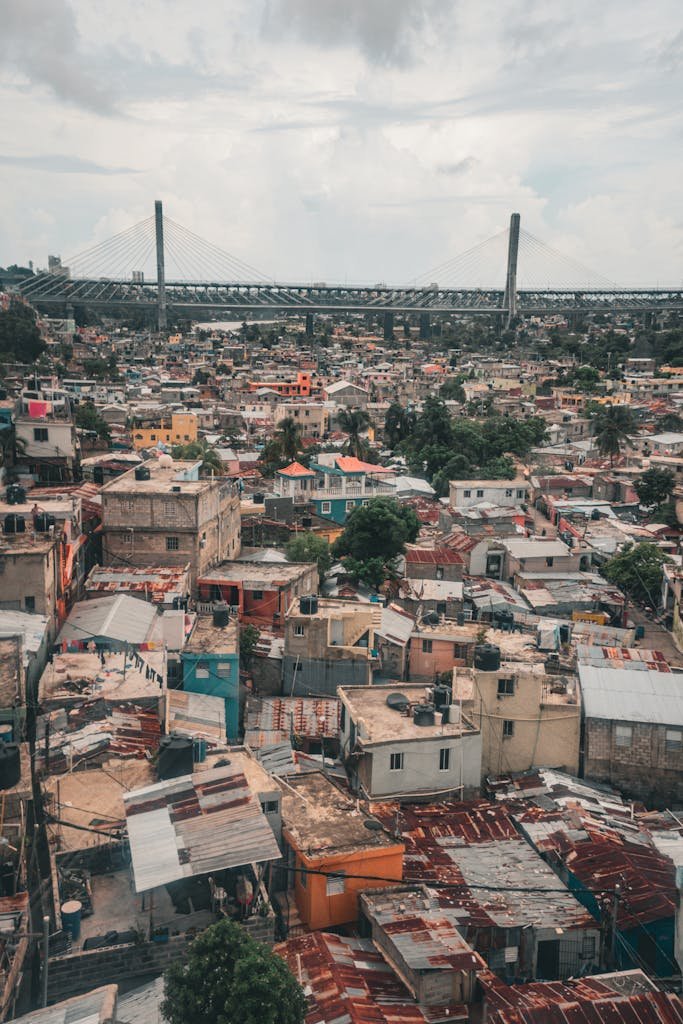
Santo Domingo feels like a real capital city.
You wake up to traffic noise instead of pool music. You walk cobblestone streets in Zona Colonial past 500-year-old buildings that aren’t replicas, they’re original. There are tourists, yes, but there are also office workers, students, families, and people who actually live there.
It’s layered. Colonial architecture sits next to modern apartment buildings. Rooftop bars overlook plazas where free walking tours gather every morning. You can spend hours moving between museums, cafés, and small bars without needing a car.
The beaches aren’t why you come here. The coastline is urban and functional, not postcard-perfect.
What surprised me most was how manageable it felt. It’s busy but not overwhelming. Infrastructure is solid. WiFi worked reliably. Driving in and out of the city was far easier than I expected.
Santo Domingo isn’t curated for tourists. It feels lived-in. And that difference is immediate.
Santo Domingo Highlights
If you base yourself near Zona Colonial, most of the main sights are walkable.
Zona Colonial – The historic core. Cobblestone streets, pastel buildings, shaded plazas, and the part of the city that actually feels cohesive and walkable.
Catedral Primada de América – The oldest cathedral in the Americas. Massive stone interior, quiet, and surprisingly humbling.
Alcázar de Colón – Diego Columbus’ former residence. Walking through it reframes the scale of early colonial power in a way textbooks never did.
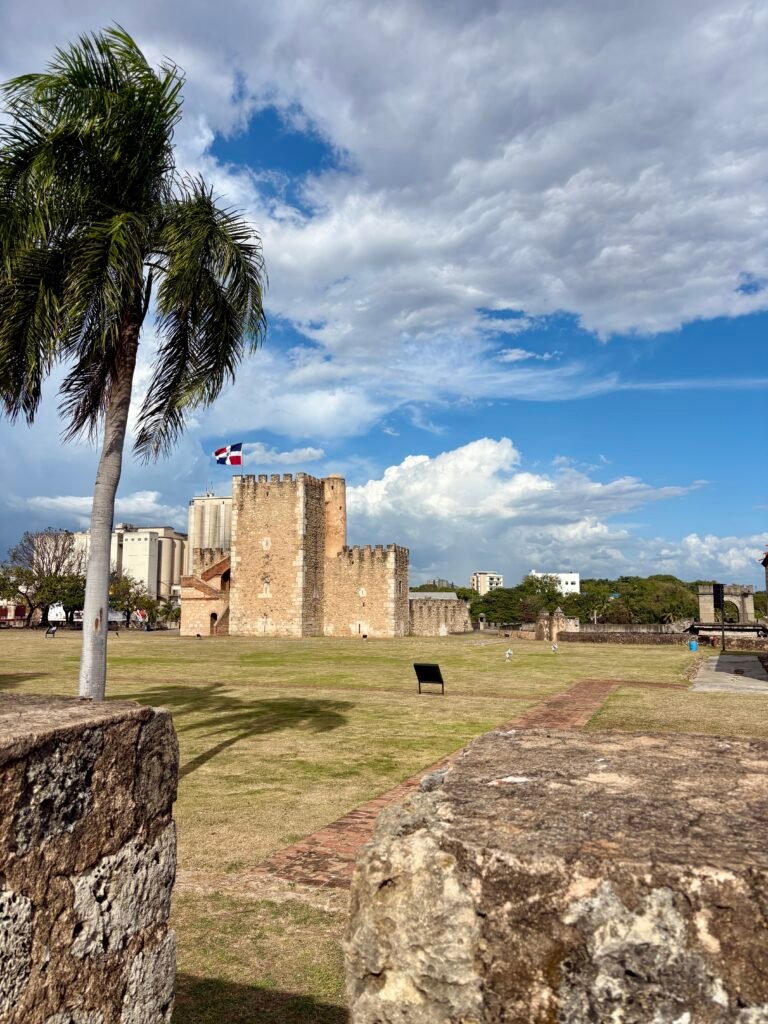
Fortaleza Ozama – A 16th-century fortress overlooking the river. Climb the tower for views across the city.
Rooftop Bars & Hole-in-the-Wall Spots – At night, Zona Colonial shifts. Music spills into the streets. You can bar-hop without planning anything.
Where to stay in Santo Domingo
If it’s your first time in Santo Domingo, stay in Zona Colonial. The historic center is compact and walkable, and most of the main sights, restaurants, and bars are within a few blocks of each other.
Hotel Villa Colonial | A beautiful small boutique hotel inside a restored colonial house with a quiet courtyard and pool.
El Beaterio Casa Museo | A unique hotel set inside a 16th-century building that used to be part of a convent. The architecture alone makes it worth staying here, and the location is perfect for exploring the historic district on foot.
Beaches, Culture, Cost & Remote Work
Beaches
If the beach is your main priority, this one is simple. Punta Cana has white sand, calm turquoise water, and long stretches built for swimming and lounging. It looks like the photos.
Santo Domingo has an urban coastline. You can walk along the Malecón, but you’re not coming here for postcard beaches.
If you want guaranteed beach days without thinking about logistics, Punta Cana wins.
If beach matters but isn’t the only thing you care about, there’s a smarter move: base yourself in Santo Domingo and drive to Las Terrenas. The drive is about two hours on an easy highway, and the beaches there feel less engineered and more lived-in.
🌴 If you want beaches without the resort bubble:
Fly into Santo Domingo and head to Las Terrenas instead of Punta Cana.
Culture & History
In Zona Colonial, you’re walking through the oldest European city in the Americas. The Catedral Primada de América isn’t a reconstruction. It’s original. Fortaleza Ozama still overlooks the river. The Alcázar de Colón reframes what you thought you knew about Columbus and early colonial power.
Punta Cana doesn’t compete here. It was built for tourism in the 1970s. Santo Domingo has been shaping history for 500 years.
If culture matters at all to you, Santo Domingo wins.
Cost
Flights are often cheaper to Punta Cana, especially from Canada.
In Punta Cana, everything is packaged or priced for short-term visitors. Food, tours, transport, it adds up fast unless you’re inside an all-inclusive. In Santo Domingo, daily costs feel more flexible. You can eat locally, walk most places, and choose when to spend.
Accommodation depends on what you book in either city. Car rental changes everything, especially if you’re exploring beyond one base.
Remote Work
Punta Cana’s internet was inconsistent. Video calls were unreliable. Power cuts happened. The entire area is designed for short vacations, not daily routines.
Santo Domingo had stable WiFi, walkable neighborhoods, cafés, and a rhythm that feels sustainable for more than a few days.
If you’re planning to work for even a week, Santo Domingo is the better base.
Getting Between Them (Driving + Logistics)
If you’re stuck on Punta Cana or Santo Domingo, here’s the thing: they’re only about 2.5 hours apart by car.
You don’t have to choose one and ignore the other.
I landed in Punta Cana because the flight was cheaper, rented a car, drove north to Las Terrenas, and then finished in Santo Domingo. That loop completely changed how I experienced the country. Once you leave the resort corridor, the Dominican Republic feels different, more varied, more interesting.
The drive itself is easy. Mostly highway, clearly marked roads, a few toll booths. Infrastructure was far better than I expected.
If you’re planning to explore beyond one base, rent your car early and build flexibility into the booking.
A few things that helped:
- Compare companies before you land
- Choose free cancellation
- Budget for tolls
- Avoid airport desk markup
🚗 Planning to road trip it? I used DiscoverCars to compare providers and filter by insurance coverage before landing. It’s much easier than sorting it out at the counter.
→ Compare rental options here
If You Have 3, 5, or 7 Days
If you only have 3 days, don’t try to do everything. That’s how trips get diluted.
Pick Punta Cana if you’re chasing sun and want to shut your brain off. Pick Santo Domingo if you’d rather walk, learn something, and feel like you’re in an actual city.
With 5 days, I wouldn’t isolate yourself in Punta Cana. Base in Santo Domingo and add Las Terrenas. You’ll get culture and real beaches without feeling trapped in a resort corridor.
With 7 days, structure it. Land wherever the flight is cheaper, rent a car, and combine Las Terrenas with Santo Domingo. Punta Cana only makes sense if beach is the entire point of the trip.
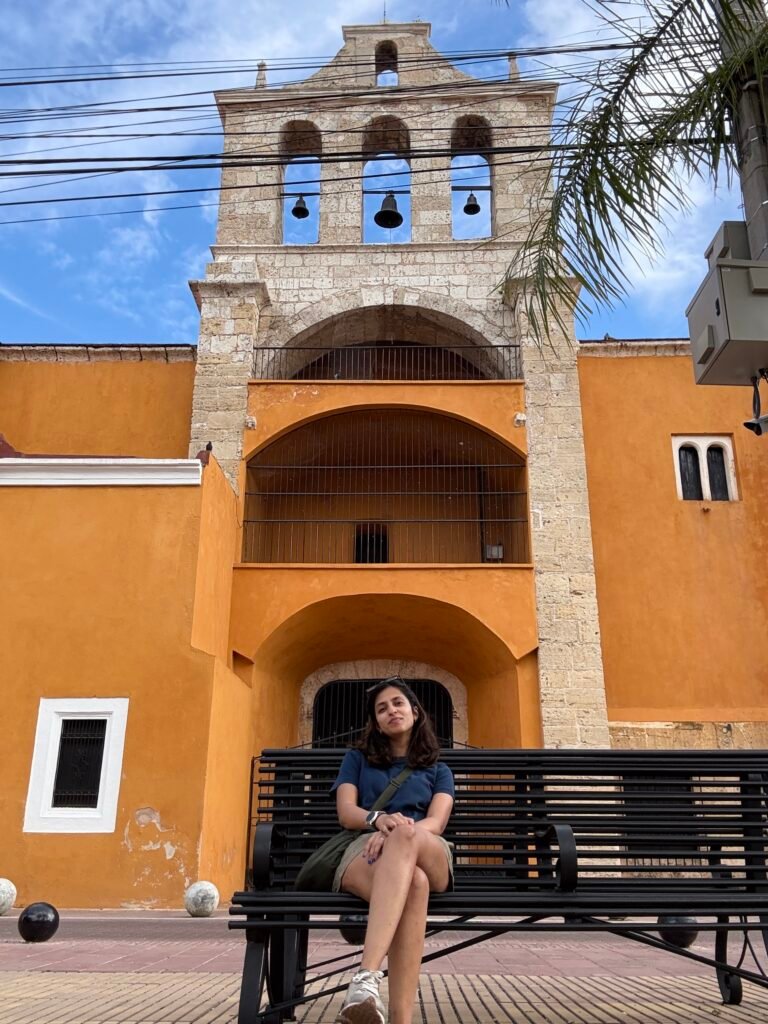
My Honest Opinion: Which Did I Like More?
Punta Cana felt artificial. It’s efficient, beautiful, and built to make your life easy. But it didn’t feel like a place with edges.
Santo Domingo did.
Walking through Zona Colonial, climbing the fort, sitting in small bars at night, learning more about colonial history in a few days than I ever did in school — it felt layered and real. It felt like a capital city, not a tourism product.
If you forced me to choose one, I’d choose Santo Domingo.
If your only metric is white sand and turquoise water, Punta Cana wins. That’s what it’s designed for.But if you want beach and depth, structure the trip differently. Start in Santo Domingo and head to Las Terrenas. That combination made far more sense than isolating myself in Punta Cana ever would have.
