
Santo Domingo doesn’t get much love. Most people fly into the Dominican Republic for beaches and resorts, not cities, and Punta Cana eats up most of the attention.
I almost skipped it too. Added it to my trip last minute, mostly because I had work to do and needed reliable wifi for a stretch. It ended up being one of my favourite stops in the country.
This is where the colonial Americas began. Christopher Columbus landed nearby in 1492. His son Diego ran the city for years. The first cathedral, the first paved street, the first university in the New World, all built right here. The whole brutal blueprint that reshaped two continents has its roots in this exact place. You can feel it walking around. You can also feel that nobody really talks about it the way they should.
Most of your time will be in Zona Colonial, which is the historic centre and the only part of the city that’s properly walkable. The European influence is obvious in the plazas, the architecture, the way people just sit outside for hours doing nothing in particular. Locals don’t need to be in a restaurant or bar to be hanging out. They just exist in public space, which is a refreshing contrast to how aggressively commercialised most cities feel now.
Outside Zona Colonial, the city is huge, sprawling, and mostly not designed for foot traffic. So where you stay matters. What you plan matters even more.
Below you’ll find what I did over a month of living there, what’s worth your time, what to skip, and a few things they don’t put on the tourist brochure.
Santo Domingo’s colonial history
Santo Domingo was the first permanent European settlement in the Americas, founded in 1496 by Bartholomew Columbus. From here, Spain launched the conquest of the rest of the continent. This island became one of the first major sites of Atlantic slavery, and the first wave of Indigenous genocide in the Americas happened on Hispaniola, with the Taíno population effectively wiped out within a few decades of contact.
A lot of the things you’ll see in Zona Colonial are first-of-their-kind in the Americas, which sounds romantic until you remember why. The first cathedral was built so colonisers could practice their religion while erasing everyone else’s. The first university trained the bureaucrats who ran the colonial system. The first paved street was paved so colonial wealth could move efficiently.
I’m not saying don’t go. I’m saying go with your eyes open. The buildings are genuinely beautiful, the plazas are some of the loveliest evening spots I’ve ever spent time in, and Dominicans today have built something distinctly their own out of a brutal history. But knowing the context changes how you walk through it. At least it did for me. (For a deeper read on the early colonial period of Hispaniola, Britannica’s overview is a decent starting point.)
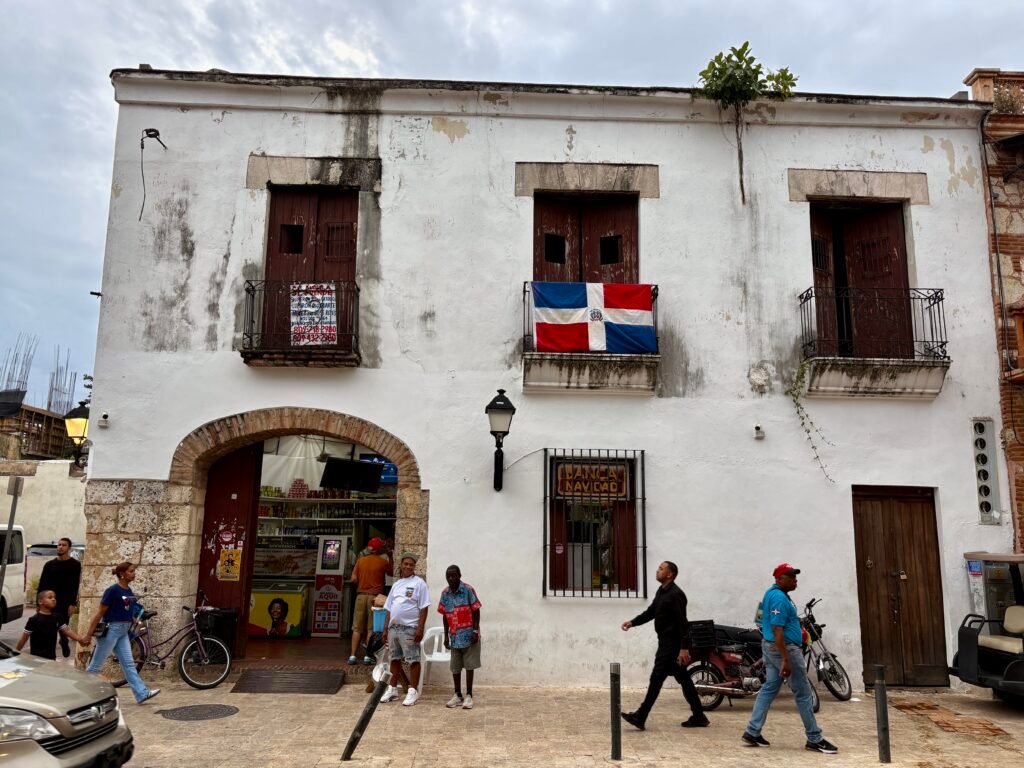
1. Wander the Colonial Zone (Zona Colonial)
Most of my time in Santo Domingo was spent in Zona Colonial, usually in the evenings after work. This is the part of the city you’ll actually enjoy walking around. Compact, easy to navigate, built for wandering. Yes, it’s touristy. But it didn’t feel like the kind of place that exists ONLY for tourists, which is increasingly rare. Locals were out too, sitting in plazas, hanging around, drinking, talking, doing nothing in particular.
I kept going back to one square, Plaza María de Toledo. I’d grab a beer and a smoke from the bodega across the street and just sit there for a while, people-watching. When in Rome.
You’ll notice pretty quickly that there’s a strong police presence here, which stood out to me at first. I’m not usually a fan of it. But over time, it started to make more sense. This area is heavily protected, both because it’s a major tourist hub and because Zona Colonial is a UNESCO World Heritage Site, which means there’s real money and political will going into keeping things tidy and preventing petty crime.
After dealing with some street harassment outside of this area, I appreciated it a bit more than I’d want to admit
🔔 If you’d rather have someone else handle the wandering: This guided walking tour of Zona Colonial covers all the main historical sites and saves you the time I spent getting lost. Worth it if you only have a day in the city.
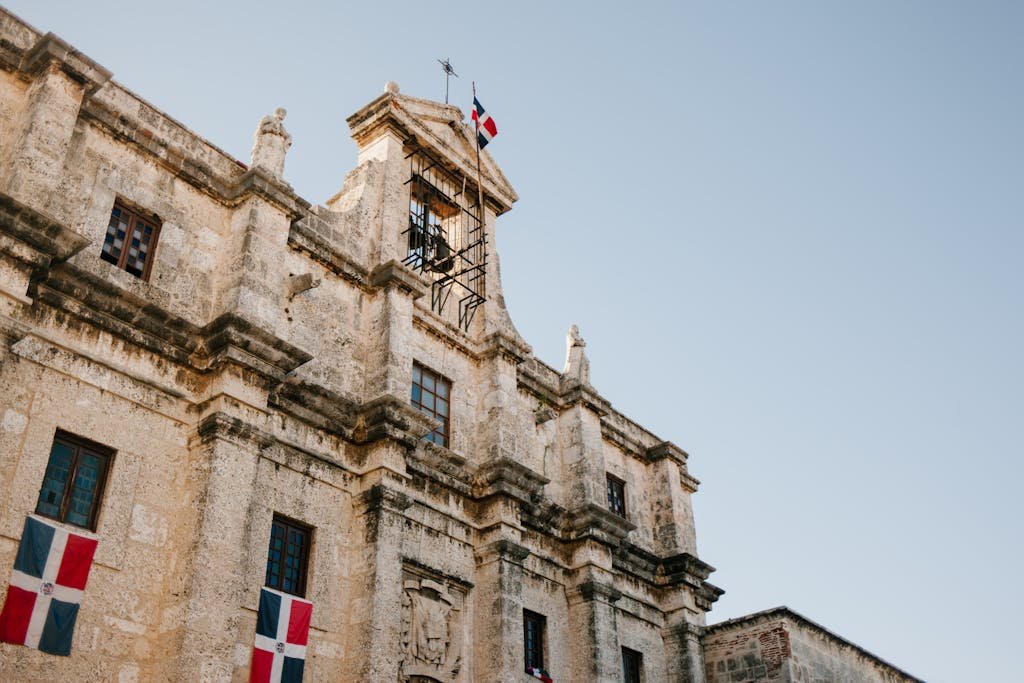
2. See the Key Sights in Zona Colonial
If you’re already walking around Zona Colonial, you’ll naturally run into most of the main sights without trying too hard. A few are actually worth stepping inside.
Group them into one slow morning or afternoon. None of these take long individually, and they all sit within a few blocks of each other.
Catedral Primada de América
The oldest cathedral in the Americas, finished in 1540. It’s one of the first things you’ll notice walking through Zona Colonial. I wouldn’t go out of my way just for it, but it’s worth a quick look inside. Simple, not overly decorated, and the history carries it more than the architecture does.
Alcázar de Colón
This is the one I’d actually plan around. Built in the early 1500s as the home of Diego Columbus, Christopher Columbus’ son, it gives you a real sense of how the colonial elite actually lived. The building is fairly plain from the outside. Inside, you get a much clearer picture of what wealth, power, and complete moral disconnection looked like in the 1500s.
It’s small. You won’t get bored. You also won’t leave thinking the people who lived here were the good guys, which is a healthier way to engage with this kind of historical site.
National Pantheon of the Dominican Republic
Visually, this was the most impressive of the lot. High ceilings, dramatic interior, and a much stronger “wow” factor than the others. Even if you’re not into history, this one stands out. It’s the resting place of major Dominican national heroes, and there’s usually a guard standing motionless at the entrance.
Calle Las Damas
Often mentioned as the first paved street in the Americas. It’s more about the context than the experience, but since you’ll already be walking near it, it’s worth knowing what you’re standing on. It’s also a quiet break from Calle El Conde, which we’ll get to.
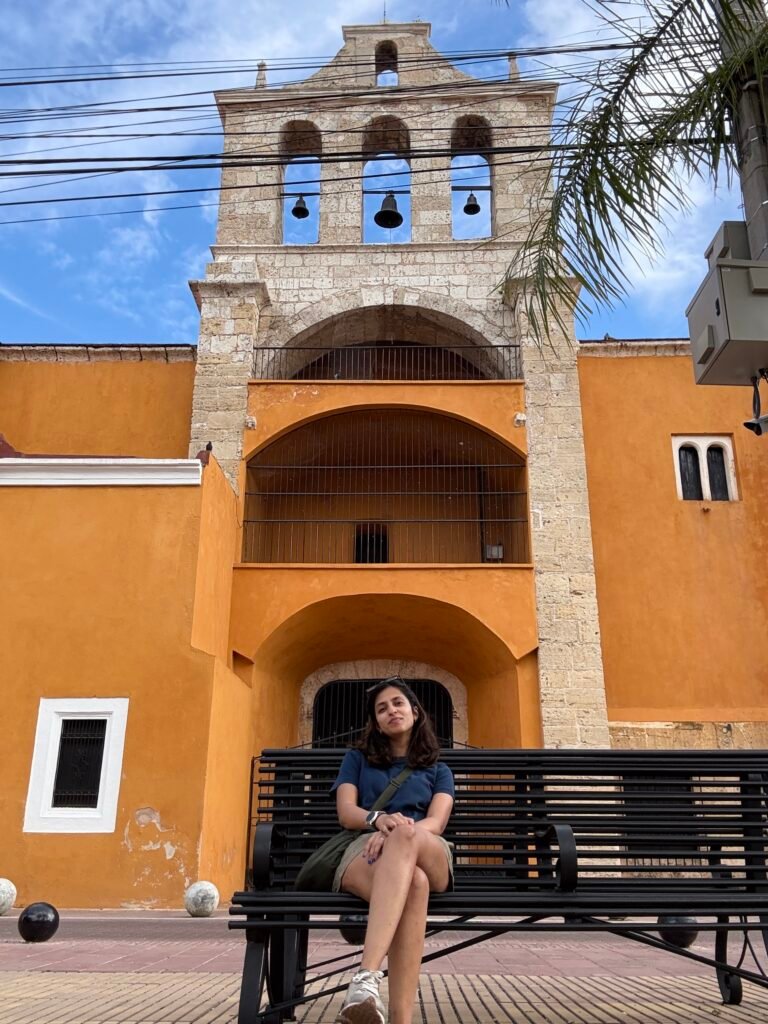
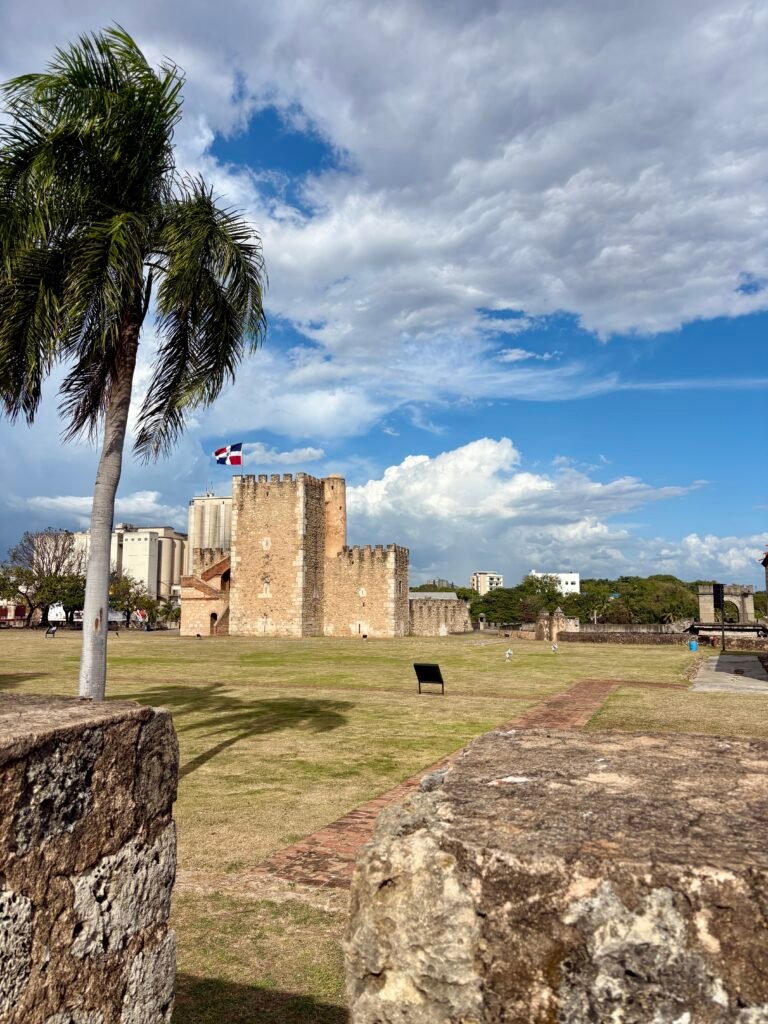
3. Hang out in Plaza de España
Right next to the Alcázar. This is one of the main open spaces in Zona Colonial, and a good place to slow things down a bit.
A large square with plenty of room to sit, walk around, or just take a break after moving through the more structured historical sites. During the day it’s pretty relaxed, people walking through, a few groups sitting around, nothing too hectic. In the evenings it picks up. Not nightlife levels of busy, but enough that the energy shifts.
There are restaurants lining the edges of the square, none of them particularly great but it’s more about the atmosphere. You’ll likely pass through naturally if you’re visiting the Alcázar or moving between other parts of Zona Colonial. Treat it as a quick stop rather than something you need to carve out time for.Affiliate box or any extra infomration that might be helpful.
4. Walk down Calle El Conde
Calle El Conde is one of the main pedestrian streets in Zona Colonial, and you’ll almost definitely end up walking down it at some point.
It’s busy, a bit chaotic, and very clearly set up for tourists. Shops, vendors, street performers, and a constant flow of people moving through. Not the most charming part of the area, but part of the experience.
What I found interesting was the mix. Tourists wandering through, but also locals using it as a thoroughfare, cutting through on their way somewhere else. It doesn’t feel completely staged. Just a bit more commercial than the plazas and quieter streets nearby.
I wouldn’t go out of my way to spend a lot of time here, but it’s worth walking through once. It also connects a lot of the main areas, so chances are you’ll pass through it anyway.Affiliate box or any extra infomration that might be helpful.
5. Eat your way through Santo Domingo (with mixed results)
I had pretty high expectations for the food in Santo Domingo. They weren’t really met.
Some places were great, others felt overpriced for what you actually got, especially in Zona Colonial where you’re clearly paying a MAJOR tourist premium.
CURCIO Pizza al Taglio was easily one of my favourite finds. Simple, casual, and actually good. The kind of place I’d go back to without thinking twice.
Same with MIX Empanadas SRL, which was a solid quick stop when you just want something easy and local without overthinking it.
Zola was the most underwhelming for me. We went there for a date night, and while it’s positioned as one of the nicer spots in the city, the food didn’t justify the price.
I also had a few other places on my list like Il Capo Pizzeria and Julietta Trattoria, which are worth checking out if you’re spending more time in the city.
I wouldn’t fly to Santo Domingo for the food. But you’ll find good spots if you keep your expectations realistic and don’t default to whatever Instagram is hyping that week.
🚗 If you’re road-tripping the country, the food in Las Terrenas is genuinely more interesting, with a much heavier French and Italian influence.
6. Visit Los Tres Ojos National Park
This is one of the more unique things to do in Santo Domingo, and worth leaving Zona Colonial for.
Los Tres Ojos is a series of open-air limestone caves with clear blue underground lakes. Not a long visit, but visually impressive and a complete shift from the rest of the city. You walk down into the caves, move between the different “eyes” (which are basically three connected sinkholes), and that’s pretty much it.
Easy to navigate, doesn’t require a full day. If you’re picking one thing outside the historic centre to do, this is a good option.
7. See the Faro a Colón
The Faro a Colón is a massive monument dedicated to Christopher Columbus. Inside, it’s more museum-style with exhibits from different countries. I didn’t find it particularly memorable.
Quick political aside: you can’t put up a giant lighthouse-shaped monument to the man who started the colonial conquest of two continents and expect everyone to feel great about it. The monument was deeply controversial when it was built in the 1990s, with Indigenous and Afro-Dominican groups protesting it openly. People were displaced from their homes to clear land for it. The lights barely work because of constant power issues. It’s a strange, heavy place that doesn’t quite know what to do with itself, which is the most fitting tribute to Columbus I can imagine.
If you’re already heading out to Los Tres Ojos, it makes sense to combine the two rather than going out of your way just for this.
🐠 For sightseeing without the planning: This tour bundles Los Tres Ojos, Faro a Colón and Boca Chica into one trip. The easiest way to knock out the sights that are scattered outside Zona Colonial.
8. Explore Parque Independencia
Parque Independencia sits just outside Zona Colonial and is easy to walk to if you’re already nearby.
It’s historically significant. It’s also one of the few places in Santo Domingo where I actually felt uncomfortable. I had a couple of instances of street harassment here, men calling out, trying to get my attention, nothing escalated, but enough to make me more aware of my surroundings than I’d been all month.
That wasn’t my experience across the whole city. Most of my time in Santo Domingo felt fine, especially in Zona Colonial and Piantini. This was a one-off. But solo female travellers (or anyone who reads as female) should know about it before walking over.
Basic awareness goes a long way here, like it does in most large cities. Keep your phone away, walk with intent, and if it’s getting dark, just take a taxi back to your hotel.Affiliate box or any extra infomration that might be helpful.
9. Spend a morning at the National Botanical Garden
The standout is the Japanese garden, designed by Mamoru Matsunaga. There’s a lake, a small bridge, and a surprising number of turtles. Quiet, well-maintained, and easily the most memorable part of the park.
There’s also an abandoned bonsai area if you walk past the main sections. It’s run down now but still interesting to see.
The park is huge. There’s a train that loops around it, but I wouldn’t bother. Walking is better. You’ll come across smaller sections like the rose garden, butterfly garden, and other corners that you’d miss otherwise.
Entry is around 50 pesos (roughly $1 USD), and it closes at 5PM, so go in the morning if you want time to explore properly. Even if it rains, it’s still worth it. I went on a drizzly day and the place was almost empty, which was a bonus.Affiliate box or any extra infomration that might be helpful.
10. Walk or bike along the Malecón
The Malecón runs along the coast and is one of the easier places to just get out and move around in Santo Domingo.
Not a must-do. A decent way to see the city from a different angle. Ocean on one side, traffic on the other, and a mix of locals walking, running, or just hanging out.
It works well as a short walk, especially later in the day when it’s cooler. Mid-afternoon will MELT you.
🚴 If walking sounds rough in the heat: This bike tour along the Malecón covers more ground without making you sweat through your t-shirt. Worth it if you want to see more of the coast in less time.
11. Check out Piantini
Piantini feels completely different from Zona Colonial.
Modern, polished, noticeably quieter. This is where you’ll find malls, restaurants, and a more local crowd going about their day.
I came here for brunch and it felt like a place people actually live in, not just visit. Compared to Zona Colonial, which is very tourist-focused, Piantini feels more like the day-to-day version of Santo Domingo. It’s also more comfortable overall. Cleaner, less chaotic, easier to navigate.
If you’re trying to decide between staying in Santo Domingo or skipping straight to a resort area, the experiences are pretty different. I break that down properly in my Punta Cana vs Santo Domingo comparison.
12. Grab a drink at República Brewing Draft Room
At some point I got tired of drinking Presidente. That’s how I ended up here.
If Santo Domingo nightlife usually means rum bars and reggaeton, this is the calmer alternative. República Brewing Draft Room is a small brewery with a more relaxed, low-key vibe than the bars in Zona Colonial. Nothing fancy. Just good beer and a place to sit for a bit.
If you’re not big on nightlife or don’t feel like going out properly, this works as an easy evening option.
13. Visit Parque Mirador Sur
This is one of the more local experiences in the city.
A large park that runs along the southern part of Santo Domingo, and people use it for everything: walking, running, biking, hanging out. Nothing particularly “touristy” about it, which is the point.
If you want a break from Zona Colonial and just want to see how people actually use public space here, this is a good place to go.
14. Visit the Museum of the Royal Houses
If you’re going to do a museum in Santo Domingo, this is one of the more relevant ones.
Located in Zona Colonial, it focuses on the Spanish colonial period: how the city was governed, how the system worked, what daily life looked like during that time. Less artefacts-on-pedestals, more political and administrative history.
It’s not overwhelming. You don’t need a ton of time here. But it adds real context to everything else you’re seeing in the area, especially if you’re trying to understand what Zona Colonial’s “first paved street” and “first cathedral” actually represented in practice.
15. Ride the Santo Domingo Teleférico
The teleférico gives you a different view of the city, both literally and figuratively.
It runs over parts of Santo Domingo that most tourists don’t see, which is a way to get a broader sense of how the city is laid out beyond Zona Colonial and the polished areas like Piantini. You’ll see neighbourhoods, schools, people’s rooftops. Real life.
Not something everyone will want to do. But if you’re curious to see a side of the city that isn’t designed for visitors, it’s a quick, cheap option.
16. Take a day trip to Boca Chica Beach
Boca Chica is the closest beach to Santo Domingo, about 18 miles (30 km) from the city, and one of the easiest day trips you can do.
The water is shallow and calm, which makes it popular with locals and families. It’s not the most pristine beach you’ll find in the Dominican Republic, but it’s convenient and works if you just want a quick escape from the city.
It can get busy, especially on weekends. Don’t expect quiet or secluded. Think more casual, LOUD, and local.If you’re planning a longer trip around the country, Boca Chica is a filler stop, not a highlight. There are much better beaches elsewhere. If you’re after a real beach destination, these things to do in Punta Cana break down what’s actually there.
🚐 If you don’t want to deal with transport: This day tour handles transfers from Santo Domingo to Boca Chica with a few other stops thrown in. Useful if you don’t have a car and don’t want to negotiate with taxis for the round trip.
17. Go snorkelling at La Caleta Underwater National Park
La Caleta is one of the better options near Santo Domingo if you want to get in the water.
Known for snorkelling and diving, with coral areas and a few shipwrecks if you go deeper. It’s close to the airport, so it’s easy to fit in depending on your schedule, especially as a final-day stop on the way out.
This isn’t something you’d typically organise last minute on your own. Most people go with a tour that includes gear and transport, and unless you have your own diving setup, that’s the path of least resistance.
Where to stay in Santo Domingo
If it’s your first time in Santo Domingo, stay in Zona Colonial. The historic center is compact and walkable, and most of the main sights, restaurants, and bars are within a few blocks of each other.
Piantini works if you’re staying for a longer stretch and want a more residential, quieter feel, but it’s a worse base for tourism.
Two places I’d recommend in Zona Colonial:
Hotel Villa Colonial | A beautiful small boutique hotel inside a restored colonial house with a quiet courtyard and pool.
El Beaterio Casa Museo | A unique hotel set inside a 16th-century building that used to be part of a convent. The architecture alone makes it worth staying here, and the location is perfect for exploring the historic district on foot.
Is Santo Domingo worth flying for?
I’d actually consider it. (And I almost never give that advice to people choosing between Caribbean cities and beach destinations.)
Santo Domingo is the most historically dense city in the Caribbean, the food and drink scene is more interesting than people give it credit for, and it’s the only place in the country where you actually engage with what the Dominican Republic is, rather than what a resort wants you to think it is. If you’re going to fly across the world to spend a week in the DR, spending two or three days here changes the texture of the whole trip.Build it into a full Dominican Republic itinerary so you’re not just hopping between airports.
🛂 A US green card or Canadian PR grants visa-on-arrival access to Dominican Republic, a benefit that applies across a number of countries. Details on Pakistani passport-specific access are available on the visa tool. Check the visa tool!
Is Santo Domingo safe?
In the areas you’ll likely spend time, yes, with normal city awareness. Zona Colonial is heavily policed because of the UNESCO status and tourist density. Piantini is upmarket and quiet. The places I felt uncomfortable were specific (mostly around Parque Independencia at certain times of day), and the issues were street harassment rather than crime. Solo female travellers should expect some unwanted attention, like in most large cities in the region. Don’t flash valuables, don’t walk around with your phone out, and take a taxi after dark.
How many days do you need in Santo Domingo?
Two full days for a tight itinerary that hits the main Zona Colonial sights and one day trip (Los Tres Ojos and Faro a Colón). Three to four days if you want to actually settle into the city, do a meal at a real restaurant, walk the Malecón, and not feel rushed. I spent close to a month and never ran out of things to do, but that’s a different category.
What’s the best area to stay in Santo Domingo?
Zona Colonial for first-time visitors. Piantini if you’re staying longer than a week and want more of a local-life base.
When’s the best time to visit Santo Domingo?
December through April is the dry season and the best weather window, but it’s also the most expensive and crowded. May, June, and November are good shoulder months with fewer tourists and lower prices, with the trade-off of occasional rain. Hurricane season runs roughly June to November, with September and October as peak risk. Avoid those if you can.
