I will wear a sleeveless kurta without a second thought. But not a tank top, in the same weather, in the same city.
It’s the same amount of skin showing, and I can’t fully explain why one feels acceptable and the other doesn’t. There’s no law behind this, no dress code written down anywhere. I picked it up as a kid, by hearing and observing, never by anyone explicitly telling me so. And even now, where I land on any given day depends on how bold I’m feeling, how much I want to push against it. None of this is universal either. Every woman here draws the line somewhere slightly different.
I grew up in Lahore, and I’ve spent my adult life going back. This is what I actually wear, what the men in my life wear, where these rules came from, and why some of them still don’t make sense to me either.
A Local’s Perspective: How Locals Actually Feel About What Tourists Wear
Honestly? Just be mindful. You don’t need to cover your head, you’re not required to, and doing it anyway can read as performative rather than respectful. On the flip side, please don’t show up in a crop top expecting nobody to notice, somebody will notice.
Most locals aren’t judging you off some imported idea of what oppression is supposed to look like here. We’re judging whether you dressed for the actual room you’re standing in.
Guidelines for Women:
- Shoulders covered
- Legs covered to the ankle
- Torso covered, nothing tight-fitting
Guidelines for Men:
- Shorts, jeans, and t-shirts are fine in the big cities
- Long pants outside mosques, no exceptions
Is There Actually an Enforced Dress Code in Pakistan?
No. There’s no national law requiring what you wear. No morality police patrolling the streets.
Compare that to some of Pakistan’s fellow Muslim-majority countries. In Afghanistan, the Taliban’s 2022 decree made the burqa mandatory, enforced not by punishing the woman directly but by threatening to imprison her male guardian if she’s seen unveiled. In Iran, the hijab has been legally mandatory since 1981, backed by an actual morality police force; even after the 2022 protests over Mahsan Amini’s death in their custody, enforcement didn’t ease, one court alone handled 2,000 to 3,000 hijab-related cases a month, and in 2025 authorities shut down dozens of cafes and businesses for serving unveiled women. That’s what an actually enforced dress code looks like. Pakistan has never had one at the national level.
But “no law” doesn’t mean nobody’s tried. Individual institutions here have taken it upon themselves to police what women wear, universities especially. Several have run their own mini dress codes over the years. Isra University made female students sign an undertaking to wear a headscarf and lab coat. Hazara University in Mansehra banned jeans, tights, and makeup for women, and long hair and earrings for men. International Islamic University Islamabad made the dupatta compulsory in one of its departments.
Not sure where to go in Pakistan?
Take my quiz and get a 9–12 day route that matches how you like to travel.
Take the quizThat gap, between what’s legal and what’s culturally acceptable, is the rest of this post.
The Unofficial Pakistani Dress Code
What do women wear in Pakistan?
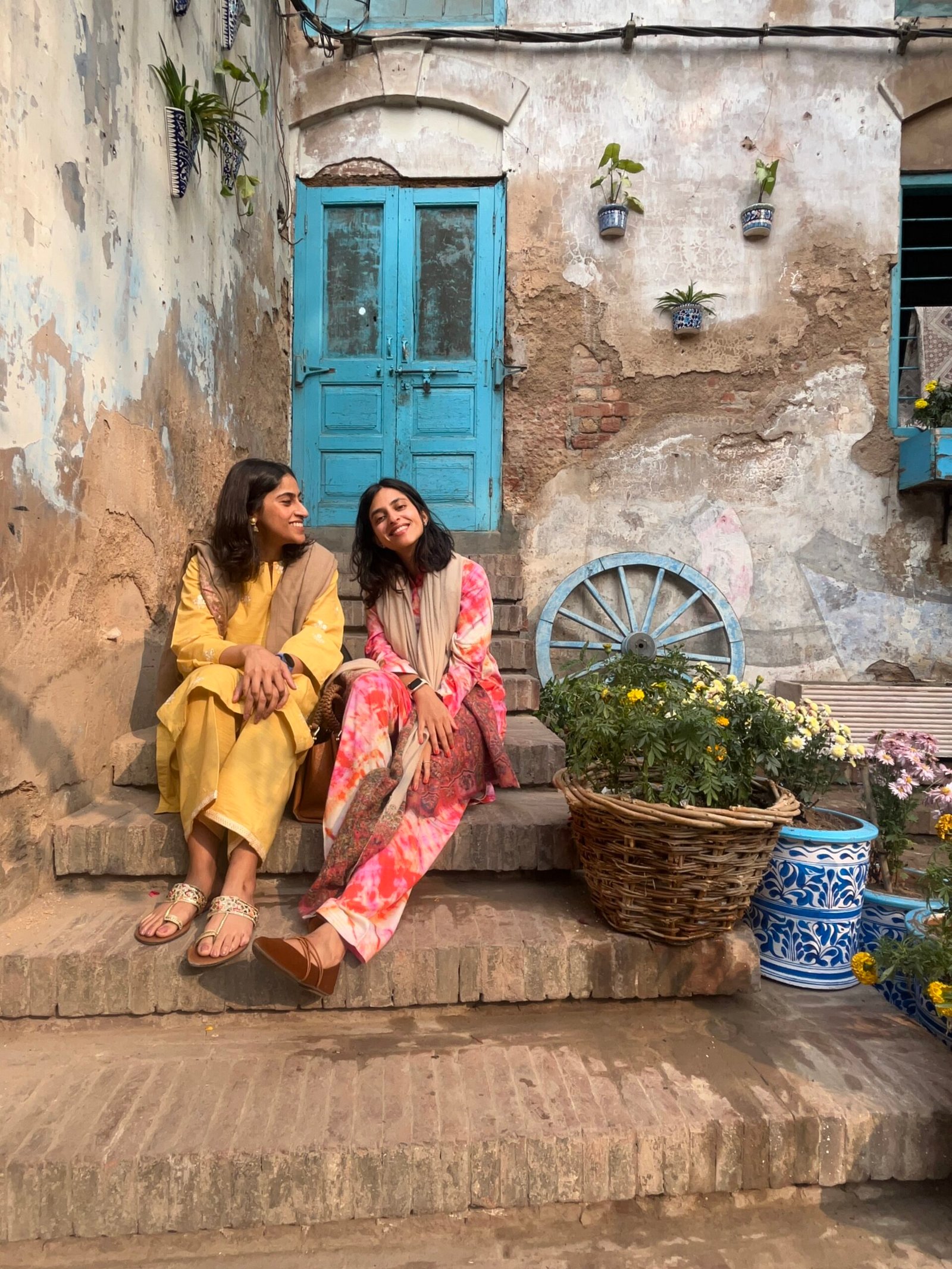
Although there’s no legal dress code, most women in Pakistan dress conservatively, and the shalwar kameez is still the most common outfit you’ll see on the street.
For reference:
- Shalwar kameez: a long tunic (kameez) over loose-fitting trousers (shalwar). The standard outfit for most women, in most cities, most of the time.
- Dupatta: a long scarf, usually worn draped over the shoulders or chest, sometimes over the head. Often comes with the shalwar kameez.
- Chaddar: a large shawl, bigger than a dupatta, wrapped over the head and shoulders. Not standard daily wear, more of a tool you reach for when you want to dial modesty up fast, walking into a mosque, a more conservative town, or anywhere you feel yourself being gawked at.
The baseline for tourists:
- Shoulders covered
- Legs covered to the ankle
- Torso covered, nothing tight-fitting
What do men wear in Pakistan?
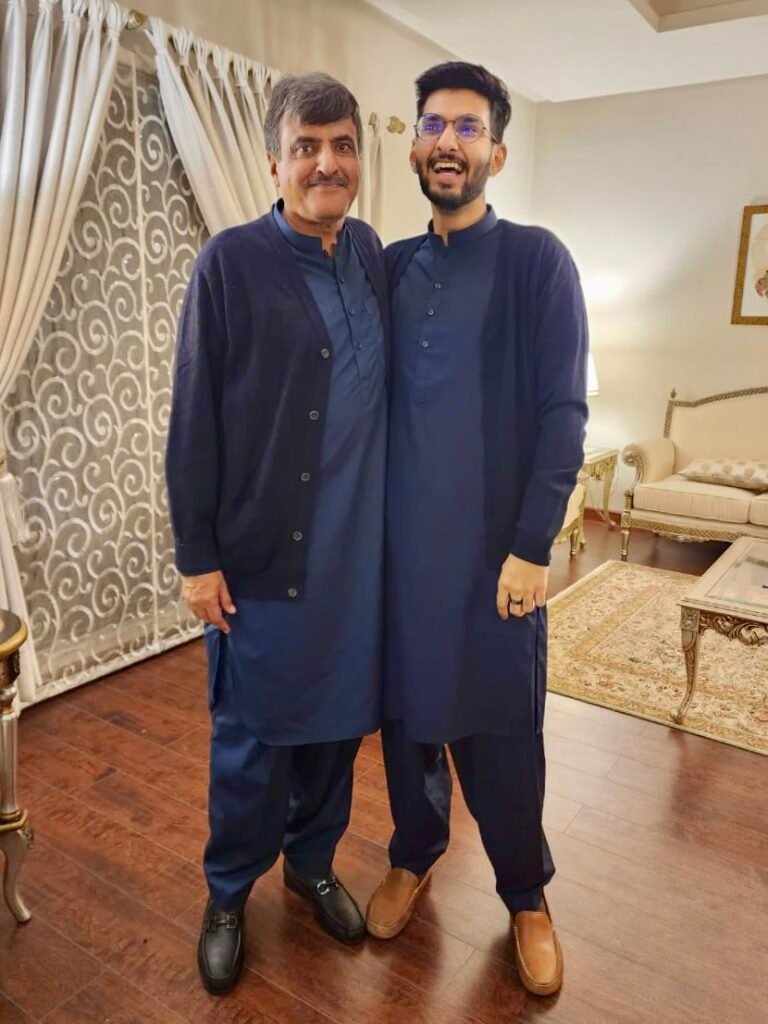
Men have more room here but generally shalwar kameez (the same two pieces as the women’s version, tunic and loose trousers, minus the dupatta) is worn everywhere from the office to weddings to Friday prayers.
The baseline for tourists:
- Shorts, jeans, and t-shirts are all fine in the big cities
- Long pants inside mosques, no exceptions
That’s the rule for everyday public spaces, streets, bazaars, restaurants, the places you’ll actually spend most of your time. It bends in a few specific situations:
🙅🏽♀️ My post on is Pakistan safe for women goes a bit deeper into how some of these rules bend if you’re a white woman or otherwise non-local.
What I Actually Wear in Pakistan
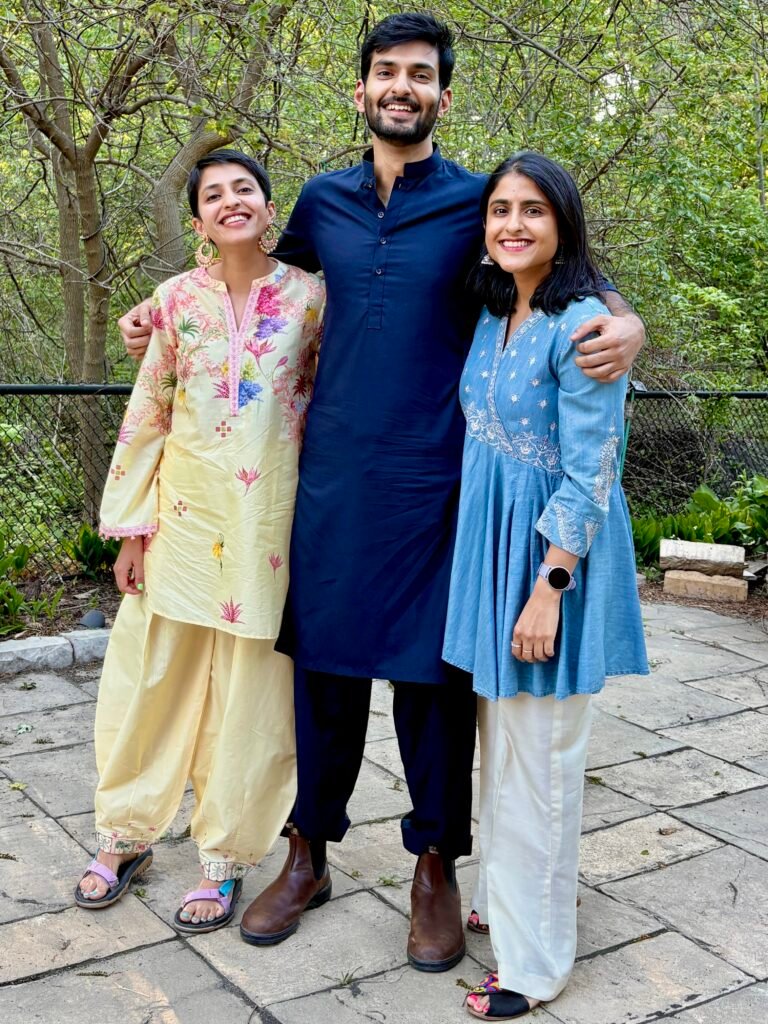
In urban Lahore, Karachi, or Islamabad, I wear whatever I’d wear anywhere else in the world, jeans, a t-shirt.
Outside that bubble, it’s usually shalwar kameez. Whether I add a dupattar or chaddar on top depends on where I’m actually headed, a market, a shrine, and a rural town don’t call for the same amount of coverage.
Up north, I almost always have a chaddar with me, ready to pull out depending on where I end up that day. On one motorcycle trip through those roads, I wore a men’s black shalwar kurta and rode looking about as male as I could manage, which felt necessary at the time. A lot more women ride those roads now, so I doubt I’d bother today.
I was once standing alone at Gilgit bus station, the only woman among fifteen men, waiting for a bus to Astore. Full shalwar kameez, oversized chaddar, dressed exactly the way this whole post tells you to. I still felt every bit of the attention. What followed turned into a proper travel horror story, and it’s a good reminder that what you wear affects how you’re perceived, not whether you’re left alone.
At parties and private events, I’ll wear whatever I want, At the bare minimum, I will still avoid showing my legs above my knees and I’ll avoid low neckline.
🏔️ Heading into the mountains? Pack for a hike. My guides to Hunza, Skardu, and Nanga Parbat base camp cover what to bring, and the northern Pakistan itinerary ties the whole route together.
TLDR: How Did We Get Here?
Ask anyone from my grandparent’s generation what women wore in the ‘70s and the answer is consistent: more Western clothes, less covering, a freer era. That was under Zulfikar Ali Bhutto’s government. Pakistan wasn’t exactly a functioning democracy then either, dictatorship in one form or another has been the norm here more than the exception, but the dress code loosened under him.
In 1977, General Zia-ul-Haq staged a coup, arrested Bhutto, and launched an Islamization campaign whose effects are still on the books today, almost 50 years later. The Hudood Ordinances passed in 1979, and parts of them remain law now. Female government employees, teachers, and TV newscasters were ordered to cover their heads and dress “Islamically.” The sari, worn for generations, got discouraged for government workers as too Indian, not Islamic enough.
In 1981, a group in Karachi formed the Women’s Action Forum to fight Zia’s Islamization, dress code included. The push for a legally mandated code never fully stuck. So there’s no dress code law in Pakistan today because women organized against one, decades ago, and won that particular fight.
What Do Parda, Haya, and Sharm Mean?
Parda literally means curtain or veil. It covers the headscarf, but also the broader practice of keeping women physically separate from men outside their immediate family, a scarf, a room divider at a family gathering, an entire section of a house.
Haya roughly translates to modesty or a sense of shame that keeps a person from behaving indecently. It applies to men and women both, and it covers more than clothing, how you carry yourself, how loudly you laugh, how you speak to people. “Be-haya,” having no haya, is what gets thrown at a woman who’s crossed a line, whatever line her specific family or neighborhood happened to draw.
Here’s the thing about haya: you rarely know exactly who’s watching or judging you in any given moment, so you just behave as if someone always is. There’s an 18th-century prison design called the panopticon, a single guard tower in the center, cells arranged all around it, built so prisoners can never tell whether the tower is actually staffed. Nobody needs to watch you constantly. You just need to believe they might be. That’s haya in practice. The threat of judgment does the work, not the judgment itself.
Sharm is the everyday, less religious version of the same idea, shame used constantly for everything from a woman’s clothing to a kid misbehaving. Same self-surveillance, less scripture attached to it.
None of these are fixed rules. All three bend depending on how religious someone is, and who’s doing the watching.
✍🏽 A Note On Policing Women’s Clothing
I think policing women’s clothing is a problem everywhere, not just here. The specifics change, a hemline in one country, a headscarf in another, but the underlying instinct, that a woman’s body needs managing by someone other than her, shows up in patriarchal societies regardless of religion or region. Women get harassed in shorts. Women get harassed in burqas. The clothing was never really the variable.
Where to Buy a Shalwar Kameez
Easiest option: pick one store and be done with it. I’m not a mall person, and you shouldn’t be taking fashion advice from me anyway.
Khaadi is my go-to, reliable, easy to find, and a shalwar kameez there runs around Rs. 5,000 (roughly $18 USD). Generation and Image are other options in the same range.
If you’re on a tighter budget, markets like Liberty in Lahore/Zainab Market in Karachi have options starting around Rs. 2,000 (about $7 USD). As with most things, there’s no real upper limit if you want to spend more.
If you’d rather browse a few stores at once, any mall in a major city works, that’s the convenient option if you want to compare before you buy.
🕌 Spending time in Lahore? Here’s where I’d actually stay and a few things worth taking while you’re there. Heading to the capital after? Here’s what’s worth your time in Islamabad.
More Pakistan Travel Resources
Whether you dress like a local or not is genuinely up to you.
Foreigners get a lot of attention in Pakistan, and most of it is good, this is the country where a stranger might insist on feeding you just for showing up. I’d personally rather blend in than have people bend over backwards for me everywhere I go, though admittedly, as a brown person, that’s never really been my problem to have. If you stand out and someone offers you tea because of it, that’s not a bad outcome either.
If you’re ready to plan the rest of the trip, my guide to planning a trip to Pakistan covers visas, money, transport, and everything else this post didn’t touch.

I love this post
and i love you